
Sink Selection Guide · Epsom, NH
Farmhouse Sinks & Stone Countertops
Farmhouse sinks — also called apron-front sinks — are a bold, practical kitchen feature. They require a modified cabinet base and must be installed before countertop templating. Understanding the installation sequence is the most important part of planning a farmhouse sink project.
Important: Farmhouse sinks require the cabinet to be modified before the countertop template appointment. The sink must also be on-site at the time of templating. Starting this process before your cabinet work is complete can delay your entire project.
The Basics
What Is a Farmhouse Sink?
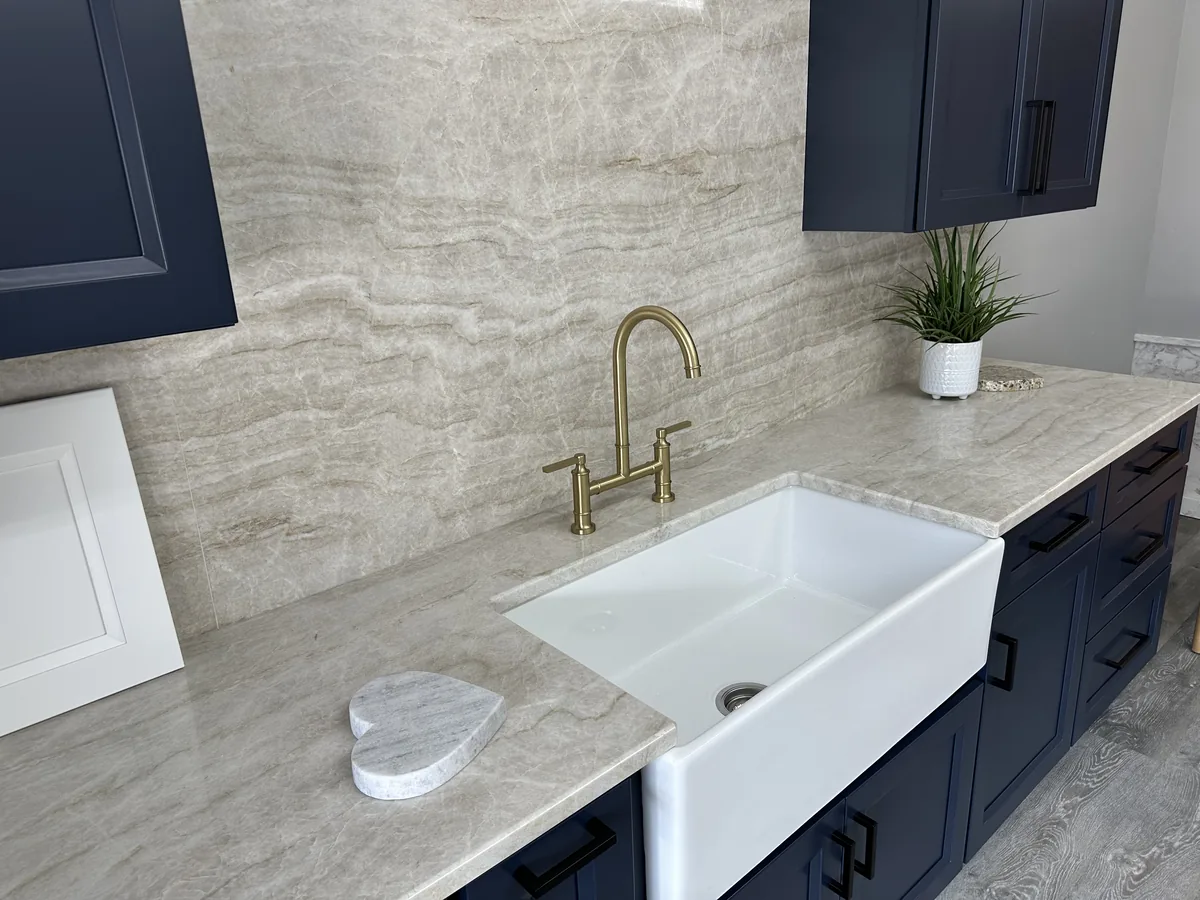
A farmhouse sink has a large, deep basin and an exposed front apron that extends to the face of the cabinetry. The apron is visible and becomes a design element in the kitchen. Unlike undermount or drop-in sinks, which are hidden behind cabinet doors, the farmhouse apron is a deliberate feature.
The deep basin and large surface area make farmhouse sinks practical for washing large pots and pans. The visual weight of the apron adds character to traditional, transitional, and farmhouse-style kitchens. They pair beautifully with stone countertops — granite, quartz, marble, and quartzite all work well.
The installation sequence is what sets farmhouse sinks apart from other styles. The cabinet modification must happen first, then the sink is set in the modified cabinet, and only then is the countertop templated. Getting this sequence right avoids delays and extra site visits.
Getting the Order Right
The Farmhouse Sink Installation Sequence
The order of operations matters more for farmhouse sinks than for any other sink style. Follow this sequence to avoid delays.
Choose Your Sink
Select the exact model. Confirm apron dimensions, bowl size, and material. Know the finished weight — it affects cabinet support requirements.
Modify the Cabinet
The sink base cabinet front must be cut or replaced. This work is typically done by your cabinet installer or contractor before the countertop process begins.
Set the Sink in the Cabinet
With the cabinet modification complete, the sink is set in place. Both the sink and the modified cabinet must be in final position before templating.
Template the Countertop
Only after the sink and cabinet are in their final configuration can an accurate countertop template be taken. The countertop is then fabricated to fit.
Design Flexibility
From Classic White to Bold Black
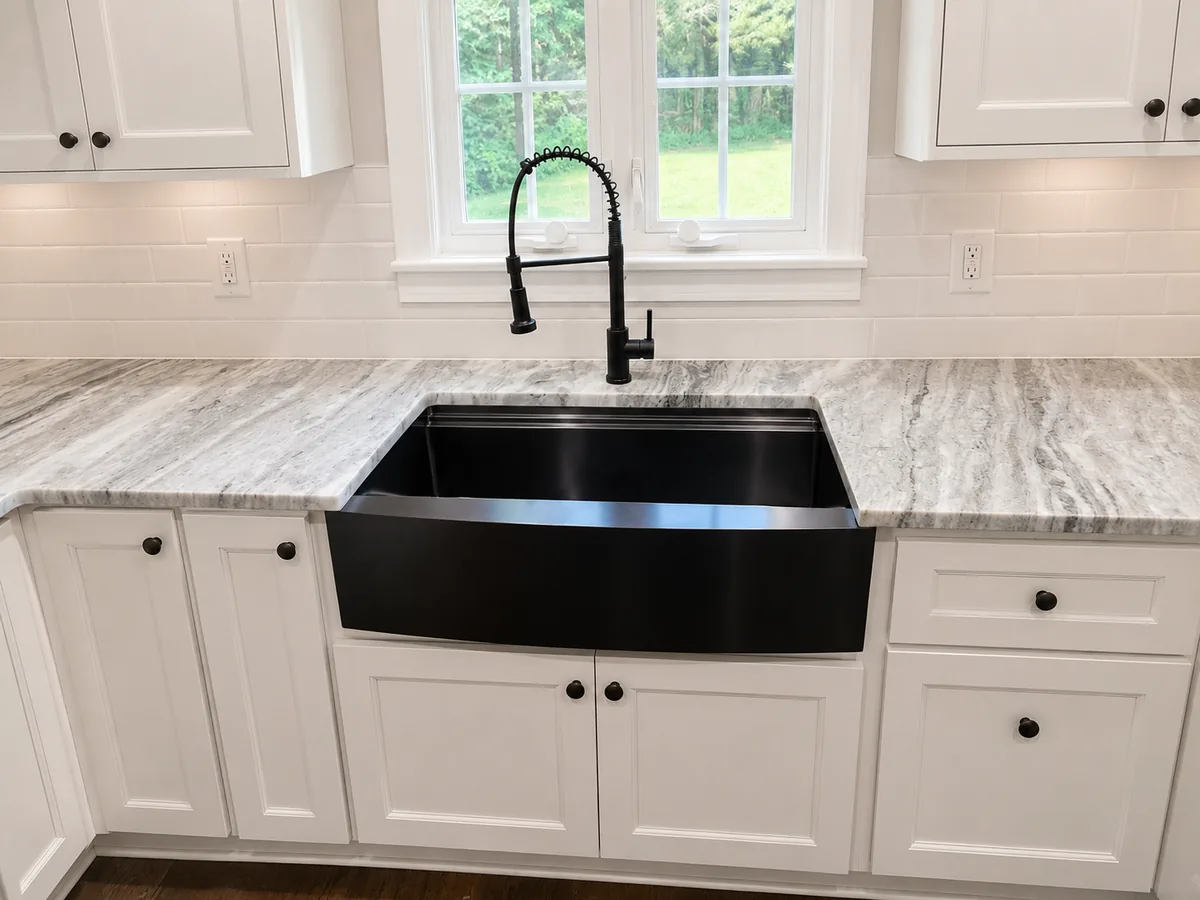
Farmhouse sinks are available in a wide range of materials and finishes — from the traditional white fireclay that defines the style to matte black stainless steel for a modern, high-contrast look.
A black apron front sink paired with granite and white cabinetry creates a striking focal point without sacrificing the warmth and character of the farmhouse aesthetic. The exposed apron is the design element — the finish you choose sets the tone for the entire kitchen.
Stone countertops complement farmhouse sinks in any finish. The natural variation in granite, quartzite, and marble gives the surface visual depth that holds its own against a bold apron front.
Materials
Common Farmhouse Sink Materials
Fireclay
The most popular farmhouse sink material. Smooth, non-porous, and scratch-resistant. Fired at very high temperatures for durability. Available in white and off-white finishes. Does not stain easily but can chip under heavy impact.
Cast Iron
Extremely durable with an enamel-coated surface. Very heavy — often 150–200 lbs — requiring reinforced cabinet support. Available in colors. The enamel can chip if subjected to sharp impacts.
Stainless Steel
Practical and easy to clean. Less traditional in appearance than fireclay but compatible with modern and industrial kitchen designs. Available in standard and commercial gauges.
Composite / Quartz Composite
Made from quartz and resin. Resistant to heat, stains, and scratches. Matte finish available in multiple colors. A good option for coordinating with stone countertops.
Natural Stone
Farmhouse sinks carved from granite, marble, or soapstone. Heavy and unique. Coordinate with your countertop material for a cohesive look. Natural stone sinks require sealing.
Honest Assessment
Benefits and Limitations
- Bold, traditional look that anchors the kitchen design
- Deep basin — practical for large pots, pans, and sheet trays
- Wide range of materials and apron styles
- Pairs beautifully with granite, quartz, and natural stone
- Comfortable ergonomic depth — less leaning over the counter
- Strong resale appeal in traditional and farmhouse-style homes
- Requires modified or purpose-built sink base cabinet
- Cabinet modification must be complete before templating
- Sink must be on-site and in final position before template appointment
- Heavy materials (fireclay, cast iron) require reinforced cabinet support
- Countertop fabrication is specific to the sink model — no substitutions after template
- Higher total project cost due to cabinet prep and coordination
Common Questions
Farmhouse Sink FAQ
What is a farmhouse sink?
A farmhouse sink — also called an apron-front sink — is a large, deep sink where the front face (the apron) extends to the face of the cabinet rather than being hidden behind a cabinet door. The apron is exposed and typically flush with or slightly proud of the cabinet face. Farmhouse sinks are most common in kitchens and are available in fireclay, cast iron, stainless steel, composite, and natural stone.
Does a farmhouse sink require a special cabinet?
Yes. A farmhouse sink requires a modified or purpose-built sink base cabinet. The front panel of a standard sink base cabinet must be cut or replaced to accommodate the exposed apron face of the sink. Some manufacturers sell farmhouse-ready sink base cabinets designed for specific sink dimensions. This cabinet modification must be complete before countertop templating — the countertop is fabricated to fit around the finished cabinet and sink configuration.
Does the farmhouse sink need to be in place before templating?
Yes. The sink must be installed in the cabinet before the template appointment. The countertop is fabricated to fit the specific sink and cabinet configuration — including the front-to-front dimension, countertop overhang over the apron, and cutout geometry. If the sink is not in place at templating, measurements cannot be accurate and the project will be delayed.
What is the difference between a farmhouse sink and an apron-front sink?
The terms are used interchangeably. Both describe a sink with an exposed front apron face that extends to the cabinet line. Some people use 'farmhouse' for traditional or rustic styles and 'apron-front' more broadly — but there is no functional distinction. Both require the same cabinet modification and installation approach.
What materials are farmhouse sinks made from?
The most common farmhouse sink materials are fireclay, cast iron, stainless steel, composite/quartz composite, and natural stone. Fireclay is the most traditional and popular option — it's smooth, non-porous, and durable. Cast iron is very heavy and requires reinforced cabinet support. Stainless steel farmhouse sinks are available in standard and commercial gauges. Each material has different weight, care, and installation considerations.
How does a farmhouse sink affect countertop fabrication?
A farmhouse sink changes how the front edge of the countertop is fabricated. Instead of a standard cabinet-flush front, the countertop front dimension is determined by the width of the apron and the desired overhang over the sink front. The countertop also typically lacks a front overhang in the traditional sense — the sink apron defines the visual front of the installation. This requires specific coordination between the sink, cabinet, and countertop fabricator.
Can I use any countertop material with a farmhouse sink?
Yes. Granite, quartz, quartzite, marble, and soapstone all pair well with farmhouse sinks. The choice of countertop material doesn't directly limit the sink style. However, the countertop fabrication approach differs from a standard sink cutout, and the countertop must be planned around the specific apron dimensions. Discuss your combination with your fabricator at the planning stage.
Who installs the plumbing for a farmhouse sink?
A licensed plumber handles all supply line, drain, and disposal connections. Precision Granite Works fabricates and installs the countertop, including the cutout and edge work around the sink. The plumbing and countertop installation are separate trades that need to be coordinated during a kitchen renovation.
Related Resources
Planning a Farmhouse Sink Project?
Talk to Our Team Before You Start
Farmhouse sink projects require coordination between your cabinet installer and our fabrication team. Contact us early in the planning process — we can help you understand the sequencing, what modifications your cabinet needs, and what to have ready before the template appointment.