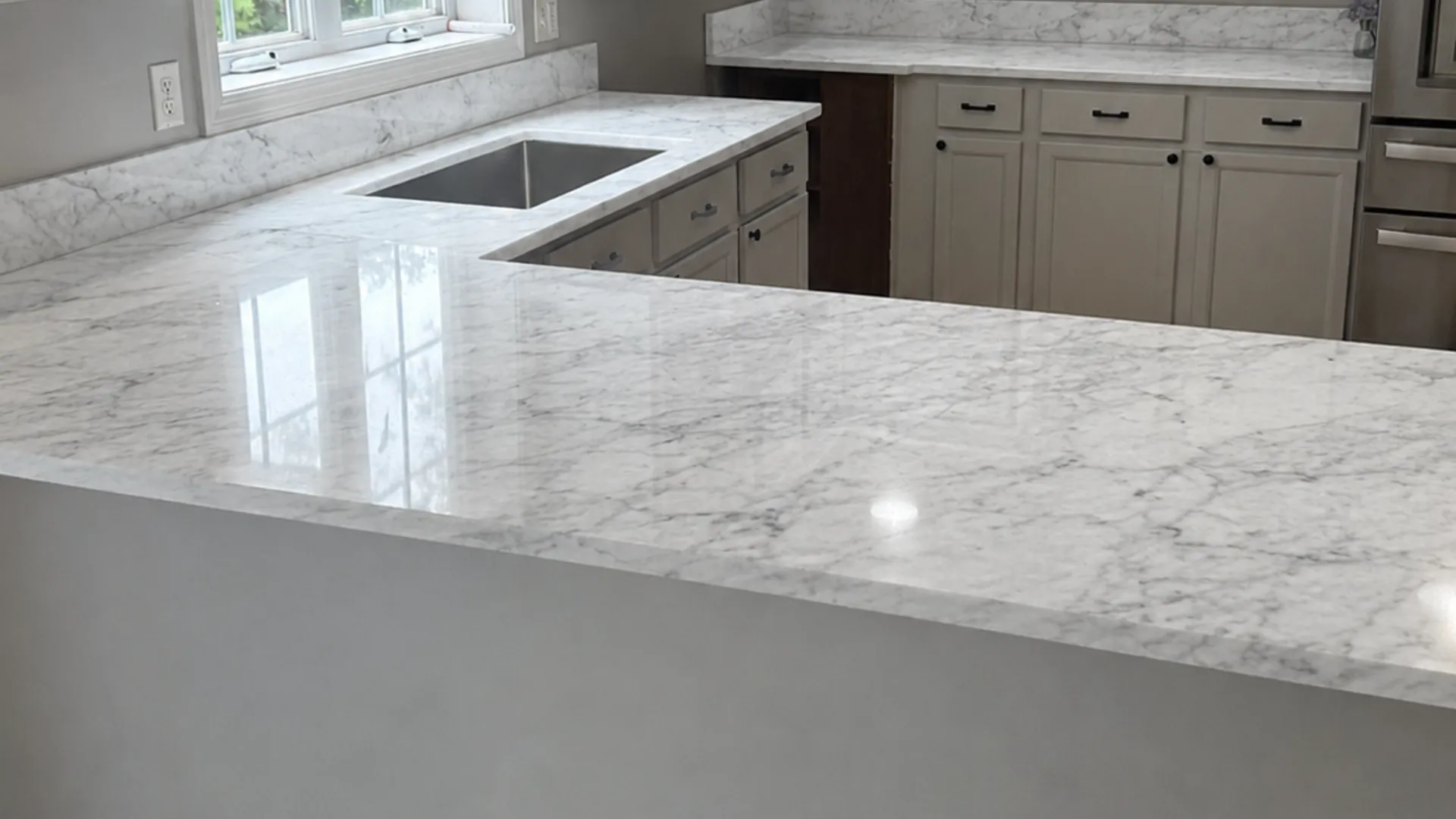
Natural Luxury Stone
Marble Countertops in New Hampshire
Carrara · Calacatta · Statuario · Nero Marquina
Timeless luxury formed over millions of years. No other material delivers marble's combination of elegance, natural veining, and enduring beauty. We'll help you select the right variety and give you honest guidance on care.
Why Marble?
The Ultimate Luxury Countertop
Marble has been the material of choice for artists, architects, and homeowners for thousands of years — from Michelangelo's sculptures to the Roman Pantheon to today's most celebrated kitchen designs. It is the only countertop surface that is immediately recognizable as a luxury choice the moment someone enters a room.
Every slab of marble is a unique natural artwork formed over millions of years, with veining patterns that cannot be replicated or manufactured. Two pieces of "Carrara" marble from the same quarry will look different from each other in subtle, beautiful ways.
Marble also has functional advantages: its naturally cool surface is beloved by bakers and pastry chefs, and it keeps kitchens looking bright and open. We believe in honest guidance — marble requires more care than granite or quartz, and we'll tell you exactly what that means for your lifestyle before you commit.
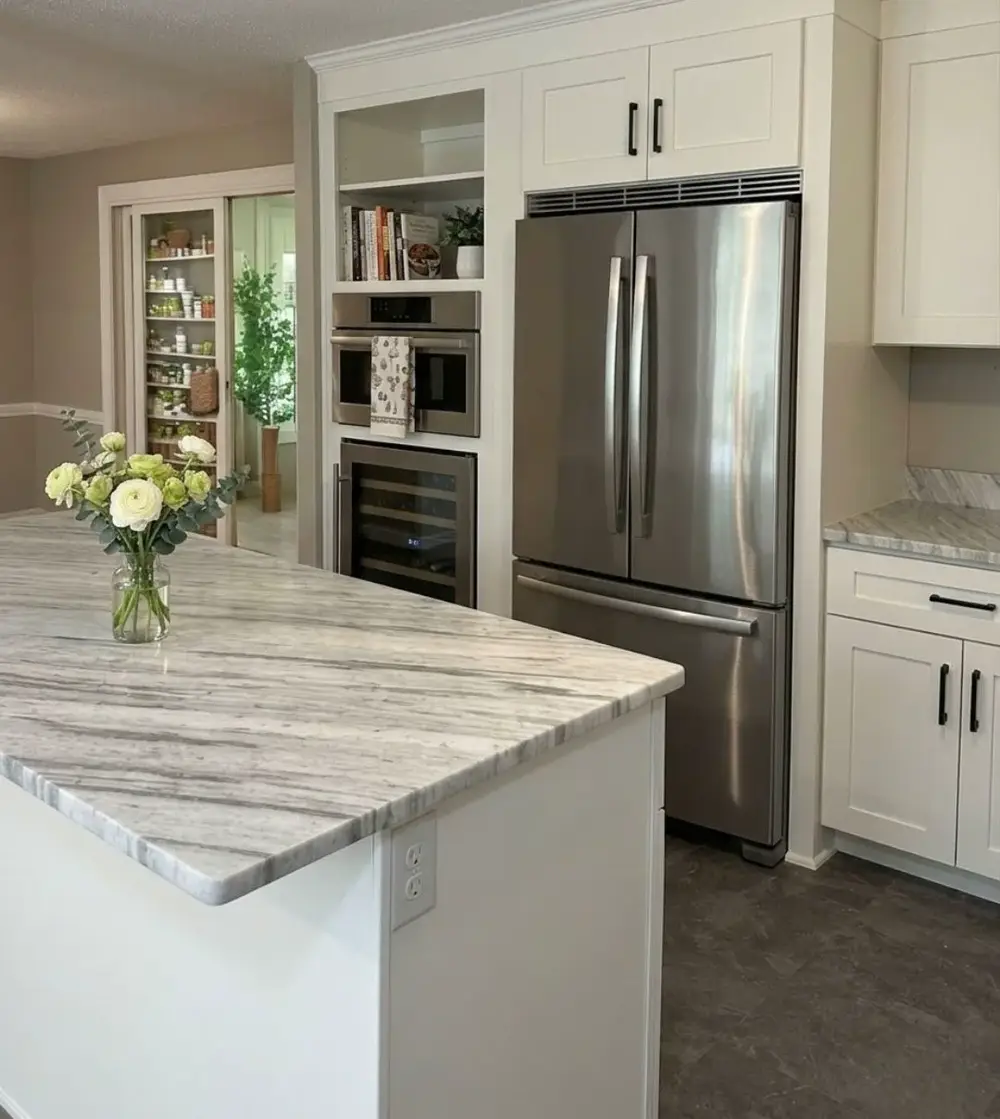
Our Honest Guidance on Marble Care
Marble is a more porous and softer stone than granite or quartz. It can be etched (chemically dulled) by acids — lemon juice, vinegar, wine, tomato sauce, coffee, and many household cleaners. It also requires resealing more frequently (every 6–12 months in kitchens).
We tell every customer this before they choose marble, because the homeowners who love their marble countertops most are those who went in with accurate expectations. Many of our marble customers describe their countertops developing a natural patina over time — and they love it. It tells the story of a kitchen well-used and well-loved.
If the idea of any maintenance concern bothers you, we'd honestly steer you toward quartzite (marble look, granite performance) or a quartz product with marble-inspired veining. No judgment either way — we want you to be happy with your countertops for decades.
Variety Guide
Popular Marble Varieties We Install
From classic Carrara to dramatic Nero Marquina, here's a guide to the six most popular marble varieties in NH homes.
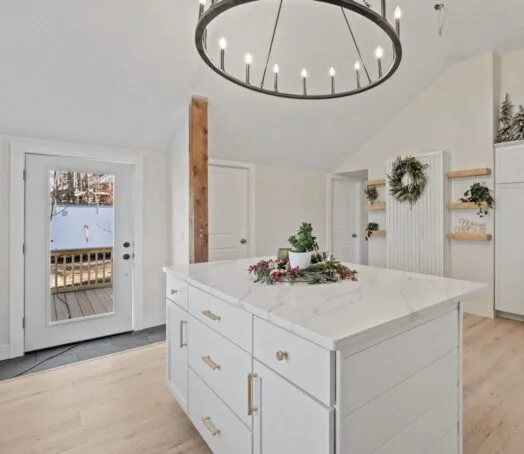
Carrara Marble
Carrara, Tuscany, ItalyLook: White to soft blue-gray background with fine, feathery gray veining. The most widely recognized marble in the world.
Best for: Classic and timeless kitchens, master bathrooms, fireplace surrounds. The quintessential luxury choice.
Carrara is the most accessible Italian marble and has been used in sculpture and architecture for centuries, including Michelangelo's David.
Calacatta Marble
Carrara region, Italy (rarer quarries)Look: Bright white background with bolder, more dramatic veining — often featuring gold, brown, or dark gray thick veins.
Best for: Statement kitchen islands, luxury master baths, fireplace surrounds where you want the stone to be the room's focal point.
Calacatta is frequently confused with Carrara but commands a premium price — its bolder veining and brighter white make it more dramatic.
Statuario Marble
Carrara, Italy (rare quarry)Look: Brilliant white background with dramatic, widely spaced gray veining. The most striking of the white Italian marbles.
Best for: The pinnacle statement choice for luxury kitchens and baths where budget is not a constraint.
Statuario is rarer and more expensive than Calacatta. Availability varies significantly — we source from premium importers.
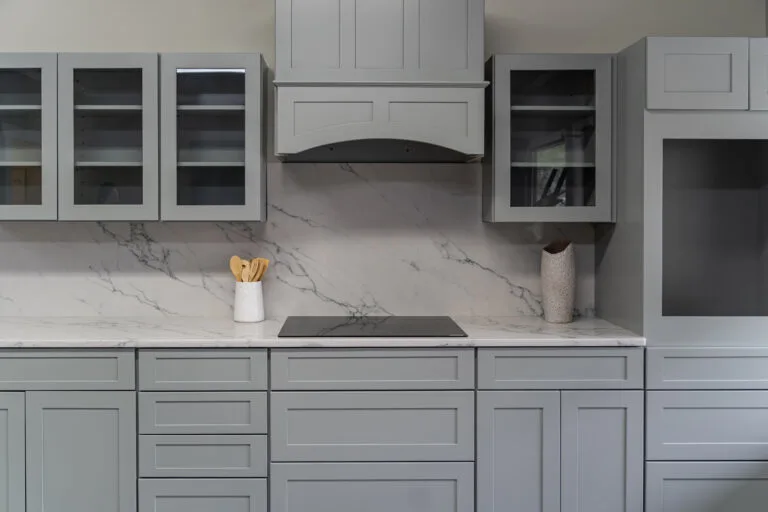
Nero Marquina
Basque Country, SpainLook: Jet black background with striking white veining. One of the most dramatic and sophisticated marble looks available.
Best for: Bold accent applications, luxury bathrooms, powder rooms, kitchen islands. Creates maximum visual impact.
Nero Marquina creates the most dramatic contrast possible in a stone countertop. Not for those who want understated elegance.
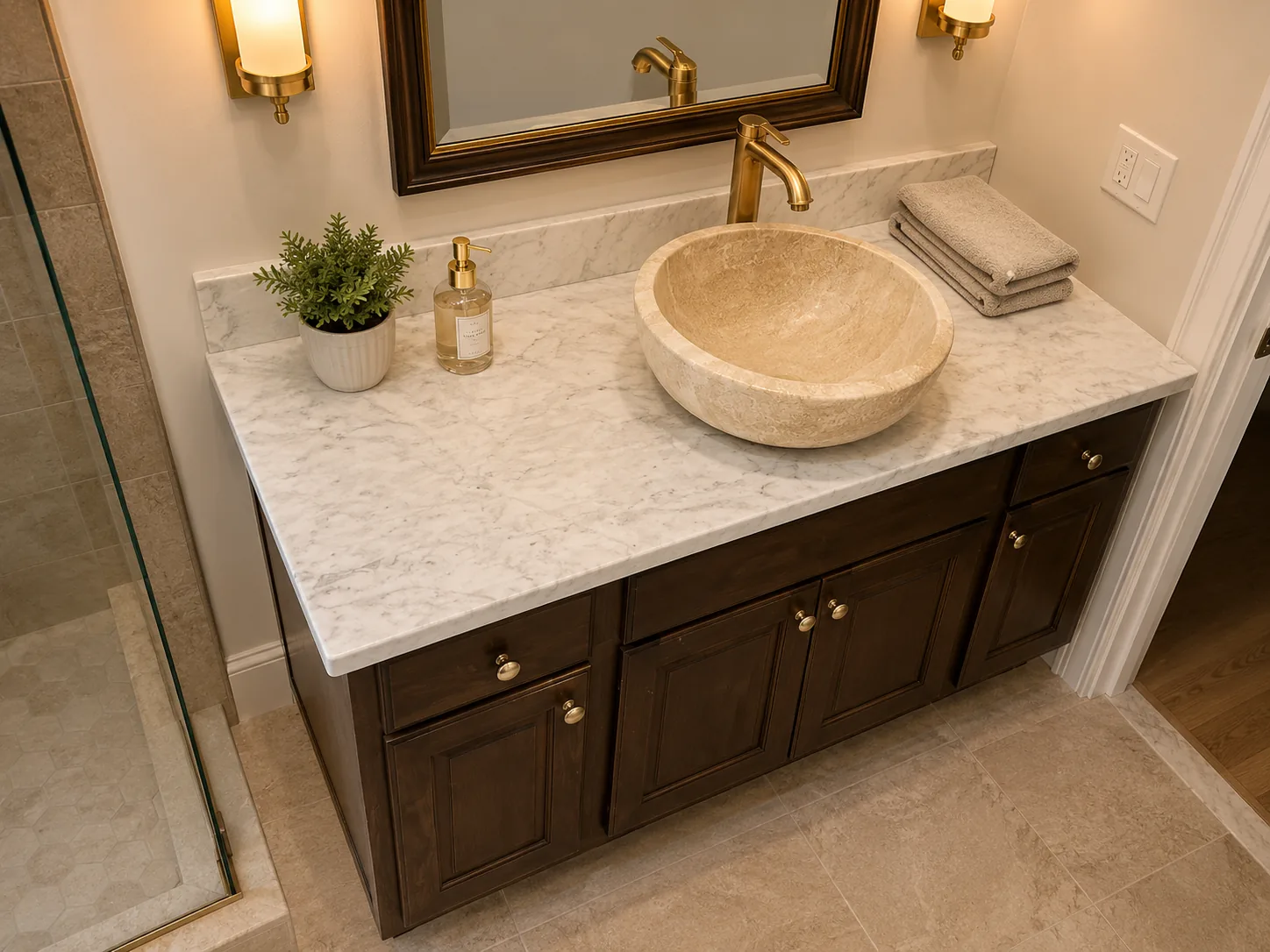
Crema Marfil
Alicante, SpainLook: Warm ivory to cream background with subtle golden beige veining. The warmest and most approachable of the popular marbles.
Best for: Warm, traditional kitchens and bathrooms where a creamy tone complements golden or honey-colored cabinetry.
Crema Marfil is one of the most popular choices for NH bathrooms — its warmth creates an inviting, spa-like atmosphere.
Emperador Dark
Alicante, SpainLook: Deep chocolate brown with fine gold and white veining. Rich, warm, and distinctly different from the classic white marble look.
Best for: Warm, traditional, and eclectic spaces where brown cabinetry, wood tones, or dark design schemes are the foundation.
Emperador offers a completely different aesthetic from white marbles while delivering the same natural beauty and veining drama.
Polished vs. Honed Marble
The finish you choose significantly affects both the look and the maintenance of marble countertops. Here's what to know.
Polished Marble
- Maximum color depth and drama
- Easy to clean — smooth surface
- Showcases veining at its most vivid
- Most recognizable 'luxury' look
- Etch marks are immediately visible (dull spots in the shine)
- Shows fingerprints and water spots more readily
- Requires more careful use in kitchens
Honed Marble
- Etch marks are nearly invisible (no sheen to disrupt)
- More contemporary, understated aesthetic
- Softer, more forgiving look for casual homes
- Very popular in NH farmhouse and transitional kitchens
- Requires sealing slightly more often than polished (same marble, slightly more porous surface)
- Color appears slightly lighter and less saturated
- Can show oil marks from hands more than polished
See care tips for every stone type.
"We chose Carrara marble for our kitchen knowing it required more care. The beauty is absolutely worth it. Precision Granite Works was honest with us about what to expect and gave us excellent care guidance."
"Our master bathroom with Calacatta marble is the most beautiful room in our house. The installation was perfect, the seams are invisible, and the team was wonderful to work with."
"I was nervous about marble in my kitchen but Jillian walked me through everything during our consultation. Now that it's installed I couldn't imagine anything else. It's exactly what I pictured."
Common Questions
Marble Countertop FAQ
How do I get a price for marble countertops in New Hampshire?
Marble pricing varies significantly by variety — Carrara, Calacatta, Statuario, and specialty marbles each have their own availability and cost profile. Pricing also depends on your kitchen size, edge profile, and project complexity. The best way to get an accurate number is a free quote from us. Call 603-736-0004 or fill out our contact form and we'll respond within one business day with a detailed estimate.
Does marble etch? What causes etching?
Yes — etching is marble's most important limitation. Marble is composed primarily of calcium carbonate, which reacts chemically with acids. When acidic substances — lemon juice, vinegar, wine, tomato sauce, coffee, and even many household cleaners — contact a polished marble surface, they chemically dissolve the polished layer, leaving a dull, rough spot called an etch mark. Etching is not a stain; it's a physical change to the surface. Etches can be polished out by a professional, or prevented by wiping acid spills immediately and choosing a honed finish, which hides etching better than polished.
Is marble a good choice for kitchen countertops?
Marble can be a beautiful and practical kitchen countertop choice — but it requires a different mindset than quartz or granite. It will develop a patina over time from minor etching and use, and many homeowners find that this natural aging adds to marble's character and charm. The homeowners who are happiest with marble in their kitchens are those who go in with clear expectations: they love the material deeply enough to accept its quirks, wipe spills promptly, and appreciate a lived-in surface that tells a story. If you need a surface that always looks perfect, quartz or quartzite may be better choices.
Should I choose polished or honed marble for my kitchen?
For kitchens, honed marble is often the more practical choice. Honed marble has a flat, matte surface that hides etch marks far better than polished marble — on a honed surface, etching is usually invisible because there's no sheen to disrupt. Polished marble looks more dramatic and is easier to clean, but any etching is immediately visible as a dull spot against the shiny background. For bathrooms used primarily for water and personal care products (which are less acidic), polished marble is often appropriate.
How often does marble need to be sealed?
Marble typically needs resealing every 6–12 months in kitchen environments, more often than granite or quartzite. The sealing frequency depends on the specific marble (denser marbles can go longer), your usage level, and your cleaning products. Professional resealing ensures the sealer is applied correctly to a properly cleaned surface for maximum protection. We offer marble resealing service throughout New Hampshire — see our Countertop Resealing page.
Can marble be repaired if it chips or cracks?
Yes — marble is repairable. Chips and cracks are repaired using color-matched epoxy in a similar process to granite repair. Etch marks can be removed by re-honing or re-polishing the affected area. We perform marble repairs throughout New Hampshire — see our Countertop Repair page or call 603-736-0004 for an assessment.
Is marble suitable for bathroom countertops?
Marble is actually an excellent choice for bathroom countertops and vanity tops, where the risk factors (heat, heavy knife use, frequent acidic food contact) are much lower than in kitchens. Most personal care products are neutral or mildly acidic, but not as aggressively etching as kitchen acids. Marble bathrooms are one of the most enduringly luxurious design choices available, and we install them throughout NH.
Already have marble? Protect its beauty.
Sealing schedule, etch prevention, and honest care tips — including what never to use on marble.
Read Our Marble Care GuideExplore More
Request a Free Marble Quote
Tell us about your project and we'll respond within one business day.