Care & Maintenance · Granite
Granite Countertop Care
Granite is one of the most forgiving countertop materials you can own — but "low maintenance" doesn't mean "no maintenance." Here's exactly how to clean, protect, and reseal your granite so it still looks showroom-fresh a decade from now.
Clean granite daily with warm water and mild dish soap, dry it to prevent water spotting, and reseal every 1–2 years. Avoid vinegar and citrus-based cleaners — they wear down the sealer over time.
Reviewed by the Precision Granite Works team — Manchester, NH fabricators and installers since 1990.·Last updated: July 2026
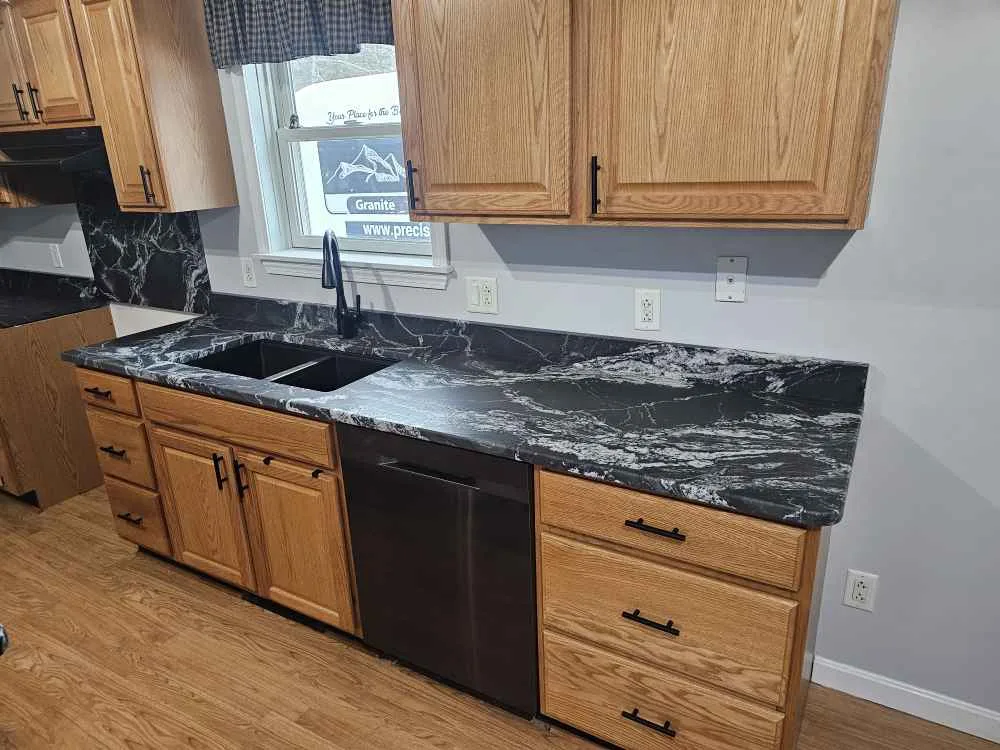
Daily Cleaning
A soft microfiber cloth, warm water, and a couple drops of mild dish soap is genuinely all your granite needs on a normal day. Work in a circular motion, then go over the surface once more with a clean, damp cloth to lift any soap film, and dry it fully with a towel.
Drying matters more than people expect — NH tap water carries enough dissolved minerals that repeated air-drying leaves a faint chalky haze near faucets over time. Thirty extra seconds with a towel prevents it.
Safe Products
- Mild dish soap diluted in warm water
- A cleaner labeled specifically for sealed natural stone
- Isopropyl alcohol diluted with water, for occasional disinfecting
- Soft microfiber cloths — never a rough sponge or scrub pad
What to Avoid
Vinegar and lemon-based cleaners are not safe as a routine granite cleaner. Even though granite is more acid-resistant than marble, repeated exposure to vinegar breaks down the sealer over time, leaving the stone unprotected long before its next scheduled resealing. The same goes for most "all-purpose" and glass-cleaning sprays — many contain ammonia or citrus acids that do the same slow damage.
- • Vinegar, lemon juice, or citrus-based sprays
- • Bleach and bleach-based disinfecting wipes
- • Ammonia or glass cleaner used as a daily wipe-down
- • Abrasive scouring pads or powders
- • Generic "multi-surface" cleaning sprays
- • Undiluted dish soap left to dry (creates a film)
Spills & Stains
Blot — don't wipe — spills from wine, coffee, oil, and tomato sauce as soon as you notice them. Wiping can spread a spill across a wider area before it's absorbed. If a spill does sit long enough to leave a mark, a poultice of baking soda and water, applied and left covered overnight, will pull most oil-based stains out of properly sealed granite. Stubborn stains are worth a call to us before you try anything stronger.
Heat & Scratch Resistance
Granite tolerates direct contact with hot cookware better than any other common countertop material — no trivet required for a quick pot set-down. It's also hard enough that kitchen knives, keys, and normal daily wear won't scratch it. The one thing to actually avoid is dropping heavy cast iron on an edge or corner, which can chip the stone regardless of hardness.
Sealing: What It Does and When to Redo It
Granite is porous at a microscopic level. Sealer fills those pores so liquids bead on the surface instead of soaking in. Without it, granite absorbs oil and pigment over time — sealing is the single most important maintenance step for this material.
Run the water bead test every few months: pour a tablespoon of water on the counter near the sink and cooktop, since these see the most use. If it still beads after 10 minutes, you're fine. If it soaks in and darkens the stone, it's time to reseal — most homeowners land on roughly a 1–2 year cycle. We offer professional resealing service if you'd rather not DIY it.
Granite Care Schedule at a Glance
Common Granite Care Mistakes
These are the mistakes we see most often when homeowners call us about a granite countertop that isn't looking its best.
Both break down the sealer over time even though granite tolerates them better than marble — it's a slow, cumulative loss of stain protection, not an instant reaction.
"Low maintenance" isn't "no maintenance." Skipping resealing for years leaves the stone unprotected long before the next scheduled service, and it can stain when it finally does.
Oil is the fastest thing to darken granite if the seal has worn thin in that specific high-traffic zone — wipe it promptly rather than letting it sit through a cooking session.
Granite resists scratches from daily use extremely well, but dragging (rather than lifting) heavy stand mixers or cast iron cookware across an edge can chip the stone regardless of hardness.
Common Questions
Granite Care FAQ
Most granite countertops need resealing every 1–2 years. NH homes with well water sometimes see faster mineral buildup on the sealed surface, which can make it look like the seal is failing sooner — but that's usually just hard-water residue, not a sealing problem. The water bead test is more reliable than a calendar: if water beads up on the surface after 5–10 minutes, your seal is still working.
Warm water with a few drops of mild dish soap on a soft microfiber cloth handles nearly everything. If you want a dedicated product, use a cleaner labeled specifically for sealed natural stone. Skip vinegar, lemon-based sprays, and multi-surface cleaners — even occasional use can wear down the sealer faster than it should.
Yes — granite is one of the few countertop materials that genuinely tolerates direct heat from cookware. It won't scorch or discolor the way quartz can. We still recommend trivets near seams and edges, since repeated direct heat there can occasionally stress the adhesive line over years of use.
Granite naturally contains mineral deposits, fissures, and color variation that can look like a stain but are permanent parts of the stone. A true oil stain usually has a soft, spreading edge and darkens over hours. If you're not sure, cover the spot with a small amount of baking soda paste overnight — an oil stain will often lighten, while a natural mineral won't change at all. When in doubt, send us a photo and we'll tell you which one you're looking at.
It's a smart move. Buyers and inspectors notice granite that looks dull, has visible watermarks, or shows early staining around the sink — all signs of a worn seal. A fresh professional sealing before listing takes an afternoon and makes the countertops show their best in photos and in person.
Own more than one type of stone? See our full Care & Maintenance hub for every material, or learn more about granite countertops in New Hampshire.
Explore More
Overdue for a Resealing?
We provide professional granite sealing throughout New Hampshire — no guesswork, no hardware-store shortcuts.