Care & Maintenance · Soapstone
Soapstone Countertop Care
Soapstone is one of the lowest-maintenance natural stones you can own — no sealing, ever. The mineral oil or beeswax you've heard about is about looks, not protection. Here's the full picture.
Soapstone never needs sealing — it's naturally non-porous. Clean it with warm water and mild soap; mineral oil or beeswax is purely a cosmetic choice to even out its natural darkening, not a protective step.
Reviewed by the Precision Granite Works team — Manchester, NH fabricators and installers since 1990.·Last updated: July 2026
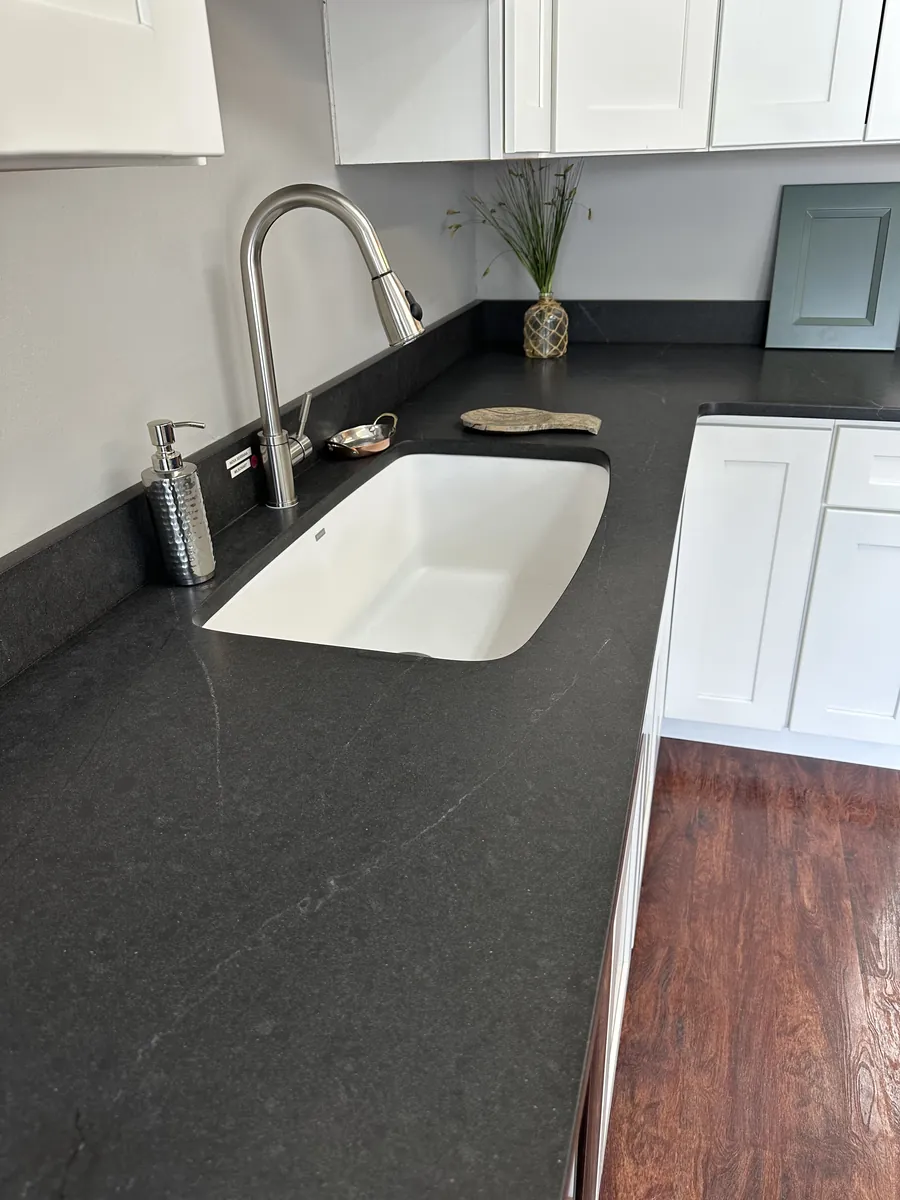
Daily Cleaning
Soapstone is non-porous and naturally resistant to bacteria, which makes it one of the easiest natural stones to keep clean. Warm water and a few drops of mild dish soap on a soft cloth handle daily messes with no fuss. Dry the surface afterward to keep it looking its best.
Unlike granite or marble, you don't need to worry about oils or wine "getting into" the stone during your normal cleaning routine — soapstone simply doesn't absorb them.
Safe Products
- Mild dish soap and warm water
- Food-grade mineral oil, applied with a soft cloth
- Natural beeswax, buffed on for a slightly longer-lasting sheen
- Fine 220-grit sandpaper for buffing out minor scratches
What to Avoid
We still don't recommend vinegar as a routine cleaner — even though soapstone is naturally acid-resistant and won't etch, vinegar isn't necessary and can leave the surface looking flatter over time compared to a simple soap-and-water routine.
- • Abrasive scouring pads or steel wool
- • Vinegar as a daily go-to cleaner
- • Dropping heavy objects on edges or corners (can chip)
- • Any commercial "stone sealer" — soapstone doesn't need one
- • Harsh degreasers not necessary for non-porous stone
- • Ignoring small scratches for years, letting them multiply
Spills, Stains & Scratches
Because soapstone is non-porous, oils, wine, and acids can't penetrate it — there's no staining risk the way there is with granite or marble. Its softness means it can pick up small scratches and nicks with regular use, which most homeowners consider part of the material's rustic charm. Minor marks buff out with fine sandpaper and a fresh coat of oil; deeper scratches are best left to a professional.
Heat Resistance
Soapstone has been used for wood stoves and industrial sinks for centuries because it handles heat exceptionally well. Hot pots and pans are not a concern on soapstone the way they are with quartz. Its main vulnerability is softness, not heat.
Mineral Oil & Wax: Cosmetic, Not Protective
This is the single most misunderstood part of soapstone ownership: applying mineral oil or beeswax is not sealing the stone and is not required for protection. Soapstone naturally darkens over time on its own, from age, light exposure, and use. Oiling or waxing simply speeds up and evens out that darkening, so the whole slab reaches its final rich charcoal tone together rather than in uneven patches around high-use areas.
Many homeowners apply oil or wax every few weeks during the first year, then taper off to just a handful of times a year — or stop altogether — once they're happy with the color. It's entirely a style choice, not a maintenance requirement.
Soapstone Care Schedule at a Glance
Common Soapstone Care Mistakes
These are the mistakes we see most often when homeowners call us about a soapstone countertop that isn't looking its best.
It's purely cosmetic — soapstone is already non-porous and needs no sealant. Treating oiling like a protective maintenance step (and worrying when you skip it) misunderstands what it actually does.
Soapstone is a softer stone, and light scratches are a normal part of its character, not a defect. Most buff out easily with fine sandpaper and a fresh coat of oil.
Soapstone won't etch from vinegar, but repeated use still leaves the surface looking duller over time compared to simple soap and water — it's unnecessary, not harmful in one use.
Without oil or wax in the first several months, the stone still darkens naturally, but unevenly — patches near the sink and stove will darken faster than the rest until it settles on its own.
Common Questions
Soapstone Care FAQ
No — soapstone is naturally non-porous, so it doesn't require sealing the way granite or marble does. There's no risk of oil, wine, or acidic liquids soaking into the stone. This surprises a lot of homeowners who assume all natural stone needs a sealer.
Purely cosmetic. Soapstone naturally darkens over time on its own through age and exposure — mineral oil or beeswax simply speeds up and evens out that darkening so the whole countertop reaches its final color at the same pace, rather than developing uneven patches around the sink and stove first. It is not a sealant and provides no protective barrier — the stone doesn't need one.
In the first several months after installation, many homeowners apply food-grade mineral oil or beeswax every few weeks to help the color even out faster. Once the stone reaches its natural darker tone, you can taper off to just a few times a year, or whenever you feel like refreshing the look — it's entirely about appearance, not protection.
Yes. Soapstone is a softer stone than granite or quartzite, and light scratches from knives, rings, or daily use are part of its character. Most minor scratches buff out with fine 220-grit sandpaper followed by a fresh coat of mineral oil. Deeper gouges are best handled by a professional fabricator.
Soapstone is genuinely acid-resistant, unlike marble, so an occasional vinegar wipe won't etch it. That said, we still don't recommend it as your everyday cleaner — vinegar can leave the surface looking slightly duller over time and isn't necessary when warm water and mild soap already do the job. Save it for occasional deep cleaning, not routine wiping.
See our full Care & Maintenance hub, or explore soapstone countertops in New Hampshire.
Explore More
Other Stone Options
Curious About Soapstone for Your Home?
Visit our Epsom, NH showroom to see and touch soapstone slabs in person.