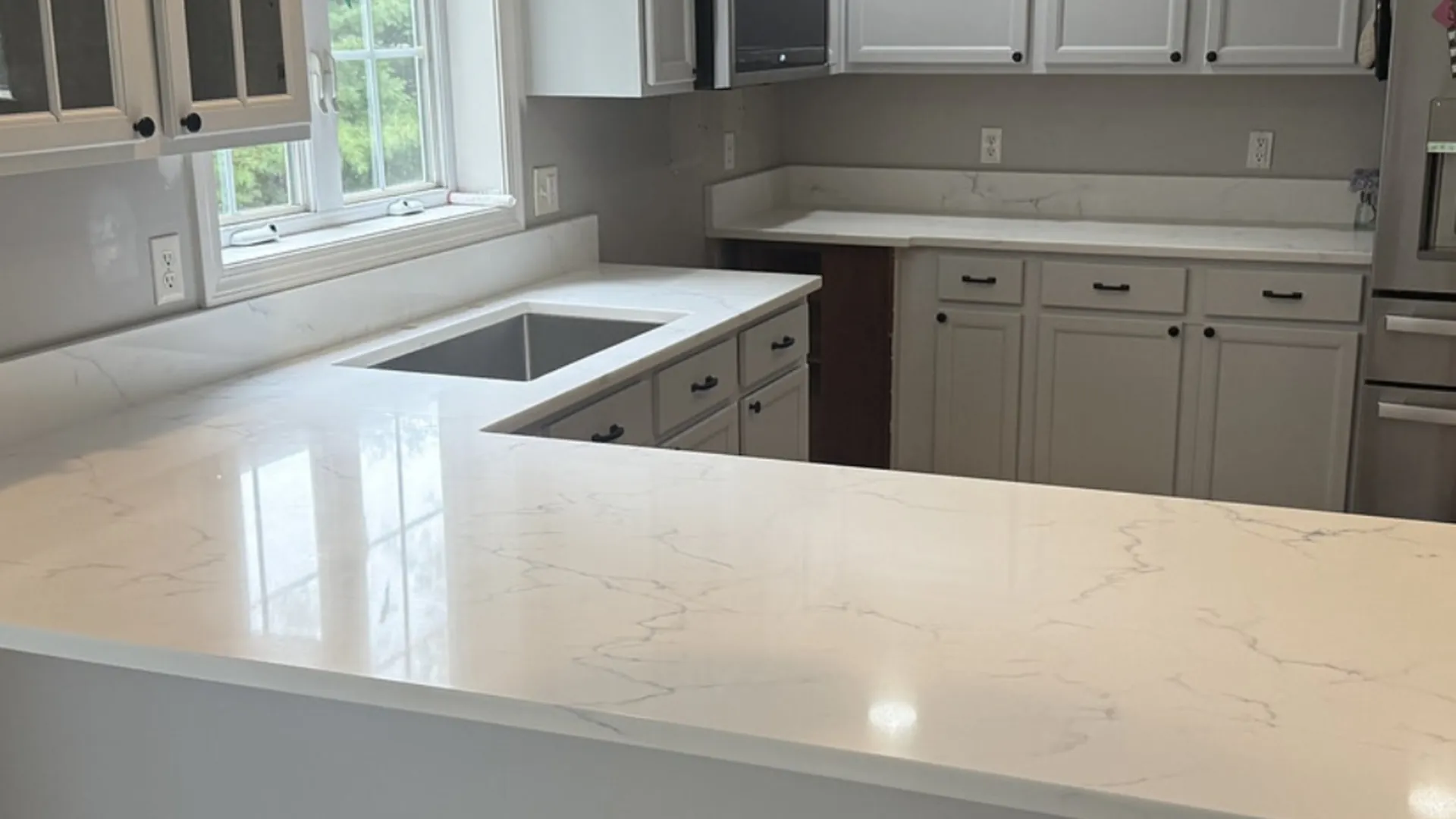
NH's Quartz Countertop Repair Specialists
Quartz Countertop Repair in New Hampshire
Chip Repair · Crack Stabilization · Seam Re-Bonding · Surface Restoration
Quartz is an engineered surface, so damage and repair options differ from natural stone. We assess chips, cracks, open seams, surface marks, and heat damage individually—and explain when repair or refinishing may not be suitable.
Why Quartz Repair Requires a Specialist
Quartz Is Engineered — and Repairs Require Engineering-Level Knowledge
Quartz countertops are engineered surfaces made with mineral particles and resin. Unlike porous natural stone, they generally do not need penetrating sealer. The resin also means heat damage, scratches, and surface refinishing need to be considered differently than on granite or marble.
Color and pattern can affect the visibility of a filled chip or crack. A local repair may not reproduce the factory surface exactly, and not every scratch, heat mark, or dull area can be polished away safely. An assessment should consider the product, damage, and finish before choosing a method.
We review the damage and discuss whether repair is appropriate, what result may be achievable, and when replacement or leaving the surface as-is may be the better option.
Always use trivets or hot pads with quartz
Unlike granite, quartz contains polymer resin binders that can discolor or crack from direct contact with hot pans. Heat damage to quartz resin is one of the hardest repairs. Prevention is far easier than restoration.
Looking for repairs on granite, marble, or other stone? Visit our general countertop repair page. Quartz does not need sealing; for porous natural stone, see our countertop resealing guide.
Get a Free Quartz Repair Estimate
Describe the damage or send photos so we can review your quartz countertop and discuss whether an assessment is appropriate.
The 5 Types of Quartz Damage
What We Repair — And What to Expect
Each type of quartz damage calls for a separate assessment. Repairability and appearance depend on the product, damage, and finish; some conditions are not suitable for repair.
Chip Repair
Impact damageA hard impact from a dropped pan, appliance, or other object can chip quartz, especially along an exposed edge. A chip may be repairable, but size, location, pattern, and the specific engineered surface affect both the method and how visible the result may be.
A color-matched filler may be an option after inspection. Solid-color quartz can make even a slight color difference easier to notice; patterns and veining may affect how a repair blends, but do not guarantee an invisible result. We'll explain the likely outcome before proceeding.
Some localized chips on the surface or edge may be suitable for a repair after assessment.
Extensive material loss, damage at an unsupported edge, or a finish/color mismatch that would not meet your expectations may make repair unsuitable.
Crack Stabilization & Repair
Including sink cutout cracksCracks can develop near sink cutouts, seams, or elsewhere on a quartz countertop. The cause and stability matter: a crack may be a candidate for stabilization only if the slab condition and support allow a sound repair.
An inspection considers crack length and location, support below the counter, and whether either side has shifted. Stabilizing a crack does not correct a height difference or guarantee the crack will be invisible. If the slab has moved or the damage is extensive, repair may not be appropriate.
Some stable, localized cracks may be candidates for stabilization after an on-site assessment.
A shifted slab, extensive cracking, or an underlying support problem may require correction or replacement rather than a surface repair.
Scratch & Surface Mark Repair
Polish & surface restorationAbrasive pads and rough objects can mark or dull a quartz surface. Quartz is a resin-bound engineered material, so it should not be treated like granite or marble: polishing or refinishing is not automatically suitable for every product or scratch.
We first assess whether a mark is on the surface, in the resin, or is another type of discoloration. Any spot polishing or refinishing is considered case by case because changing the surface can affect its sheen or texture and may leave a visible transition. We do not promise that quartz can be restored to its original factory finish.
Some superficial marks may be candidates for improvement after material-specific inspection.
Deep gouges, widespread dullness, or marks within the material may not be correctable through spot polishing.
Heat Damage Repair
Discoloration & thermal crackingQuartz contains resin, which can be affected by high heat. A hot pan may leave a discolored, hazy, or cracked area. Use a trivet or hot pad to help prevent thermal damage.
The appearance and depth of heat damage determine whether anything can be improved. Some cases may be candidates for limited treatment, but polishing or filling is not a guaranteed fix and can alter the surface finish. We'll inspect the affected area and explain what is feasible; significant damage may not be repairable.
A limited heat mark may be considered for treatment after assessment of the product and damage.
Deep or widespread heat damage may be permanent and may not be improved with a local repair.
Seam Repair & Re-Bonding
Open seams & separationA quartz seam may open or become more noticeable if the countertop or supporting cabinets move, or if the original bond has failed. The cause of movement should be understood before treating the seam.
Re-bonding may be considered when the seam edges are in suitable condition and the underlying support is stable. Adhesive color and seam alignment affect the result; a repaired seam may remain visible. Movement or a significant height difference can require correction of the support first.
Some open or discolored seams may be candidates for re-bonding after the support and alignment are checked.
Ongoing cabinet movement, damaged edges, or a substantial height difference should be addressed before seam work.
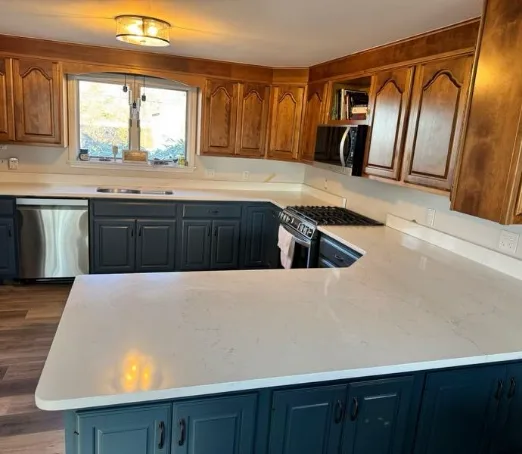
Material-specific care
Repair Is Different From Natural Stone Restoration
Quartz is non-porous and does not need a penetrating sealer. Sealing will not fix a chip, crack, or heat mark. On granite, marble, and other natural stone, a surface repair and resealing serve different purposes: repair addresses damage, while resealing can help protect suitable porous stone from absorbing liquids.
Our Process
How We Repair Quartz Countertops
The work begins with an assessment and discussion of options. A repair is recommended only when the condition and expected result make sense.
Damage Assessment
We review the damage, location, surface, and available product information. An assessment helps determine whether repair is appropriate and what limitations to expect.
Repair Options
If repair may be suitable, we discuss the proposed method, color or finish considerations, and expected result before work begins.
Surface Preparation
The repair area is cleaned and degreased with professional stone cleaner. Any loose material is removed from chips, and the cavity is prepared to provide maximum bonding surface for the repair compound.
Repair Application
If you approve the proposed work, the repair method and materials are selected for the damage and product. Not every chip, crack, heat mark, or seam can be repaired.
Shaping & Finishing
Where the chosen repair requires it, the repair material is shaped and finished carefully. The result may still be visible, and the surrounding surface finish may limit how closely it can be matched.
Review
We review the completed work and explain any care considerations. A local repair cannot always reproduce the countertop's original factory surface or appearance.
Repair vs. Replacement
Should You Repair or Replace Your Quartz?
Repair versus replacement depends on the damage, support, likely appearance, and your plans for the kitchen. A localized chip or seam may justify an assessment; extensive or structural damage may not be a good candidate for repair.
We explain the options and limitations so you can decide. If repair is not appropriate—or if a surface treatment is unlikely to produce a result you want—we'll say so rather than promise a restoration that may not be achievable.
Repair is the right choice when:
Replacement may make more sense when:
Common Questions
Quartz Countertop Repair FAQ
Answers to common New Hampshire homeowner questions about quartz repair.
Can quartz countertops be repaired?
Some quartz damage may be repairable, but feasibility depends on the product, damage type, location, and condition of the slab. A chip, crack, open seam, scratch, or heat mark each needs a different assessment. Refinishing or spot polishing is not suitable for every quartz surface and cannot be assumed to restore the factory finish. We'll discuss likely results and limitations before any work.
How visible will a quartz chip repair be?
Visibility depends on the quartz color and pattern, the chip's location and size, and the repair materials available. A solid, uniform color can make a mismatch easier to notice; patterning does not guarantee that a repair will disappear. We can discuss the likely appearance after inspecting your countertop, but cannot promise an invisible result.
Can you repair a crack in my quartz countertop near the sink?
Possibly, but it needs an assessment. The crack's length and location, support below the counter, and any movement or height difference all matter. Stabilization does not correct a shifted slab or guarantee the crack will be inconspicuous. If repair is not appropriate, we'll explain why and discuss other options.
Why is there a crack in my quartz near the sink?
Cutout corners can concentrate stress, and cracks may relate to impact, countertop support, or movement in the cabinets. The cause cannot be determined from appearance alone; an in-person inspection may be needed to assess the crack and what should happen next.
Can a hot pan damage quartz countertops?
Yes. Quartz contains resin, which can be affected by direct heat and may discolor, haze, or crack. Use trivets or hot pads. Existing heat damage may be permanent; whether any improvement is feasible depends on the product and damage, and polishing is not guaranteed to restore the original finish.
Does quartz need to be sealed?
No. Quartz is a non-porous engineered material — the resin binders eliminate the pore structure that natural stone has. Unlike granite, marble, or quartzite, quartz does not absorb liquids and does not require a penetrating sealer at any point. If someone recommends sealing your quartz countertop, that's either a misunderstanding of the material or an upsell you don't need.
What should I not use to clean quartz countertops?
Avoid abrasive scouring pads, steel wool, or rough scrubbing — these will dull the polished surface over time. Also avoid highly alkaline cleaners (oven cleaner, bleach at high concentrations) which can break down the resin binders with prolonged contact. Acidic cleaners won't etch quartz the way they etch marble (quartz is not calcium carbonate), but they're still unnecessary and some can discolor certain quartz colors. Best practice: pH-neutral stone cleaner or simple dish soap and water for daily cleaning. For dried-on food, a plastic scraper and warm water — not an abrasive pad.
Should I repair or replace my quartz countertop?
It depends on the extent and cause of the damage, the likely appearance of a repair, and your plans for the kitchen. A localized chip or seam may be worth assessing; a shifted slab, widespread damage, or a desire to change materials may point toward replacement. We can explain the options after reviewing the countertop rather than promise that a repair will be suitable.
Do you assess quartz countertops that you didn't originally install?
Contact us with details about the countertop and damage. We'll review the information and let you know whether an assessment is appropriate; repair feasibility depends on the product and condition.
Explore More
Other Stone Options
Repair or care guidance for another countertop material?
Quartz repair methods do not apply to every stone. Find the relevant service information below.
Have a quartz chip, crack, seam, or surface mark? Ask us to review the details.