Undermount Sink vs Drop-In Sink: Which Is Better for Granite Countertops?
Choosing between an undermount sink and a drop-in sink affects more than the look of your granite countertops. The sink decision impacts fabrication, cutouts, faucet holes, cabinet fit, support, cleaning, and the finished result.
By Precision Granite Works Team · Precision Granite Works, Epsom NH
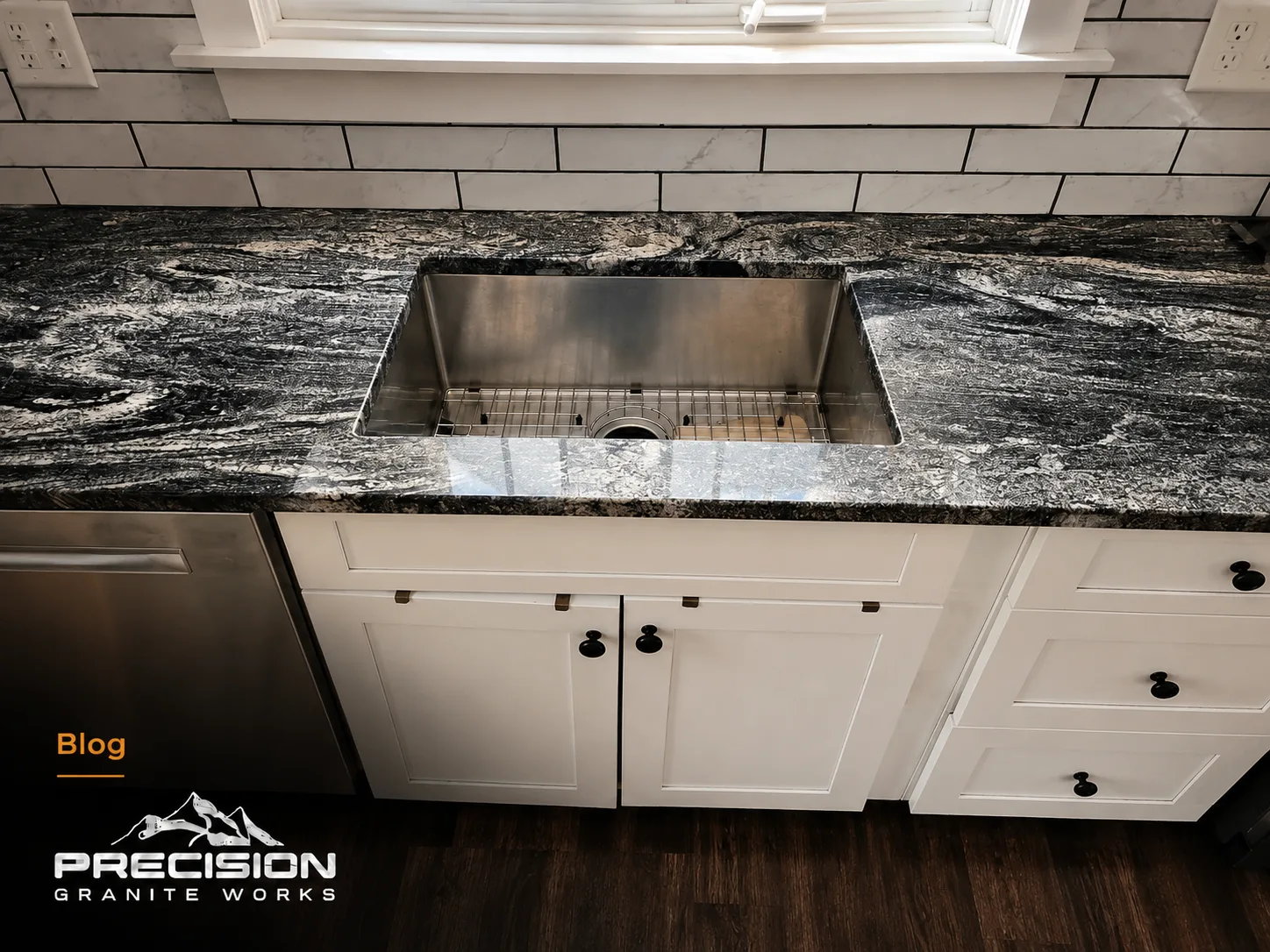
When you're investing in new granite countertops, the sink choice is not just a small detail at the end of the project.
It's one of the decisions that affects the entire countertop plan.
Your sink affects how the stone is measured, cut, polished, supported, and installed. It also changes how the finished kitchen looks and how easy the sink area is to clean every day.
That's why homeowners should choose their sink before templating, not after.
So, when comparing an undermount sink vs. a drop-in sink for granite countertops, which one is better?
For most granite countertop projects, an undermount sink is the preferred choice. It creates a cleaner, more seamless look, makes the countertop easier to wipe down, and shows off the polished stone edge around the sink opening. A drop-in sink can still be used with granite, but it sits on top of the counter and creates a raised rim. The best choice depends on your budget, sink style, cabinet space, and whether the countertop is being newly fabricated or modified.
Here's what homeowners should know before choosing a sink for granite, quartz, quartzite, or other stone countertops.
Why Sink Choice Matters Before Templating
Sink choice matters because granite is fabricated around the sink you select.
Once the stone is measured, cut, polished, and installed, changing the sink can become expensive, difficult, or sometimes not practical at all.
Before templating, a fabricator needs to know the exact sink being used. Not just "single bowl" or "undermount," but the actual sink model, dimensions, installation type, and placement.
That information helps the fabricator:
- Plan the exact sink cutout size and shape
- Position the sink correctly within the cabinet
- Determine faucet and accessory hole locations
- Check cabinet clearance
- Understand support requirements
- Finish the visible stone edge around the sink opening
- Avoid layout issues before the stone is cut
This is especially important with undermount sinks because the granite edge around the sink opening remains visible. That edge needs to be cut cleanly and polished properly.
With a drop-in sink, the rim covers the cutout edge, which gives the project a little more forgiveness visually — but also creates a different look and cleaning experience.
The sink may seem like a separate purchase, but from a fabrication standpoint, it is part of the countertop design.
What Is an Undermount Sink?
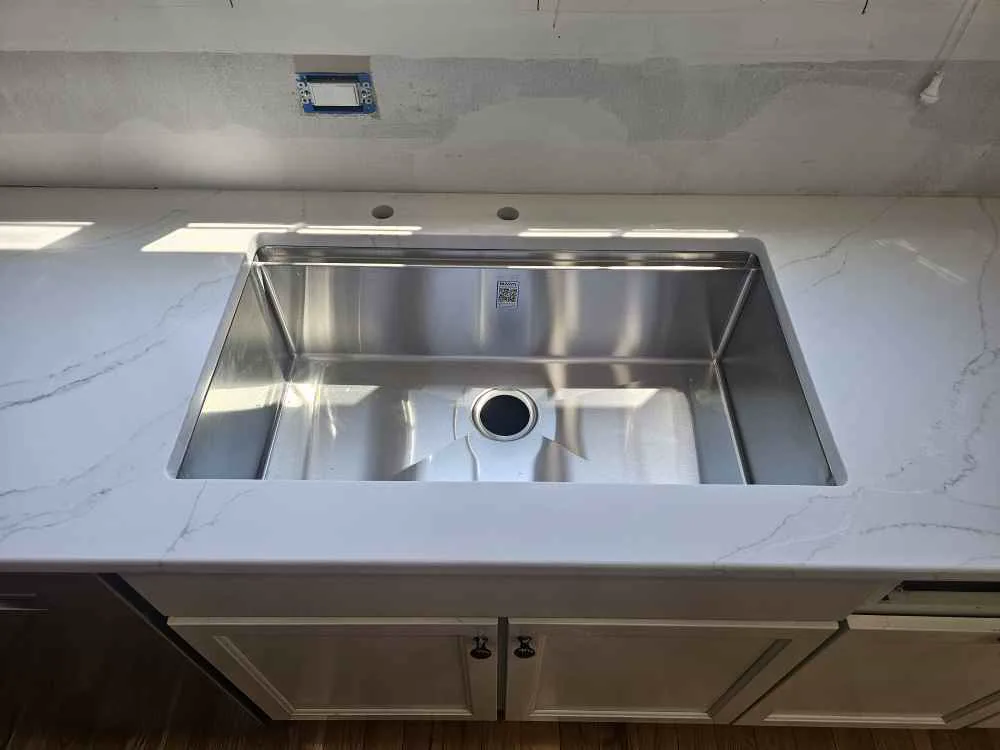
An undermount sink is installed underneath the countertop.
Instead of sitting on top of the granite, the sink is mounted below the stone. The granite edge becomes the visible rim around the sink opening, creating a smooth transition from countertop to basin.
This is one of the reasons undermount sinks are so popular with granite countertops. They create a clean, finished look and allow the stone to remain the focus.
An undermount sink is a good choice if you want:
- A cleaner, more seamless appearance
- Easier daily wipe-downs
- No raised rim around the sink
- A more custom-looking countertop
- A finished stone edge around the sink opening
The biggest everyday benefit is cleanup. With an undermount sink, you can wipe crumbs, water, and small debris directly from the countertop into the sink. There's no rim sitting on top of the stone to catch residue.
Undermount sinks require more precise fabrication. Because the edge of the stone is visible, it needs to be shaped and polished carefully. The sink also needs to be mounted and supported correctly beneath the countertop. That's why the exact sink should be selected before fabrication begins.
What Is a Drop-In Sink?
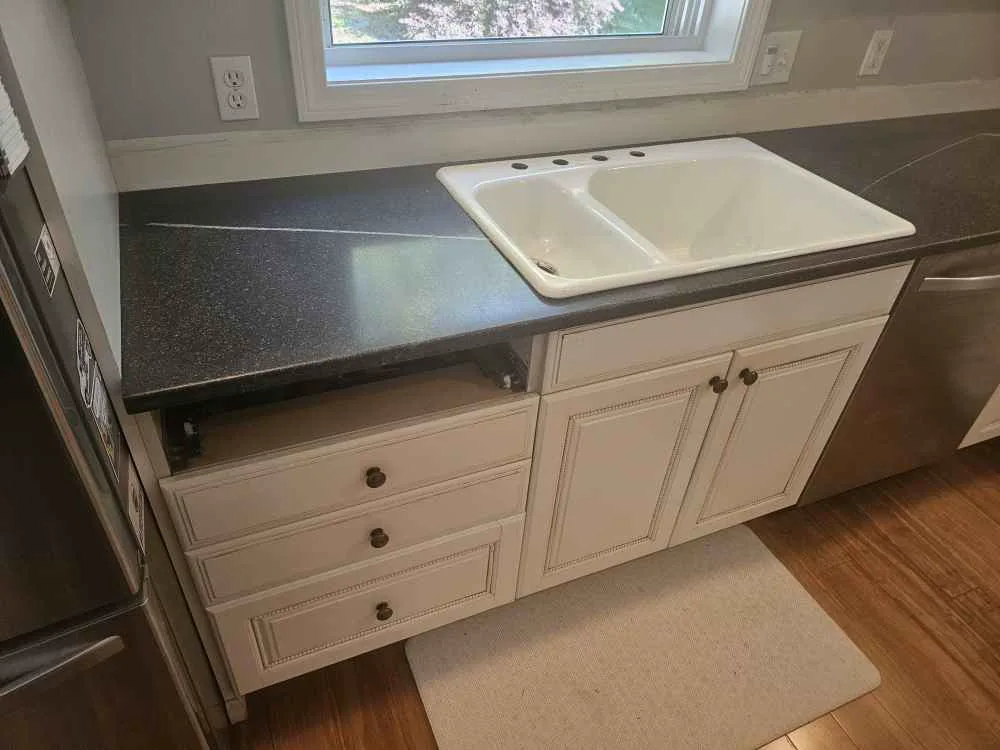
A drop-in sink, also called a top-mount sink or self-rimming sink, is installed from above the countertop.
The sink drops into the cutout, and the rim of the sink rests on top of the granite. That rim covers the edge of the countertop cutout.
Drop-in sinks are common in older kitchens, laminate countertop projects, laundry rooms, utility spaces, and budget-conscious updates. They can also be useful when replacing an existing sink and working with an existing countertop opening.
A drop-in sink may be a good choice if you want:
- A simpler installation
- A more budget-friendly sink option
- A replacement option for an existing top-mount sink
- A practical choice for a utility area or secondary space
Drop-in sinks can absolutely be used with granite countertops — there is nothing technically wrong with that. The main difference is the finished look. Because the rim sits on top of the stone, a drop-in sink does not create the same seamless transition as an undermount sink. It also creates a raised edge where crumbs, water, soap residue, and debris can collect.
Which Sink Looks Better With Granite Countertops?
For most homeowners, an undermount sink looks better with granite countertops.
Granite is a premium surface. An undermount sink allows the stone to feel more finished because the polished edge around the sink opening becomes part of the design. There is no rim sitting on top of the counter. The eye moves from stone to sink more naturally, and the finished look feels cleaner, more open, and more intentional.
That's why undermount sinks are the standard in new granite countertop installations.
A drop-in sink can still look good, especially if the sink itself has a style you prefer. But if the goal is a clean, custom-looking kitchen countertop, undermount is usually the better choice.
Which Sink Is Easier to Clean?
An undermount sink is usually easier to clean with granite countertops.
The reason is simple: there is no raised rim on top of the stone. You can wipe crumbs, water, coffee spills, and everyday mess directly from the countertop into the sink. In a busy kitchen, that makes a real difference.
With a drop-in sink, the raised rim can collect crumbs, soap residue, moisture, and grime. The caulk line around the sink rim may also need attention over time. If easy maintenance is a priority, undermount usually wins.
Which Sink Costs More to Install?
An undermount sink usually costs more to fabricate and install than a drop-in sink.
That's because an undermount sink requires a more precise cutout and a finished, polished stone edge around the opening. The sink also needs to be mounted securely underneath the countertop. With a drop-in sink, the rim covers the cutout edge, so the fabrication approach differs.
The final cost also depends on the sink style. A large single-bowl sink, farm sink, workstation sink, specialty shape, or oversized sink may require more planning and support.
For many homeowners, the extra cost of an undermount sink is worth it for the improved look and easier cleaning. If you're upgrading to granite, the sink is part of the overall investment.
Can You Use a Drop-In Sink With Granite?
Yes — you can use a drop-in sink with granite countertops.
A drop-in sink may make sense in situations such as:
- Budget-conscious projects
- Replacing an existing top-mount sink
- Utility rooms or laundry rooms
- Wet bars or secondary sinks
- Specific cabinet or plumbing limitations
A drop-in sink will not give the same seamless look as an undermount. For a main kitchen with new granite countertops, most homeowners prefer the cleaner finish of an undermount. For utility or secondary spaces, a drop-in is often the practical choice.
Can You Replace a Sink Later?
Replacing a sink later can be tricky once granite countertops are already installed. This is one of the biggest reasons to choose the sink before templating.
If you have a drop-in sink, replacing it with another drop-in may be possible if the new sink fits the existing cutout. But if the new sink is a different size or shape, the granite may need to be modified.
Changing from a drop-in to an undermount sink later is more complicated. The original cutout may not be shaped, sized, or polished correctly for an undermount, where the stone edge is visible. The safest approach is to choose the sink you actually want before the granite is fabricated — it saves time, money, and frustration later.
What Is Sink Reveal?
If you choose an undermount sink, your fabricator may talk with you about the sink reveal — how the countertop edge lines up with the sink below.
There are three common reveal styles:
- Positive reveal — a small amount of the sink rim is visible beneath the stone
- Negative reveal — the granite slightly overhangs the sink rim
- Zero reveal — the countertop edge lines up closely with the inside edge of the sink
Each option creates a slightly different look and cleaning experience. The right choice depends on the sink, the countertop material, cleaning preference, and the fabrication plan. This is another reason the exact sink model matters — the dimensions, corner shape, and rim style all affect how the cutout is made.
Faucet Holes and Accessories Need to Be Planned Early
The sink choice also affects faucet and accessory placement. Before fabrication, you'll want to decide which holes need to be drilled in the granite.
Common options include:
- Main faucet
- Soap dispenser
- Filtered water faucet
- Air switch for garbage disposal
- Side sprayer
- Instant hot water dispenser
Faucet placement also depends on sink size, cabinet depth, backsplash, and window trim clearance. These are details that need to be reviewed before templating — granite cannot be easily drilled after installation without risk of damage.
Cabinet Space and Sink Size Matter
Not every sink fits every cabinet. This is especially important if you want a large single-bowl sink, deep undermount, farm sink, workstation sink, or specialty sink.
Before choosing a sink, confirm:
- Sink base cabinet width and interior clearance
- Sink depth and drain location
- Faucet location and backsplash clearance
- Garbage disposal and dishwasher connection requirements
- Plumbing space beneath the cabinet
A sink that looks perfect online may not work in your specific cabinet. Your fabricator can help you confirm fit before the stone is cut.
Support Requirements for Undermount Sinks
Undermount sinks need proper support. The sink should not rely only on adhesive or caulk — it needs to be mounted in a way that supports the weight of the sink, water, dishes, and daily use.
Support methods vary depending on the sink, cabinet, and countertop material. Larger sinks, heavy sinks, farm sinks, and workstation sinks may need more support planning than a standard sink. This is why the fabricator needs to know which sink you're using before fabrication begins.
What Homeowners Should Know Before Choosing a Sink
Before choosing between an undermount sink and a drop-in sink, think about how you actually use the kitchen. Do you cook often? Do you wash large pans? Do you want one large bowl or two smaller bowls? Do you want a workstation sink with accessories? Do you need a garbage disposal?
Also think about the finished look. If you want the granite to feel clean, seamless, and custom, undermount is usually the better choice. If budget, replacement flexibility, or a specific sink style matters more, a drop-in may make sense.
Before templating, homeowners should know:
- Which sink style they want and the exact sink model
- Whether the sink fits the cabinet
- Whether faucet placement and accessory holes have been decided
- Whether plumbing changes are required
- Whether backsplash or window trim affects faucet clearance
- Whether the sink needs extra support
You don't need to figure everything out alone. Our team can walk you through what details matter before the stone is cut.
Fabricator Recommendation: Undermount Usually Makes Sense for Granite
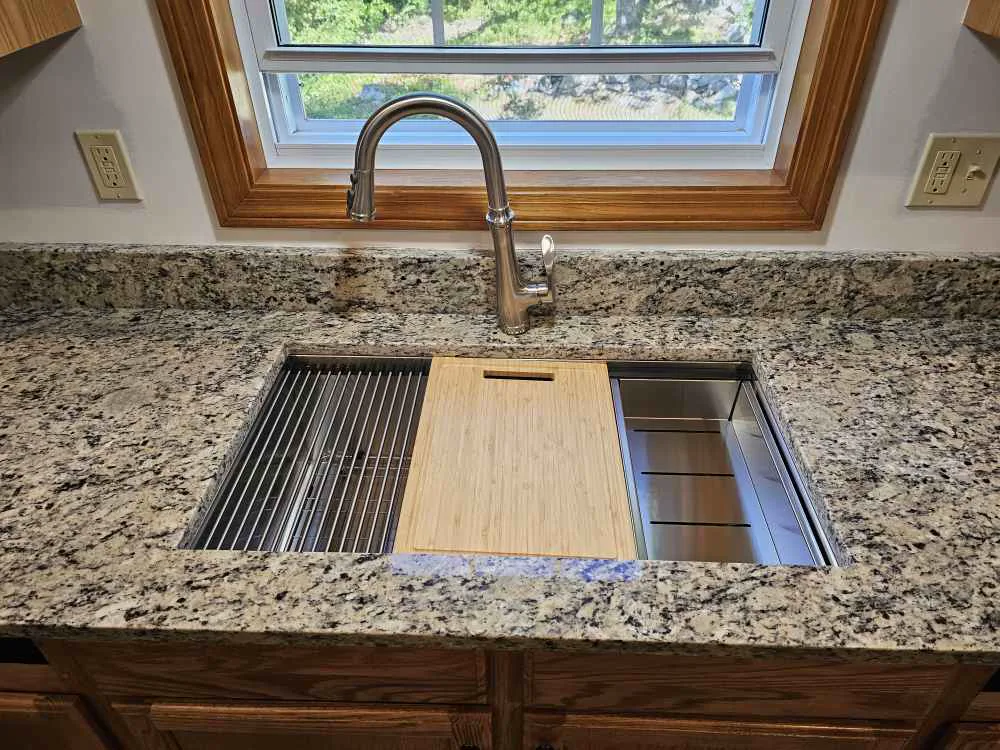
For most granite countertop projects, an undermount sink is the recommended choice. It looks cleaner, makes daily cleanup easier, and allows the finished stone edge around the sink opening to become part of the design. If you're investing in granite countertops in New Hampshire, an undermount sink often gives the project the polished look homeowners expect.
That said, the best sink is the one that fits the project. A drop-in sink may still be a good choice for certain budgets, utility spaces, replacement projects, or cabinet conditions.
The most important thing is to choose the sink early and make sure it works with the countertop, cabinet, faucet, and plumbing plan.
Which Sink Is Better for Granite Countertops?
For most kitchens, an undermount sink is better for granite countertops because it creates a seamless look, makes cleaning easier, and highlights the finished stone edge. A drop-in sink can still be used with granite, but it sits on top of the countertop and creates a raised rim.
If you're planning new granite countertops, choose your sink before templating. The sink affects the cutout, reveal, faucet holes, support, cabinet fit, and overall finished appearance.
Precision Granite Works serves homeowners across New Hampshire — including Concord, Manchester, Laconia, Dover, Portsmouth, Rochester, Bedford, Hooksett, and the Seacoast. We can help you compare sink options, review the details that affect fabrication, and make sure your countertop project is planned correctly before the stone is cut.
Contact Precision Granite Works to talk through your sink options, material choices, templating, and installation plan.
Frequently Asked Questions
Is an undermount sink better for granite countertops?+
Can you use a drop-in sink with granite countertops?+
Which sink is easier to clean, undermount or drop-in?+
Does an undermount sink cost more to install?+
Can you replace a sink after granite countertops are installed?+
What is a sink reveal on an undermount sink?+
Do faucet holes need to be planned before granite fabrication?+
How do I know if a sink will fit my cabinet?+
Ready to Start Your Project?
Contact Precision Granite Works for a free consultation and quote at our Epsom, NH showroom.
About the Author
Written by the team at Precision Granite Works — New Hampshire's family-owned countertop fabricators. Jillian and Shawn Woodward and their team serve homeowners and builders across all of NH from our Epsom showroom.