How Much Do Granite Countertops Cost in New Hampshire? A Homeowner's Guide
Trying to budget for granite countertops in New Hampshire? The final cost depends on more than square footage. Stone selection, layout, edge profile, sink cutouts, backsplash choices, removal, cabinet condition, and installation access can all affect your estimate.
By Precision Granite Works Team · Precision Granite Works, Epsom NH
If you're planning a kitchen update, one of the first questions on your mind is probably, "How much do granite countertops cost in New Hampshire?"
It's a practical question. Before you visit a showroom, choose a slab, or schedule an in-home measurement, you want to know what kind of budget you may be looking at.
The honest answer is that granite countertop pricing is not one flat number.
The cost of granite countertops depends on the stone selected, the total square footage, kitchen layout, edge profile, sink cutout, faucet holes, appliance openings, backsplash details, removal of existing countertops, cabinet condition, and installation access.
That's not meant to avoid the question. It's how countertop projects are actually priced.
A small bathroom vanity, a simple kitchen with straight countertop runs, and a large kitchen with an island, farm sink, cooktop, and full-height backsplash are all very different projects. Even if two kitchens have similar square footage, the final quote can be different because the work involved is different.
If you're trying to budget for granite countertops in Epsom, Concord, Manchester, the Lakes Region, the Seacoast, Southern New Hampshire, or nearby areas of Maine and Vermont, this guide will help you understand what affects the final estimate and how to get a more accurate number.
Why There Isn't One Flat Price for Granite Countertops
A lot of homeowners start by searching for a square-foot price. That makes sense. It feels like the easiest way to estimate the cost.
The problem is that granite countertops aren't priced like paint, carpet, or basic flooring.
The stone itself is only part of the project. A complete countertop estimate also includes details like fabrication, edge profile, sink cutout, seam placement, removal of old countertops, backsplash planning, and installation conditions.
Two kitchens can have the same square footage and still have different costs.
For example, one kitchen may have a simple layout with one sink cutout and a standard eased edge. Another may have a large island, multiple seams, a decorative edge, a cooktop opening, an undermount sink, and old tile countertops that need to be removed.
Those are not the same job.
That's why a project-specific quote is so important. A rough price range can help with early budgeting, but an accurate granite countertop estimate needs to be based on your actual kitchen.
Why Square-Foot Pricing Can Be Misleading
Square-foot pricing is not useless, but it can be incomplete.
Some advertised prices only refer to certain materials. Others may include a standard edge but not removal. Some may not include sink cutouts, faucet holes, backsplash, or installation conditions specific to your home.
That can make online pricing confusing.
A homeowner may see a low number and assume it includes the full project from start to finish. Then, once the actual details are added, the price changes.
This is why it's better to ask what is included rather than focusing only on the square-foot number.
A complete countertop estimate should consider the full scope of the project, not just the amount of stone.
What Actually Affects Granite Countertop Cost in NH?
The final cost of granite countertops in New Hampshire is shaped by several project details. Some are obvious, like the material and size of the kitchen. Others are easier to overlook until the project is being measured.
Here are the main factors that affect a granite countertop quote.
Stone Selection
Granite is a natural stone, and every slab is different.
Some granite colors and patterns are more common and easier to source. Others are more unique, dramatic, or limited in availability. The slab you choose can have a major impact on the final price.
A more common granite may be a good fit if you want the beauty and durability of natural stone while staying within a more modest budget. A more exotic granite with bold movement, rare coloring, or a high-end look may cost more.
This is one reason it helps to see materials in person. Photos online don't always show the true color, movement, depth, or finish of the stone. A slab that looks simple in a photo may have much more character in person. When you visit a showroom, you can compare options more realistically and get a better sense of what fits your home and budget.
Square Footage
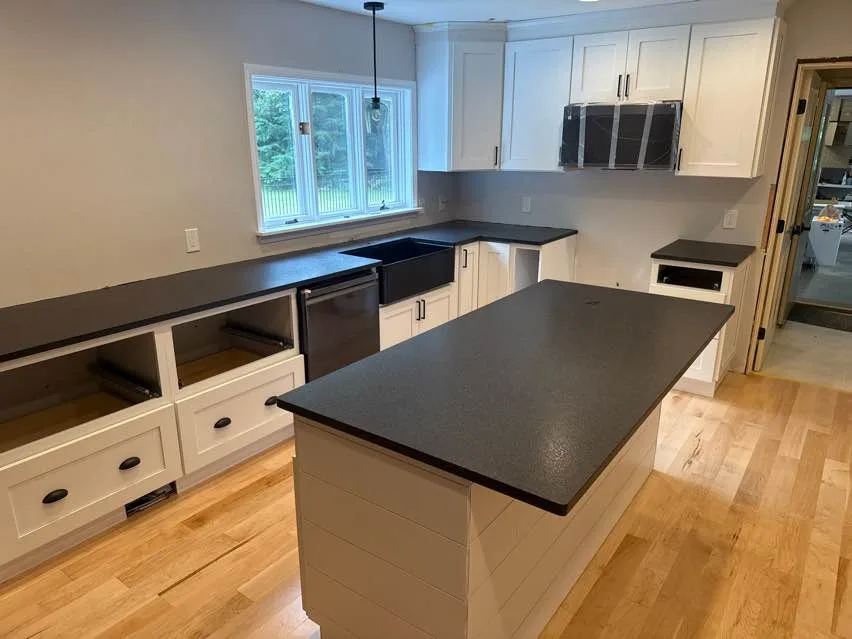
Square footage still matters. A larger project usually requires more material, more fabrication time, and more installation labor.
But square footage is only the starting point.
A small kitchen with a complicated layout can sometimes involve more planning than a larger kitchen with simple straight runs. An island, peninsula, raised bar, angled wall, or unusual corner can affect how the stone is cut and installed.
So while measurements are important, they don't tell the whole story by themselves.
Kitchen Layout and Seams
Your kitchen layout affects how the stone will be fabricated.
A straight countertop run is usually simpler than a kitchen with an island, peninsula, angled cabinets, tight corners, or multiple appliance openings. The more complex the layout, the more planning is needed.
Seam placement is part of that planning. A fabricator considers slab size, cabinet support, sink location, appliance openings, and the natural pattern of the stone when deciding where seams should go. Good seam planning is both practical and visual — it helps the countertop fit properly and look intentional.
Edge Profile
The edge profile is the shape of the exposed countertop edge.
A standard eased edge is popular because it's clean, durable, and works with many kitchen styles. More decorative edges, such as ogee, bullnose, or other shaped profiles, may add cost because they require additional fabrication time.
The best edge depends on your kitchen style, cabinet design, and personal preference. It's a small design choice that can affect both the look and the estimate.
Sink Cutout
The sink cutout is one of the most important parts of the countertop project.
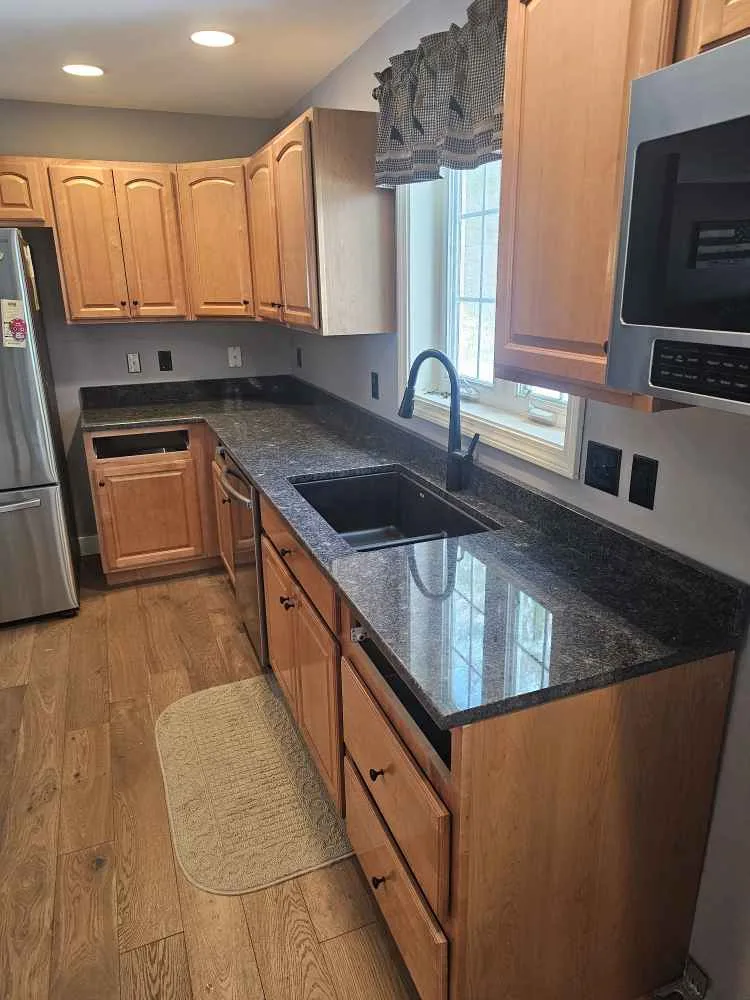
If you choose an undermount sink, the stone around the sink opening needs to be cut and finished carefully because the edge remains visible. Farm sinks, oversized sinks, and specialty sinks can also require additional planning and fabrication.
If you're replacing your sink, the fabricator will need the sink model and dimensions before fabrication begins. This is not something to figure out after the stone has already been cut. If you plan to keep your existing sink, that may be possible depending on the sink style, condition, and compatibility with the new countertop material.
Faucet Holes and Accessories
Faucet holes and accessory holes also need to be planned before fabrication. Your countertop may need holes for:
- Main faucet
- Soap dispenser
- Filtered water faucet
- Air switch
- Side sprayer
- Instant hot water dispenser
Stone is fabricated to match the final layout, so it's best to make these decisions early.
Backsplash Choices
Backsplash decisions can affect the project more than homeowners expect.
Some people keep their existing tile backsplash. Others remove it and install new tile after the countertops are in. Some choose a short granite backsplash. Others upgrade to a full-height stone backsplash for a more seamless, finished look.
A full-height stone backsplash creates a beautiful, high-end result, but it requires more material, more fabrication, and more installation time. If your existing countertop has a raised backsplash attached to it, removing that piece may expose unfinished wall areas that need patching, painting, or new tile work.
This is why backsplash planning should happen before the final quote is prepared.
Removal of Existing Countertops
If your old countertops need to be removed, that may affect the estimate.
Laminate, tile, solid surface, butcher block, and existing stone all come out differently. Tile countertops, for example, can involve more labor and mess than many homeowners expect.
Removal can also reveal hidden issues such as:
- Water damage near the sink
- Loose cabinet sections
- Old adhesive buildup
- Uneven cabinet tops
- Wall damage behind the backsplash
A clear estimate should explain whether removal is included and whether there are any conditions that could change the scope once the old tops come off.
Cabinet Condition and Levelness
New granite countertops need a solid, level foundation.
If cabinets are out of level, loose, damaged, or poorly supported, those issues need to be corrected before templating or installation. Stone should not be forced to sit on an uneven cabinet run.
This does not always mean you need new cabinets. Sometimes a contractor can secure, shim, or reinforce existing cabinets before the countertop template. But if the sink base has serious water damage or the cabinet boxes are failing, repairs or replacement may be needed first.
This is one of the reasons an in-home measurement matters. A fabricator is not just looking at the countertop size — they're also looking at whether the space is ready for new stone.
Overhangs and Support
Islands, peninsulas, breakfast bars, and seating areas may need additional support.
Granite is strong, but unsupported overhangs can be a concern depending on the depth, material thickness, layout, and how the countertop will be used. Support brackets, corbels, steel supports, or other reinforcement may be recommended. If you want seating at an island or peninsula, bring that up early in the quote process.
Installation Access
The path into the home matters.
Granite pieces are heavy and need to be handled carefully. Tight staircases, narrow doorways, long walks from the driveway, steep entries, second-floor kitchens, or limited parking can all affect installation planning.
This is especially relevant in New Hampshire, where homes vary widely. A newer home in Southern NH may have easy access. A lake house in the Lakes Region or an older home near the Seacoast may have tighter access, uneven entries, or narrow interior spaces. Good planning helps the installation go more smoothly.
Granite vs. Quartz vs. Quartzite: Cost Considerations
Many homeowners compare granite, quartz, and quartzite when budgeting for new countertops. That's a smart comparison, but it's important to understand that each material has its own pricing variables.
Granite
Granite is a natural stone known for durability, character, and long-term appeal. It comes in a wide range of colors and patterns, from subtle and classic to bold and dramatic. Pricing depends heavily on the slab selected — some options are more accessible, while rarer or more dramatic slabs may cost more. For many New Hampshire homeowners, granite offers a strong balance of beauty, durability, and value.
Quartz
Quartz is an engineered surface made with quartz minerals, resins, and pigments. It's popular because the patterns are more consistent and it does not need sealing the same way natural stone does. Pricing depends on brand, design, thickness, and project details. Some options are more affordable, while premium designs can be priced closer to higher-end natural stone.
Quartzite
Quartzite is a natural stone known for strength and dramatic visual movement. It's often chosen by homeowners who want a high-end natural stone with a lot of character. Quartzite often trends higher than many granite options because of the material itself and the fabrication involved — but the final cost still depends on the specific stone and project details.
Which Material Costs Less?
There isn't one universal answer. A common granite may cost less than a premium quartz. A premium granite may cost more than some quartz options. Quartzite often trends higher, but layout, edge detail, cutouts, backsplash, and installation conditions still affect the final quote.
The best way to compare is to choose materials that fit your style and then price the actual project.
Why Templating Matters
Templating is the step where precise measurements are taken before your countertops are fabricated. This is not the same as a rough measurement for budgeting — a template captures the actual shape of the cabinets, walls, corners, sink placement, appliance openings, overhangs, and other details that affect fabrication.
In many homes, walls are not perfectly straight. Corners are not perfectly square. Cabinets may be slightly out of level. Because granite countertops are cut before they arrive at your home, accuracy matters. A professional template helps determine:
- Exact countertop dimensions
- Sink and cooktop locations
- Seam placement
- Overhangs and finished edges
- Backsplash dimensions
- Appliance clearances and support needs
This is where a project moves from "rough estimate" to "ready for fabrication."
What a Complete Granite Countertop Estimate Should Include
When comparing granite countertop estimates, make sure you understand what each one includes. A complete estimate may cover:
- Stone selection and approximate square footage
- Template and fabrication
- Edge profile
- Sink cutout
- Faucet holes
- Backsplash details, if included
- Removal of existing countertops, if included
- Installation
- Overhang support requirements, if needed
- Notes about anything not included
This matters because two estimates may look different but may not cover the same scope of work. Before choosing based on price alone, make sure you're comparing the same project.
The Lowest Estimate Isn't Always the Best Value
It's natural to care about price. Countertops are a real investment.
But the cheapest estimate is not always the best value. Granite countertops are something you'll see and use every day. A good finished result depends on accurate measurements, careful fabrication, smart seam placement, proper support, and professional installation.
A low quote that skips important details may not help you in the long run. That doesn't mean you need to choose the most expensive option — it means you should look for a fair, complete estimate from a fabricator who takes the time to understand your project.
How to Get a More Accurate Granite Countertop Estimate
You don't need to have every detail finalized before requesting a quote. But the more information you can provide, the more realistic your starting estimate will be. Helpful information includes:
- Rough measurements of your countertops
- Wide photos of the full kitchen and each countertop run
- Photos of the sink area, island or peninsula, and existing backsplash
- Notes about whether the cabinets are staying
- Whether you want granite, quartz, quartzite, or are still deciding
- Whether you are replacing the sink or changing appliances
- Whether the old countertops need to be removed
- Any concerns about water damage, soft spots, or uneven cabinets
A simple sketch with rough dimensions can also help. Even a hand-drawn layout gives the fabricator a better starting point.
What Photos Should You Send Before Visiting the Showroom?
Before visiting the showroom or requesting a granite countertop estimate, take a few clear photos of the space. Try to include:
- A wide shot of the entire kitchen
- Each wall or countertop run
- The sink area and stove, range, or cooktop area
- The island or peninsula
- The dishwasher and refrigerator openings
- Any existing backsplash
- Any damaged areas or tight access points
These photos help start the conversation. They can show whether your sink is undermount or drop-in, whether your island has seating, and whether the project appears simple or more involved. Photos do not replace an in-home measurement, but they do help create a better starting estimate.
Local Considerations for New Hampshire Countertop Projects
Countertop projects can look very different from one New Hampshire home to another.
A kitchen in Concord may have a completely different layout from a lake house in the Lakes Region. A historic home near the Seacoast may have older walls, tighter rooms, or more challenging access. A newer home in Southern New Hampshire may have a larger island, open layout, and more modern cabinetry.
Homes in Epsom, Manchester, Bedford, Hooksett, Portsmouth, Rochester, Laconia, Wolfeboro, Meredith, Gilford, and surrounding communities all come with different project conditions.
A granite countertop estimate should account for the home, the layout, the access, and the details that affect the finished project — not a generic number that ignores the real space.
Precision Granite Works works with homeowners throughout Epsom, Concord, Manchester, the Lakes Region, the Seacoast, Southern New Hampshire, and nearby areas of Maine and Vermont.
So, How Much Do Granite Countertops Cost in New Hampshire?
The cost of granite countertops in New Hampshire depends on the stone selected, square footage, layout, edge profile, sink cutout, faucet holes, appliance openings, backsplash choices, removal of existing countertops, cabinet condition, support needs, and installation access.
A square-foot price can be a useful starting point, but it does not tell the whole story.
The most accurate way to price a granite countertop project is to share measurements, photos, material preferences, and project details with a fabricator. From there, an in-home measurement or template can confirm the final scope.
If you're planning new granite countertops in Epsom, Concord, Manchester, the Lakes Region, the Seacoast, Southern New Hampshire, or nearby parts of Maine and Vermont, Precision Granite Works can help you review material options, understand what affects the estimate, and prepare a quote based on your actual project.
Visit our showroom at 1022 Dover Road, Epsom, NH, call 603-736-0004, or request a free estimate online. We're happy to walk you through your options.
Frequently Asked Questions
How much do granite countertops cost in New Hampshire?+
Why can square-foot pricing be misleading for granite countertops?+
What affects the cost of granite countertops?+
Is granite more expensive than quartz?+
What should I send to get a granite countertop estimate?+
Does countertop installation cost depend on the kitchen layout?+
Do backsplash choices affect the cost of granite countertops?+
Ready to Start Your Project?
Contact Precision Granite Works for a free consultation and quote at our Epsom, NH showroom.
About the Author
Written by the team at Precision Granite Works — New Hampshire's family-owned countertop fabricators. Jillian and Shawn Woodward and their team serve homeowners and builders across all of NH from our Epsom showroom.