Can You Replace Countertops Without Replacing Cabinets? What Homeowners Should Know
Wondering whether you can replace countertops without replacing your cabinets? In many kitchens, the answer is yes. As long as the existing cabinets are level, structurally sound, and properly secured, new granite, quartz, or quartzite countertops can often be installed on the current cabinet layout.
By Precision Granite Works Team · Precision Granite Works, Epsom NH
If your cabinets are still in good shape but your countertops are worn, dated, stained, or just not your style anymore, you may be wondering if you really need to take on a full kitchen remodel.
The short answer is yes. In many kitchens, you can replace countertops without replacing cabinets. As long as your existing cabinets are level, structurally sound, and properly secured, new granite, quartz, or quartzite countertops can often be fabricated and installed directly on top of your current cabinet layout.
That's one of the reasons countertop replacement is such a popular update. It can dramatically change the look of a kitchen without the cost, timeline, and disruption of replacing everything.
But there's an important difference between "Can it be done?" and "Is your kitchen ready for it?" Before a fabricator templates your new countertops, they'll need to look at the condition of the cabinets, the layout, sink location, backsplash, appliance clearances, and whether any leveling or added support may be needed. The countertop itself is only one part of the project. What it sits on matters just as much.
Here's what homeowners should know before replacing countertops while keeping their existing cabinets.
Yes, You Can Often Replace Countertops and Keep Your Cabinets
A countertop-only replacement works well when the cabinet layout still makes sense for your home.
Maybe you like where your sink is. Maybe the island works. Maybe the cabinets are solid, but the old laminate, tile, or outdated stone is bringing the whole room down. In that case, replacing the countertops can be a smart way to refresh the kitchen without turning it into a full remodel.
This is common for homeowners who want to:
- Replace worn or dated laminate countertops
- Upgrade to granite, quartz, or quartzite
- Improve the kitchen before selling the home
- Keep cabinets that are still attractive and functional
- Avoid the cost of a full kitchen renovation
- Make the room feel cleaner, newer, and more finished
Sometimes new countertops also make the cabinets look better. A cabinet color or door style that felt dated can feel completely different once the old countertop is gone and the new surface is installed.
The key is making sure the cabinets are worth keeping. New stone countertops need a solid, level foundation. If the cabinets are sturdy and properly installed, countertop replacement without a full kitchen remodel is often very doable.
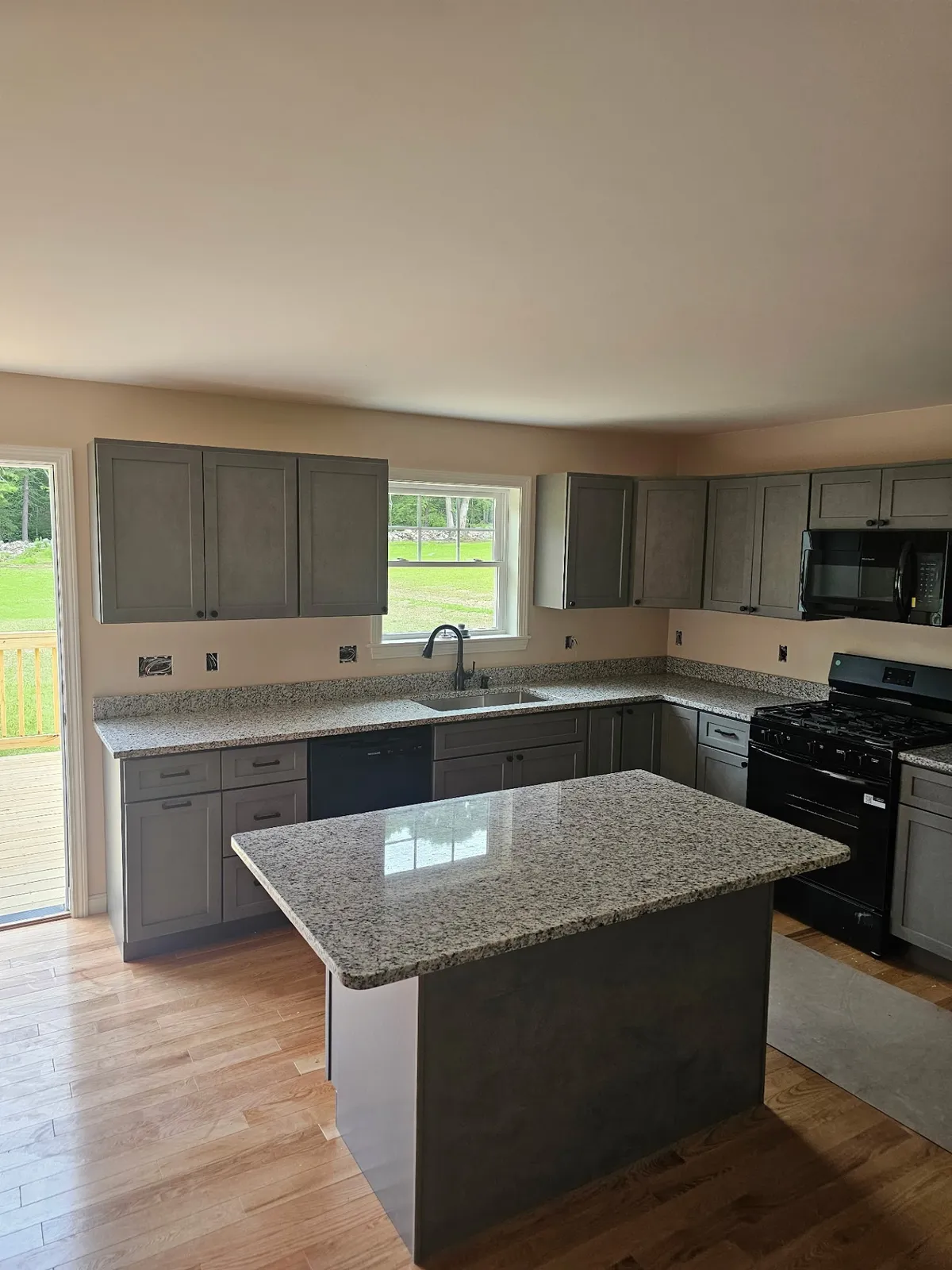
When Existing Cabinets Are Strong Enough
Granite, quartz, and quartzite are heavy materials. That doesn't mean your cabinets need to be brand new, but they do need to be in good condition.
A fabricator will typically look for cabinets that are:
- Level from side to side and front to back
- Securely fastened to the wall
- Solid at the cabinet boxes and joints
- Free from major water damage
- Not sagging, shifting, or separating
- Properly supported around sink areas, corners, islands, and overhangs
Older cabinets are not automatically a problem. In fact, many older cabinet boxes were built very well. The age of the cabinets matters less than their condition.
What you don't want is a beautiful new countertop sitting on cabinets that are soft, loose, uneven, or starting to fail. If the cabinets move or settle after installation, it can affect seams, caulk lines, sink areas, and long-term performance. That's why the cabinet structure has to be reviewed before the final template.
Can Old Cabinets Support Granite Countertops?
One of the most common questions homeowners ask is, "Can old cabinets support granite countertops?"
In many cases, yes. Old cabinets can support granite countertops as long as they are structurally sound, level, and properly secured. The concern isn't whether the cabinets are old. The concern is whether they're strong enough to support the new countertop material safely and evenly.
The sink base is one of the most important areas to inspect. Over time, leaks, moisture, and plumbing issues can weaken the cabinet below the sink. Sometimes the damage is obvious. Other times, it's hidden until the old countertops are removed.
A fabricator may look for warning signs such as:
- Soft or swollen cabinet sides
- Water damage under or around the sink
- Loose cabinet boxes
- Broken corner supports
- Sagging cabinet runs
- Gaps between cabinets and walls
- Uneven tops where the new stone would sit
- Unsupported overhangs or spans
If the cabinets are solid, granite may be a perfectly reasonable option. If there are weak areas, those may need to be repaired or reinforced before templating and installation. This is especially important with islands, peninsulas, seating overhangs, and wide openings. Depending on the layout, additional support brackets or other reinforcement may be needed.
What Happens to the Old Countertops?
In most countertop replacement projects, the old countertops are removed before the new ones are installed.
The removal process depends on what's currently there. Laminate, tile, solid surface, butcher block, and older stone all come apart differently. Some tops are screwed down. Some are glued. Some are tied into a backsplash, wall, or trim detail.
The goal is to remove the old countertop without damaging the cabinets underneath. But once the old tops come off, you may discover things that were not visible before, such as:
- Uneven cabinet tops
- Old adhesive buildup
- Water damage around the sink
- Loose cabinet sections
- Out-of-square walls or corners
- Wall damage behind an old backsplash
- Gaps that were hidden by the previous countertop
These issues don't always stop the project. Many can be corrected. But they need to be known before the new countertops are fabricated and installed. This is one of the reasons it's helpful to work with a fabricator who looks closely at the existing conditions instead of treating every countertop replacement like a simple swap.
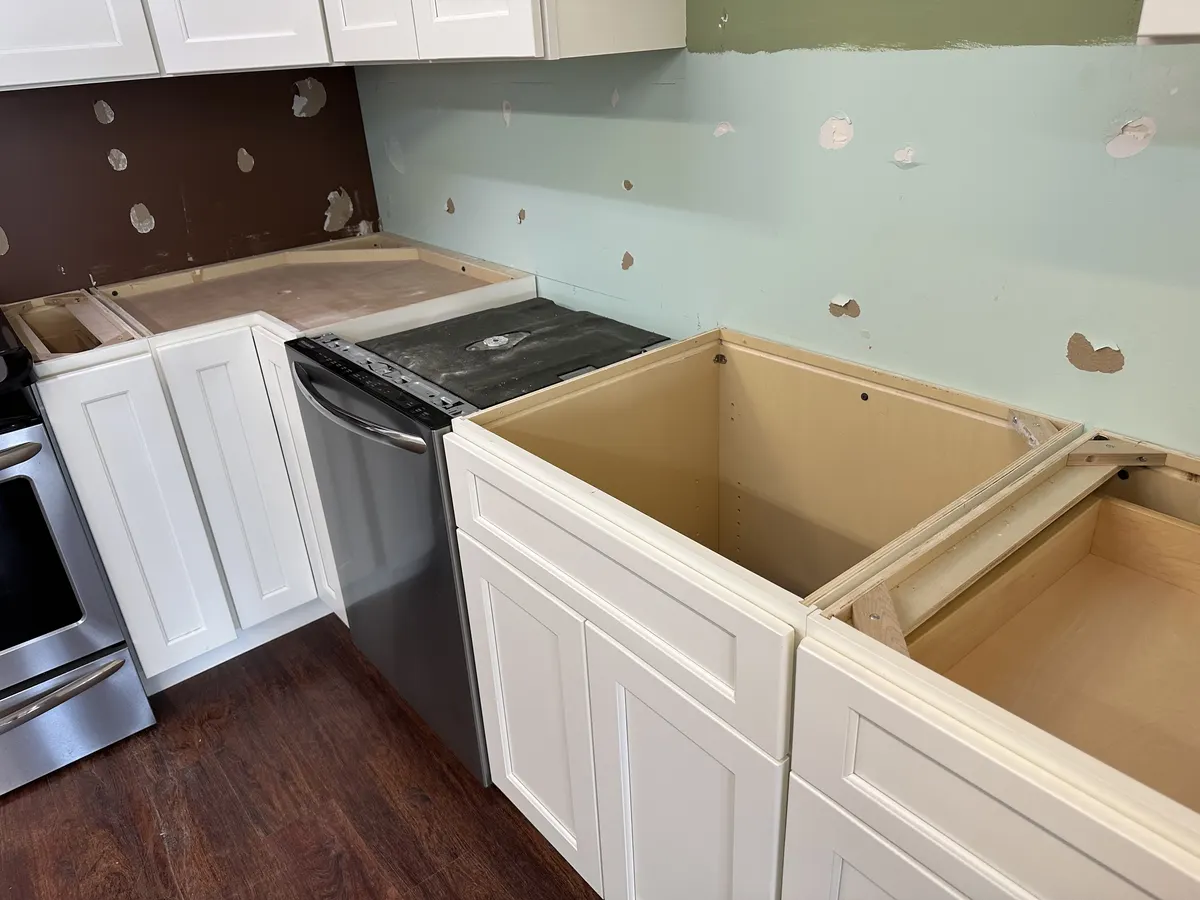
Sink, Faucet, Backsplash, and Appliance Details Matter
When homeowners think about replacing countertops, they usually picture the stone first. That makes sense — it's the visible surface. But the surrounding details are just as important. Your sink, faucet, backsplash, appliances, and overhangs all affect how the countertop is measured, fabricated, and installed.
Sink Considerations
Countertop replacement is often a good time to replace the sink. Many homeowners use the project as an opportunity to switch from a drop-in sink to an undermount sink. With granite, quartz, or quartzite, an undermount sink creates a clean look and makes daily cleanup easier because crumbs and water can be wiped directly into the sink.
But this needs to be decided before fabrication. The fabricator needs the sink information before the stone is cut. The sink model, cutout dimensions, mounting style, and placement all matter. This isn't something you want to figure out after the countertop has already been made. If you want to keep your existing sink, that may be possible, depending on the sink type, condition, and whether it works with the new material.
Faucet Holes and Accessories
Faucet layout also needs to be planned before fabrication. You'll want to know whether the countertop needs holes for a main faucet, soap dispenser, filtered water faucet, air switch, side sprayer, or instant hot water dispenser. These details may feel small, but they're important. Stone countertops are fabricated to fit the final layout. Changing your mind after installation can be difficult or, in some cases, not practical.
Backsplash Considerations
Backsplash planning is another piece homeowners sometimes overlook. If you currently have a raised 4-inch backsplash attached to your old countertop, removing it may expose unfinished wall areas. That wall may need patching, painting, tile, or another backsplash solution after the old top is removed.
If you have an existing tile backsplash, the situation depends on how it was installed and how closely it meets the countertop. Sometimes it can stay. Sometimes removing the old countertop may disturb it. Sometimes homeowners choose to remove it intentionally and update the whole area. Common backsplash options include keeping the existing tile, removing old tile and installing new tile after the countertops, adding a short stone backsplash, or choosing a full-height stone backsplash for a more seamless look. There isn't one right answer — it depends on your kitchen, your budget, and the finished look you want.
Appliance Clearances
Appliances also need to be considered before new countertops are made. Slide-in ranges, cooktops, dishwashers, refrigerators, and built-in appliances all have clearances that need to be respected. A change in countertop thickness, edge profile, or layout can affect how everything fits. This is another reason an in-home measurement matters — a fabricator isn't just measuring the length of the cabinets, they're looking at the whole space and how each piece needs to come together.
When Cabinet Repairs or Leveling May Be Needed
Sometimes the cabinets are good enough to keep, but they need a little work before the new countertops can be installed. That's common, especially in older homes. Floors settle. Cabinets shift. Previous remodels may not have been perfectly level. A sink base may have moisture damage while the rest of the kitchen is still in good shape.
Cabinet repairs or leveling may be needed if:
- The cabinet run is out of level
- One section sits higher or lower than the rest
- The sink base has water damage
- Cabinets are loose from the wall
- Cabinet boxes are separating
- An island or peninsula needs more support
- Previous modifications were not done correctly
Stone countertops need to sit on a flat, consistent surface. They should not be forced to bend or twist over uneven cabinets. If the base is not right, it can create problems with seams, support, and long-term durability.
In many cases, a contractor or cabinet professional can correct the issue before templating. That may involve securing cabinets, shimming, reinforcing weak areas, or making small repairs. In more serious cases, cabinet replacement may be the better decision. If the boxes are badly damaged, poorly built, or not expected to last, it may not make sense to invest in new countertops until the cabinets are addressed.
Why an In-Home Measurement Matters
Photos and rough measurements are helpful at the beginning of the quote process. They can give a fabricator a general idea of the layout and size of the project. But they don't tell the whole story.
An in-home measurement gives the fabricator a chance to see what's actually happening in the space. They can check the cabinet layout, walls, sink area, appliance openings, overhangs, corners, backsplash conditions, and overall readiness for templating. During the measurement process, a fabricator may review cabinet levelness, cabinet condition, sink location and type, faucet and accessory layout, seam placement, appliance clearances, overhang support, backsplash plans, edge profile, material thickness, and existing countertop removal details.
This step helps prevent surprises. It also gives homeowners a clearer understanding of what needs to happen before installation. A good measurement is not just about getting numbers — it's about making sure the project can be fabricated and installed correctly.
Countertop Replacement Without a Full Kitchen Remodel
A full kitchen remodel can involve cabinets, flooring, electrical work, plumbing, appliances, drywall, painting, and weeks of disruption. A countertop replacement is much more focused.
If your kitchen layout works and your cabinets are solid, new countertops can give the room a major visual upgrade without taking on the entire kitchen at once. This can be a smart option if your kitchen feels dated mainly because of the countertop surface. Older laminate, worn tile, stained counters, or a color that no longer fits your style can make the whole room feel tired. New granite, quartz, or quartzite can change that quickly.
It can also help tie the rest of the kitchen together. Cabinets, flooring, wall color, hardware, and backsplash choices often look different once the right countertop is in place. That's why countertop replacement can be such a practical middle ground. You're not ignoring the kitchen, but you're also not committing to a full renovation if you don't need one.
When Replacing Cabinets Makes More Sense
There are times when replacing the countertops alone is not the best choice. Cabinet replacement may make more sense if:
- The cabinet layout does not work for your household
- The cabinet boxes are badly damaged
- There is significant water damage
- There are mold concerns
- The cabinets are poorly built
- You plan to move plumbing or appliances
- You want to change the kitchen footprint
- The cabinets are unlikely to last long-term
This is worth thinking through carefully. New countertops are a long-term investment. You don't want to install quality stone on cabinets that may need to be removed in a year or two. If you're unsure, it's better to have the conversation before fabrication. A fabricator can help identify potential concerns and explain what needs to be addressed before moving forward.
What to Know Before Requesting a Countertop Quote
You don't need to have every detail finalized before reaching out for a quote. Most homeowners don't. But it does help to think through a few things before the conversation:
- Is your cabinet layout staying the same?
- Are you interested in granite, quartz, quartzite, or another material?
- Are you keeping your current sink or replacing it?
- Do you want an undermount sink?
- Is your backsplash staying or changing?
- Are any appliances being replaced?
- Have you noticed water damage, soft spots, or uneven areas?
- Do you have photos of the kitchen?
Photos can be especially helpful early in the process. Wide shots of the kitchen, close-ups of the sink area, appliance openings, corners, islands, and backsplash details can give the fabricator a better starting point. From there, an in-home measurement can confirm what's possible.
So, Can You Replace Countertops Without Replacing Cabinets?
Yes. In most kitchens, you can replace countertops without replacing cabinets as long as the cabinets are level, structurally sound, and properly secured.
A fabricator will look at the cabinet condition, layout, sink openings, appliance clearances, backsplash details, and support needs before templating new granite, quartz, or quartzite countertops. For homeowners who like their current kitchen layout, this can be one of the most effective ways to update the space without taking on a full remodel. The most important step is making sure the cabinets are ready before the new countertops are fabricated.
Visit Precision Granite Works
If you're thinking about putting new countertops on your existing cabinets, Precision Granite Works can help you look at the project, review material options, and understand what needs to happen before templating and installation.
Visit our showroom in Epsom, NH to see materials in person, ask questions, and get ideas for your project. Call us at 603-736-0004 or request a free estimate online.
Frequently Asked Questions
Can you replace countertops without replacing cabinets?+
Can old cabinets support granite countertops?+
What happens to my old countertops when new ones are installed?+
Do I need to replace my sink when I replace my countertops?+
When does it make more sense to replace cabinets instead of just countertops?+
Why does an in-home measurement matter for a countertop-only replacement?+
Ready to Start Your Project?
Contact Precision Granite Works for a free consultation and quote at our Epsom, NH showroom.
About the Author
Written by the team at Precision Granite Works — New Hampshire's family-owned countertop fabricators. Jillian and Shawn Woodward and their team serve homeowners and builders across all of NH from our Epsom showroom.