Can You Put Hot Pans on Granite Quartz Quartzite Marble and Soapstone
A stone may tolerate high heat and still be vulnerable when a very hot pan lands on one small area. Here is how granite, quartz, quartzite, marble, and soapstone differ, and why a good trivet remains the easiest protection.
By Precision Granite Works Team · Precision Granite Works, Epsom NH
You pull a roasting pan from the oven and need somewhere to set it down. Can it go straight on the countertop, or do you need to find a trivet first?
The practical answer is easy: use a heat-rated trivet or solid hot pad every time. Granite, quartz, quartzite, marble, and soapstone do not react to heat in the same way, but that one habit protects the surface, seams, adhesives, nearby caulk, and cabinet materials.
That does not mean every countertop is fragile. Some stones handle heat extremely well. The concern is often the sudden change between one very hot spot and the cooler area around it, or the hours of heat produced by an air fryer, slow cooker, griddle, or roaster.
Heat Resistance Does Not Mean Heat Proof
A countertop can tolerate high temperatures and still develop damage from a quick, concentrated blast of heat. The hot area expands while the cooler surrounding material changes less. That difference can add stress near an edge, seam, cutout, repair, or other vulnerable spot.
Time matters too. A hot pan set down for a few seconds is different from a slow cooker warming the same place all afternoon. Small appliances can release heat downward or sideways, and the base may trap that heat against the countertop.
A trivet creates a buffer and spreads the load over a safer landing area. It is inexpensive protection for a countertop that is much harder to repair or replace.
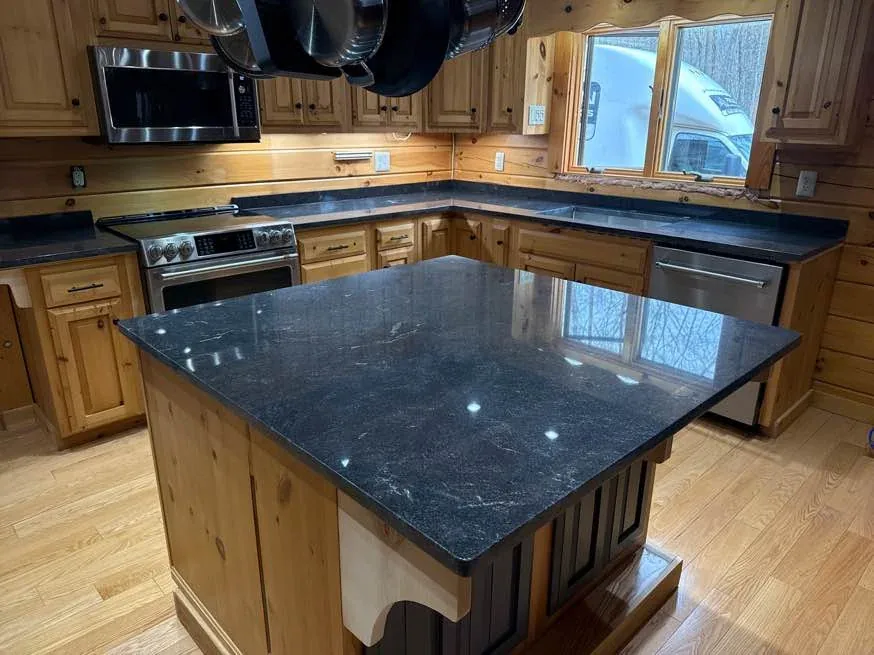
Granite Usually Handles Kitchen Heat Well
Granite is known for heat resistance, which is one reason it works so well in busy kitchens. Still, it is better to use a trivet than to make the countertop your regular landing spot for cookware straight from the oven.
The broad middle of a sound slab is not the only part of the installation that matters. A hot pan may end up beside a seam, near a sink corner, on a narrow strip in front of the cooktop, or over an area that contains resin or a repair. Sudden localized heat can put more stress on those areas.
Using a trivet also protects nearby caulk, seam adhesive, sealers, and backsplash joints. It protects the whole installation, including details that may respond to heat differently from the granite.
Explore our granite countertops for more information about the material.
Engineered Quartz Needs Reliable Heat Protection
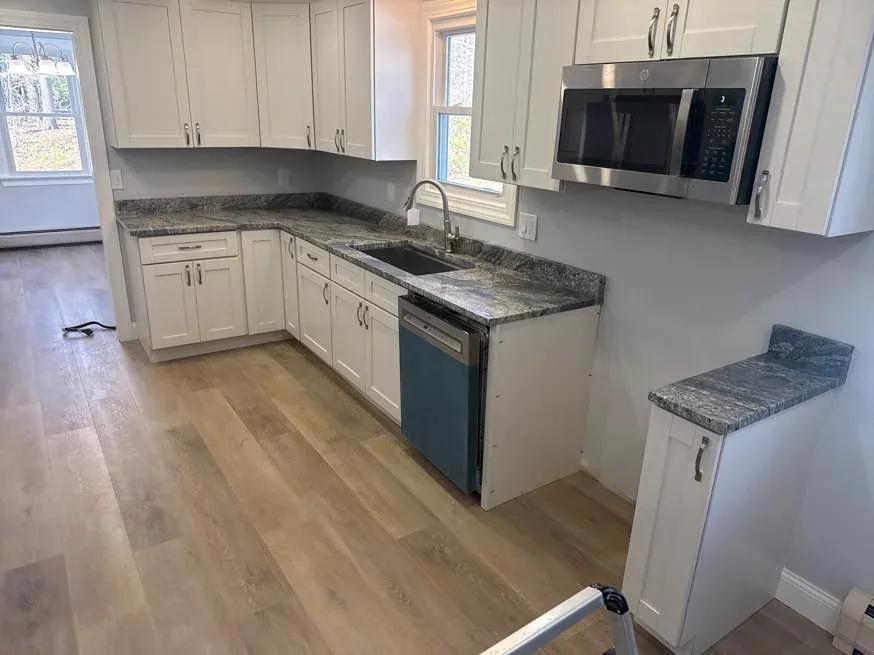
Quartz countertops contain crushed mineral held together with polymer resin. That resin helps create a consistent, low-maintenance surface, but it is more sensitive to heat than most natural stone.
Direct heat can leave a pale or dark ring, change the sheen, or damage the resin below the surface. Manufacturers such as Cambria and Caesarstone tell owners to use trivets or hot pads. The same advice applies to electric skillets, warming trays, slow cookers, air fryers, and other appliances that run hot for long periods.
Do not assume a thick towel or decorative mat is enough. Use a solid, heat-rated barrier large enough to cover the entire hot base, and follow the appliance and countertop manufacturer's care instructions.
Learn more about quartz countertops or compare granite versus quartz for a busy kitchen.
Quartzite Is Natural Stone but Every Slab Is Different
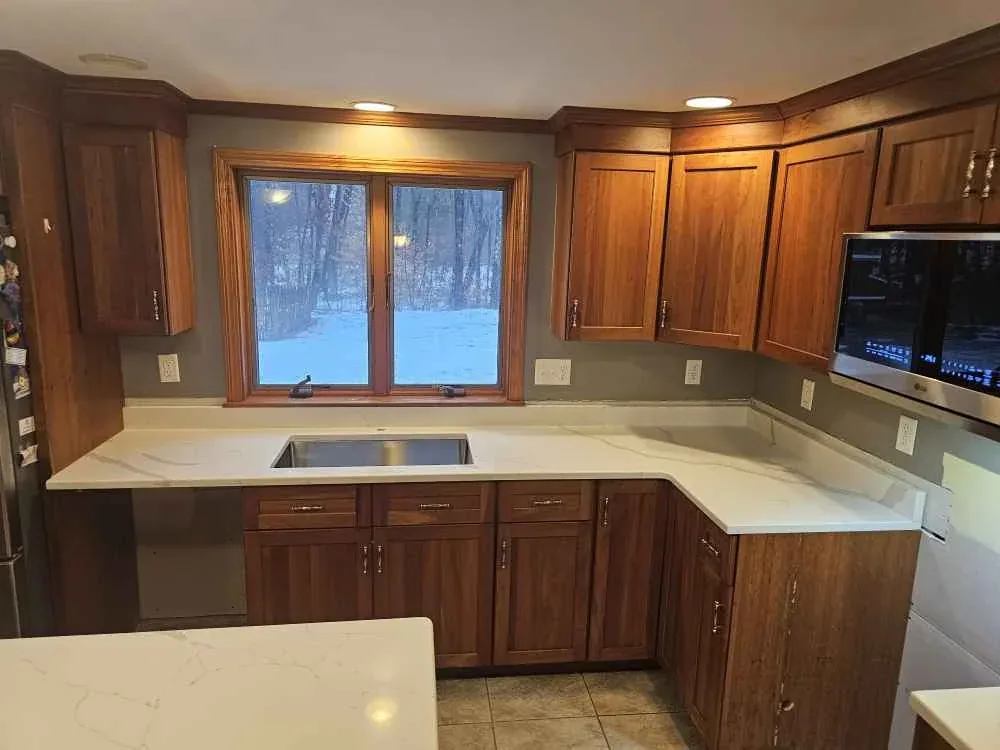
True quartzite is natural stone and generally handles kitchen heat better than engineered quartz because it does not contain polymer resin throughout the slab. Even so, it is not a reason to skip the trivet.
A quartzite slab may contain natural fissures, mineral changes, resin-filled areas, mesh backing, or repairs. Some stones sold with quartzite in the name contain more calcite and may behave differently from a hard, nonreactive quartzite.
Keep hot cookware away from seams, cutouts, and edges, and follow the care guidance for the actual slab. The material name gives you a starting point; the finished installation determines the safest daily habits.
See our quartzite countertops to learn more about this natural stone.
Marble Handles Heat Better Than Acid
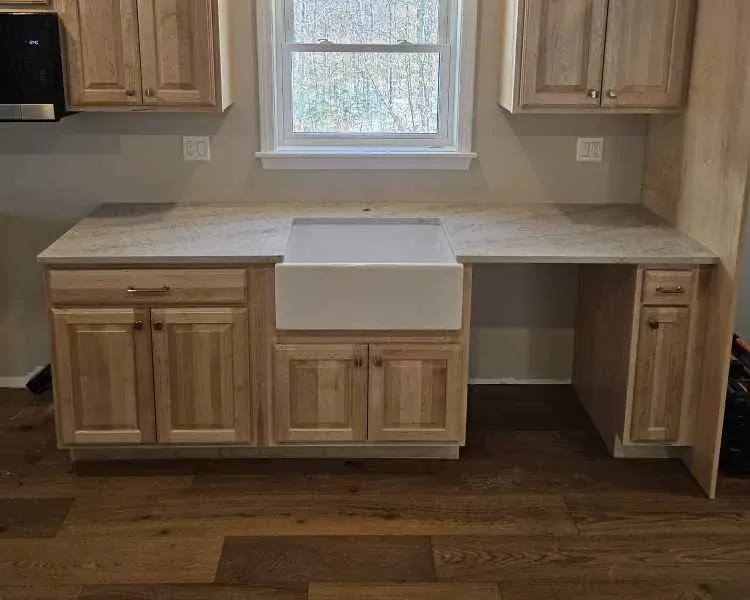
Marble does not contain the same resin binder as engineered quartz, so heat is not usually its most common kitchen problem. Acid is. Lemon juice, wine, tomato, and vinegar can dull the finish through etching.
A hot acidic spill can create more than one issue at the same time. The heat can affect the surrounding installation, while the acid changes the polished surface. Wipe spills promptly with a material-appropriate method and keep cookware on a trivet.
Sealer can slow absorption and give you more cleanup time, but it does not stop etching and should not be treated as heat protection.
Learn more about marble countertops and choosing the right surface for your kitchen.
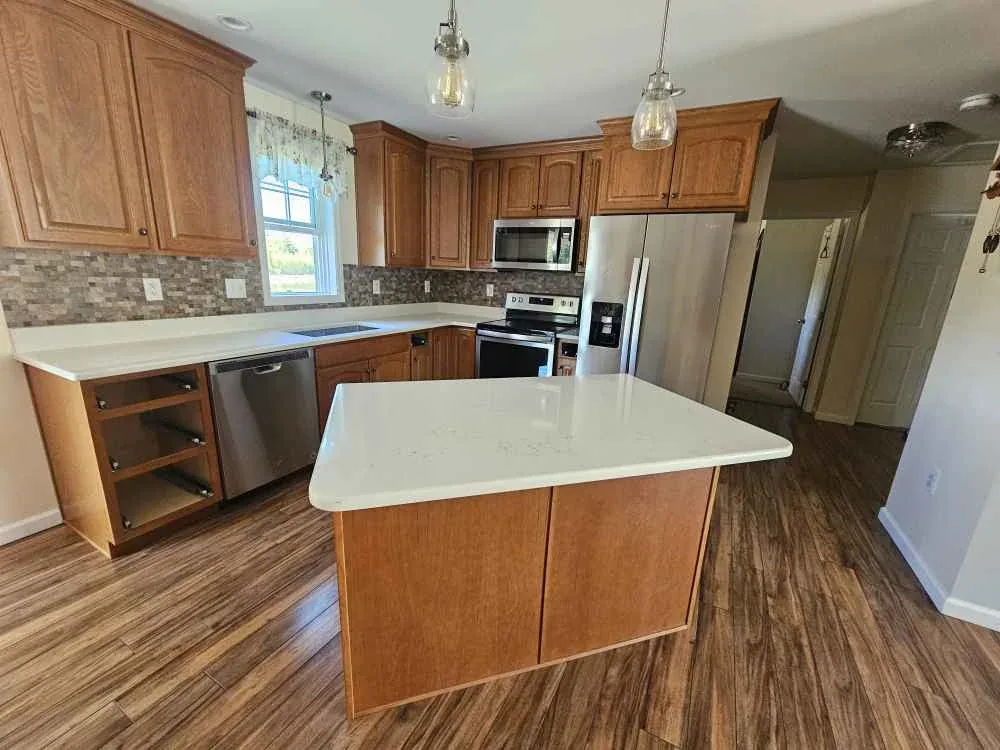
Soapstone Has Excellent Heat Tolerance
Soapstone has been used for laboratory tops, hearths, and wood-stove surrounds because it handles heat exceptionally well. Of the materials in this guide, it is the one least likely to be troubled by a hot pot itself.
Its everyday weakness is softness. A rough cast-iron base, gritty pan, or heavy appliance dragged across the counter can scratch or dent the surface even when the heat causes no problem. Wax or mineral-oil treatments and nearby seams may also deserve protection.
A trivet still gives a heavy pan a clean, stable place to land. It also protects the rest of the installation and makes one safe habit work across the whole kitchen.
Our soapstone countertop care guide covers everyday cleaning and surface treatments.
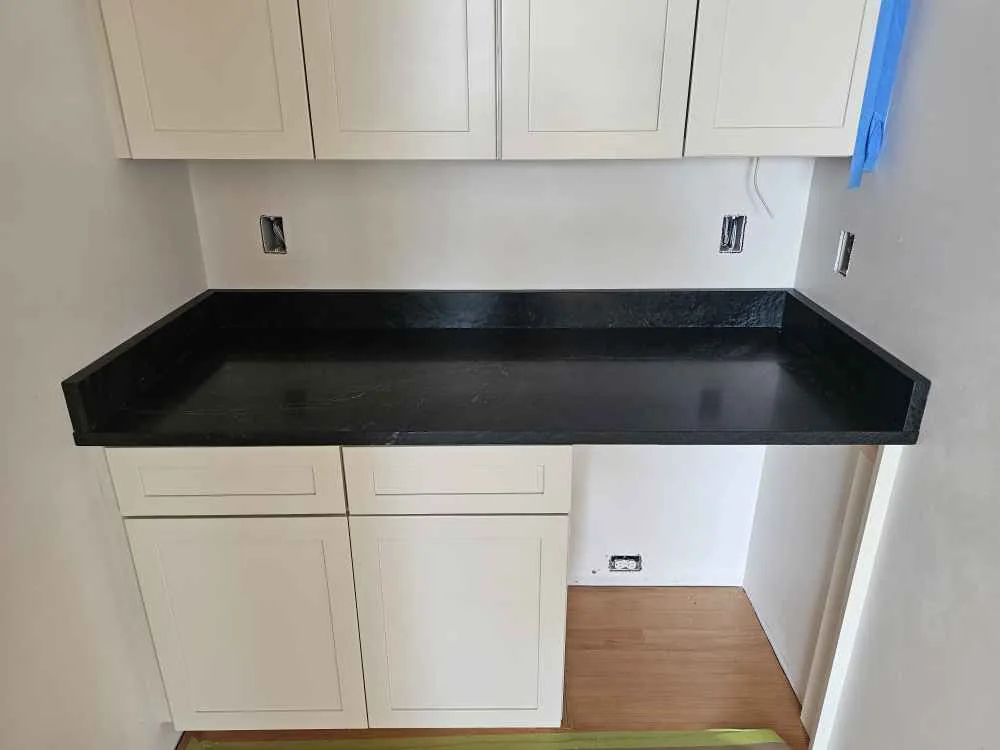
Seams, Edges, and Cutouts Need More Care
Edges and narrow strips cool faster than the middle of a large slab. Seams contain adhesive. Sink and cooktop cutouts create corners where stress can concentrate. These details are good reasons to keep hot cookware away from transitions even when the main material has strong heat resistance.
Choose a wide, fully supported spot for the trivet. Do not balance a pan partly over a seam or place it on the narrow rail in front of a cooktop. A little planning during dinner is easier than diagnosing a mark or crack later.
Countertop Appliances Can Create More Heat Than Expected
An air fryer, slow cooker, pressure cooker, toaster oven, or electric griddle may sit in one place for hours. Some release hot air toward a backsplash or cabinet. Others send heat through the base even when the area around them feels comfortable to the touch.
Read the appliance manual for clearance and ventilation requirements. Place the entire base on a solid, heat-rated barrier without blocking feet or vents. Leave room around the appliance so heat can escape, and check nearby cords, outlet covers, and backsplash materials.
This is especially useful during holiday cooking, when every outlet and square foot of counter seems to be in use at once. Set out the correct trivets before the kitchen gets busy.
What to Do After a Heat Mark Appears
Move the heat source safely and let the countertop return to room temperature on its own. Do not apply ice or cold water. Another sudden temperature change can add stress instead of helping.
Once the area is cool, photograph it in even light and again from a low angle. Note the countertop material or brand, the appliance or pan involved, how long it was there, and whether the mark crosses a seam or sits near a cutout.
Do not sand, scrape, bleach, or polish the area before you know what changed. Surface residue, damaged resin, an opened seam, and a crack all require different responses. Ask the fabricator or manufacturer for material-specific guidance.
Read about countertop repair before trying a repair product yourself.
A Simple Heat Routine for Everyday Cooking
- Keep heat-rated trivets beside the range and oven so nobody has to search for one with a hot pan in hand.
- Place air fryers, slow cookers, griddles, and roasters on a solid barrier with the required ventilation.
- Keep hot cookware away from seams, sink corners, cooktop cutouts, exposed edges, and narrow countertop rails.
- Use cutting boards for food preparation rather than sliding rough cookware across the surface.
- Review the care guide for the exact countertop material or quartz brand in the home.
Use One Safe Habit Across the Kitchen
You do not need to treat granite, quartzite, marble, or soapstone as delicate. You do need a routine that protects the entire installation and works when several people use the kitchen.
Precision Granite Works can help identify an existing countertop and explain the care guidance for that material. If a heat mark has already appeared, contact Precision Granite Works at the Epsom showroom before trying a cleaner, polish, or repair product.
Frequently Asked Questions
Can I put a hot pan directly on granite?+
Can I put a hot pan directly on quartz?+
Can quartzite take a hot pan?+
Can marble be damaged by heat?+
Is soapstone safe for hot pots?+
Should an air fryer sit directly on a countertop?+
Ready to Start Your Project?
Contact Precision Granite Works for a free consultation and quote at our Epsom, NH showroom.
About the Author
Written by the team at Precision Granite Works — New Hampshire's family-owned countertop fabricators. Jillian and Shawn Woodward and their team serve homeowners and builders across all of NH from our Epsom showroom.