Is It a Stain, Etch, Scratch, Chip, or Crack? Countertop Damage Guide
A dull ring, dark spot, rough edge, or fine line can point to very different countertop problems. Identify the material, location, texture, and way the mark reacts to light before choosing a cleaner or repair.
By Precision Granite Works Team · Precision Granite Works, Epsom NH
You wipe the counter and the mark is still there. Is it a stain, an etch, a scratch, or the beginning of a crack? The answer matters because a cleaner that helps one problem can make another one worse.
A pale ring on marble is often an etch rather than a stain. A dark spot on granite may be absorbed oil, trapped moisture, or residue sitting on the surface. A line in natural stone may be a stable fissure, an opened seam, or damage that needs attention.
Before reaching for a strong cleaner or repair kit, identify the countertop material and look closely at the mark's color, texture, location, and appearance under different light. Start with the gentlest appropriate cleaning step, then decide whether the surface needs stain treatment, refinishing, filling, stabilization, or replacement.
Identify the Countertop Material First
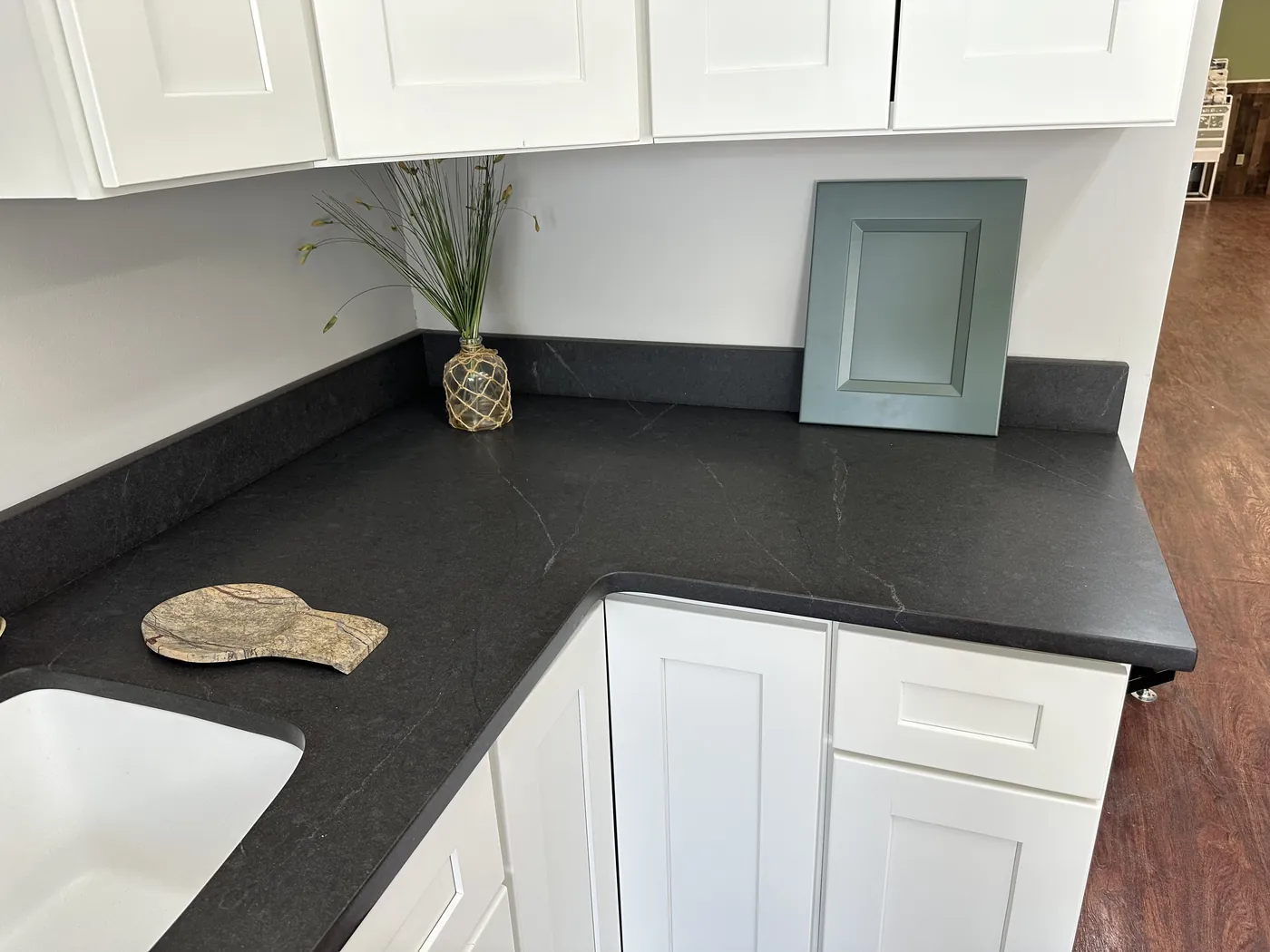
Granite, marble, quartzite, soapstone, and engineered quartz can look surprisingly similar in a photo. They do not react the same way to acids, abrasives, heat, sealers, or repair products.
Check purchase records, manufacturer labels, leftover samples, or paperwork from the original fabricator. If you bought the home with the countertop already installed, take one photo of the whole area and several close views in good light. A stone professional may be able to narrow down the material before you try a treatment.
Do not rely only on the color or trade name. Some natural stones are marketed under names that do not describe their geology, and quartz products may have brand-specific care instructions.
Rule Out Residue and Hard Water
Soap film, cooking grease, hard-water minerals, wax, cleaner buildup, and metal transfer can sit on top of the countertop. A surface deposit may feel slightly raised, smear when rubbed, or improve after gentle cleaning.
Begin with the care method approved for the known material. Mild soap and water with a soft cloth is a common first step for many surfaces. Rinse and dry the area thoroughly because leftover soap can create another film.
Do not jump straight to vinegar, lemon, abrasive powder, a razor blade, or a scrubbing pad. A remedy that removes hard water from one surface can etch or scratch another.
For routine maintenance, see our granite countertop care guide.
A Stain Changes the Color
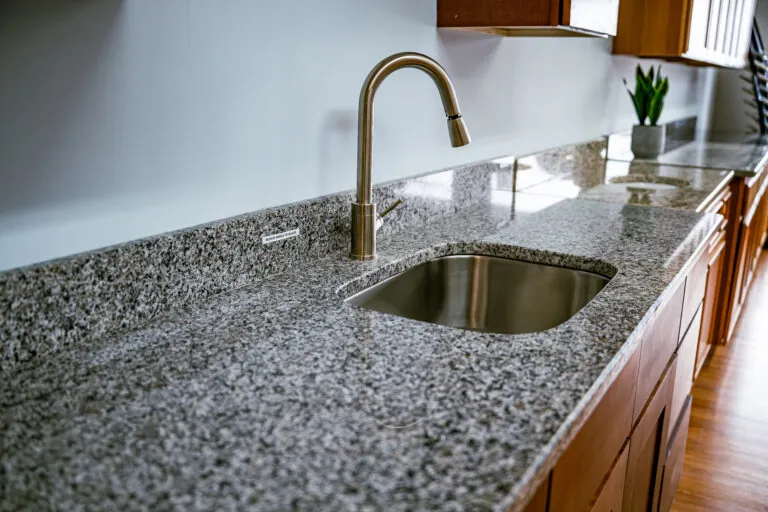
A stain usually looks darker or takes on a new color because oil, wine, coffee, cosmetics, rust, or another substance entered the stone or changed it chemically. The edges may look soft or uneven rather than sharply scratched.
The Natural Stone Institute recommends identifying the source before choosing a poultice or chemical. Oil, organic color, metal, ink, and biological stains do not respond to the same treatment. Some deep or chemically changed marks may not come out completely.
Sealer can slow absorption and give you more cleanup time, but it does not make natural stone stainproof and it does not remove an existing stain. Photograph the area before applying anything, especially when the source is unknown. Learn more about countertop resealing.
An Etch Changes the Finish
Etching happens when acid reacts with a sensitive stone such as marble, limestone, travertine, onyx, or another material that contains calcite. The reaction changes the surface itself and alters the way it reflects light.
An etch may look pale, cloudy, or dull on polished stone. It often becomes easier to see when you crouch down and look across the counter at a low angle. The spot may feel slightly rough. A spill can leave color behind too, so one area can be both stained and etched.
Penetrating sealer does not stop etching. Refinishing, honing, or polishing may improve the area, but the method has to match the stone and its existing finish. Our marble countertop repair page explains assessment considerations.
A Scratch Cuts Into the Surface
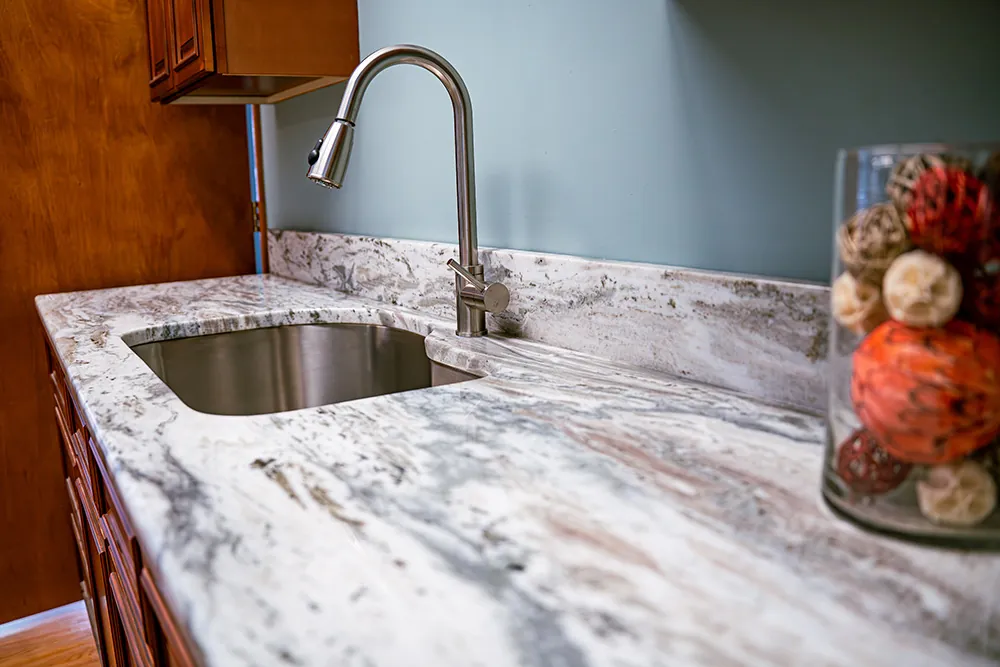
A scratch is a groove or worn path in the finish. It may catch a fingernail and often follows the direction an object moved. A scuff or metal mark can look similar while remaining on top of the surface, which is why gentle cleaning comes first.
Marble and soapstone scratch more readily than many granites. Quartz can show metal transfer or a change in sheen, especially on dark, solid, matte, or nearly uniform colors.
Avoid sanding a polished countertop or using steel wool without material-specific guidance. A successful repair has to match both the level of the surface and the sheen around it.
A Chip Means Material Is Missing
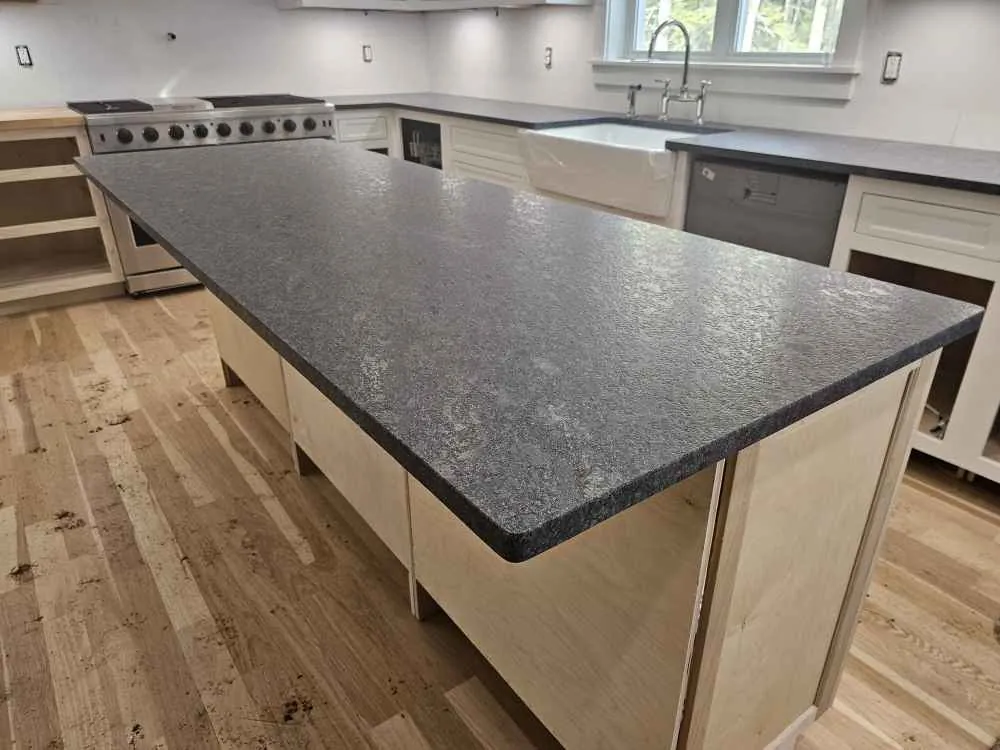
Chips often appear on an exposed edge, sink opening, dishwasher edge, corner, or impact point. The spot may feel sharp or reveal fresh-looking material inside a small cavity.
Many chips can be filled and color matched, but the likely appearance depends on the size, depth, location, pattern, edge profile, and finish. Busy natural stone patterns often disguise a small repair better than a uniform surface.
If you find the loose piece, save it in a labeled container. Take photographs before cleaning and do not use household glue, nail polish, or generic clear epoxy. Those products can contaminate the repair area or yellow over time.
A Fissure and a Crack Are Different
A fissure is a natural feature that formed with the stone. A crack developed later. That distinction is useful, but the name alone does not tell you whether a line is stable or needs repair.
Notice whether the line can be felt, runs through the slab, changes height from one side to the other, or begins at a sink or cooktop corner. Lines near cutouts, seams, unsupported spans, or cabinets that have moved deserve a prompt professional assessment.
Do not push on the area to see whether it moves. Keep weight, heat, and vibration away from it, and do not inject filler before someone has checked the cause and support below.
A Seam Problem Follows a Joint
A seam is an intentional joint between countertop pieces. Even a sound seam may remain visible. A problem is more likely when the joint opens, chips, collects water, changes color, or develops a height difference.
Movement can come from cabinet settling, weak support, impact, moisture, or a failed bond. A dark or yellow line may also be residue or aging adhesive rather than a stain in the slab.
Photograph the seam from above and again at countertop height. Note whether the condition runs along the whole joint, whether water reaches it, and whether nearby cabinets or flooring have shifted. See our countertop seams guide for more context.
Heat Damage Can Resemble a Stain or Crack
Engineered quartz may develop a pale, dark, or dull mark when heat damages the resin. Natural stone can crack after a sudden, concentrated temperature change even when the stone handles high heat in general.
Heat can also affect seam adhesive, filler, caulk, sealer, or a resin-treated area. A mark near an air fryer, slow cooker, pan landing area, seam, edge, or cooktop offers an important clue.
Let the surface cool on its own. Do not apply ice or cold water, and do not sand or bleach the mark before the fabricator or manufacturer identifies what changed. Read more about quartz countertop repair.
Take Useful Photos Before Trying a Repair
Start with one wide photo that shows where the mark sits in the room. Then take close photos in daylight and from a low angle. Add a ruler or coin for scale without covering the damaged area.
If it is safe and easy to see below the countertop, photograph the cabinet and support under the mark. Write down when you first noticed it, what touched the surface, whether it changes when wet or dry, and whether it has grown or moved.
These details often make a phone or email assessment much more useful. They also preserve information that may disappear after cleaning.
Avoid Harsh Cleaners and Quick Fixes
Do not use vinegar, lemon, toilet-bowl cleaner, rust remover, oven cleaner, bleach, or an unknown solvent on an unidentified countertop. Strong acids and alkalis can damage both natural stone and engineered materials. Never mix bleach with ammonia.
Do not grind, sand, scrape, torch, drill, or widen a line. Avoid filling a chip or seam with consumer adhesive when a professional repair is being considered. A quick fix can hide the cause and make a lasting repair more difficult.
Online advice often leaves out the stone type, finish, and chemical strength. Follow the care guide for the exact material or get written direction from a qualified stone professional.
Repair Depends on the Cause and Stability
Many isolated stains, etches, scratches, chips, and stable cracks can be evaluated for repair. The material, pattern, finish, location, support, and movement all affect what is possible and how visible the finished repair may be.
Replacement becomes more likely when damage is widespread, a structural crack has shifted out of plane, support cannot be corrected, or several repairs would remain prominent. It may also make sense when the homeowner already plans a larger remodel.
Ask whether a proposed repair addresses only appearance or also the cause. Filling a crack without correcting a moving cabinet or support problem can allow it to return.
Information to Gather for a Repair Assessment
- Countertop material, brand, color, finish, and approximate age
- Wide and close photographs from several lighting angles
- Location relative to edges, seams, sinks, cooktops, and supports
- Length, width, texture, depth, and whether the line catches a fingernail
- Recent impacts, heat, spills, cleaners, plumbing leaks, or cabinet movement
- Whether the mark changes after gentle cleaning or complete drying
- Whether the two sides remain level or have shifted
- Any loose fragment, purchase paperwork, care guide, or repair history
Identify the Problem Before Choosing the Treatment
A stain needs a different response from an etch. A scratch is not repaired like a chip, and a crack near a sink may point to a support problem that surface filler cannot solve.
Precision Granite Works assesses countertop damage for New Hampshire homeowners and can discuss whether cleaning, refinishing, filling, stabilization, or replacement may be appropriate. Send clear photos or contact the Epsom showroom before experimenting with a permanent treatment.
Learn about countertop repair or request a repair assessment.
Frequently Asked Questions
How can I tell a stain from an etch?+
Does sealer prevent etching?+
Can a chipped countertop be repaired?+
How do I know if a line is a crack or fissure?+
Can heat damage on quartz be removed?+
When should a damaged countertop be replaced?+
Ready to Start Your Project?
Contact Precision Granite Works for a free consultation and quote at our Epsom, NH showroom.
About the Author
Written by the team at Precision Granite Works — New Hampshire's family-owned countertop fabricators. Jillian and Shawn Woodward and their team serve homeowners and builders across all of NH from our Epsom showroom.