What Countertops Look Best With Wood Cabinets? Granite, Quartz and Quartzite Pairings
Wood cabinets bring warmth and natural character to a kitchen, but the wrong countertop can make the room feel too yellow, too cold, flat, or overly busy. Learn how to pair granite, quartz, and quartzite with white oak, maple, cherry, and walnut cabinets by looking at undertones, contrast, movement, and lighting.
By Precision Granite Works Team · Precision Granite Works, Epsom NH
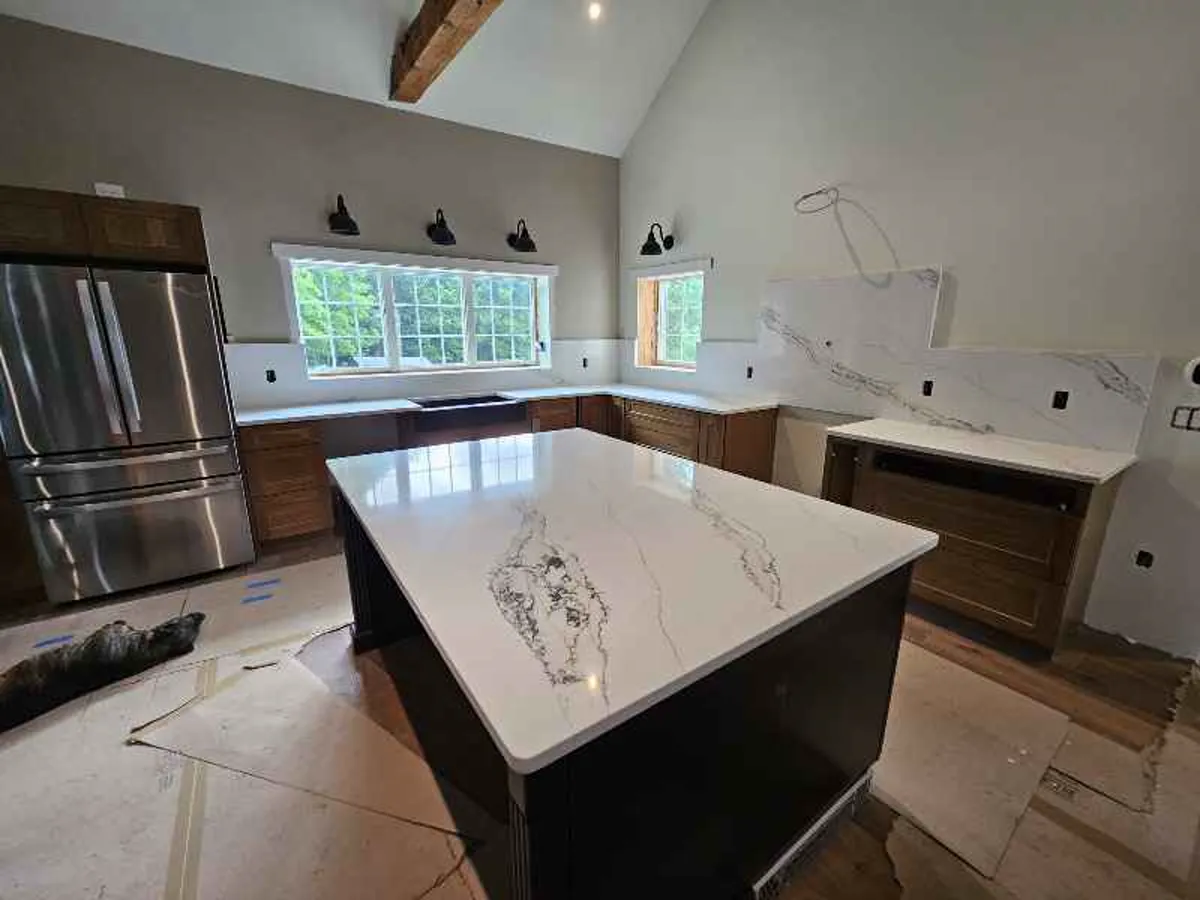
Wood cabinets are bringing warmth and natural character back into kitchens. White oak, maple, cherry, and walnut all create a look that painted cabinetry cannot fully copy. Each has its own grain, color variation, and undertone. That is part of what makes wood cabinets so appealing — and what makes countertop selection more important.
A stone that looks soft and neutral by itself can suddenly feel too yellow beside one wood finish, too cold beside another, or too busy when the cabinet grain and countertop movement start competing with each other.
The best countertop for wood cabinets is one that either works with the cabinet's undertone or creates clear, intentional contrast. White oak often pairs well with warm whites, creams, taupes, and some darker stones. Maple works with creamy neutrals or stronger contrast. Cherry usually benefits from quieter light countertops, while walnut can support cream, pale quartzite, green-toned stone, or even darker dramatic surfaces in the right room.
The goal is not to find one countertop that works with every wood cabinet. It is to understand the cabinet's undertone, decide how much contrast you want, and choose a surface that makes the whole kitchen feel intentional.
Start With the Cabinet Undertone
Every wood species has a base color, but stain and finish can change how that color reads.
- White oak often leans beige, tan, or slightly gray.
- Maple can look creamy, honey-toned, or lightly peach.
- Cherry brings red and orange undertones.
- Walnut usually ranges from medium brown to deep chocolate, sometimes with cooler streaks running through the grain.
Those undertones matter. A warm white countertop may feel balanced beside oak, while a crisp blue-white surface can make the same cabinets look more yellow. A taupe stone may calm a red-toned cherry finish, while a pink-beige background may exaggerate it.
Homeowners often focus on the dramatic movement in a slab and overlook the quieter base color underneath. But once the stone is installed beside the cabinets, that background is what will connect or clash with the wood every day. Undertones do not have to match perfectly — they do need to look intentional when they sit next to each other.
What Countertops Look Best With White Oak Cabinets?
White oak is popular because it feels light, natural, and flexible. It works well in modern, Scandinavian-inspired, transitional, farmhouse, and updated traditional kitchens. One of the reasons white oak is so versatile is that it can lean warm, neutral, or slightly cool depending on the stain and finish — which means the exact cabinet sample matters.
Warm white quartz, creamy granite, and soft beige or taupe quartzite are all dependable pairings with white oak cabinets. These surfaces repeat the warmth of the wood without making the room feel heavy. Gentle gold or greige veining can also work well because it connects naturally to the grain and color variation in the oak.
Good countertop choices for white oak cabinets may include:
- Warm white quartz
- Creamy granite
- Soft beige quartzite
- Taupe stone
- Warm greige surfaces
- Light stone with restrained gold movement
For more contrast, consider charcoal, deep brown, or black stone — especially on a kitchen island. That darker countertop can ground the room and keep pale oak from blending too much with pale floors, walls, and backsplash. Be careful with cool gray surfaces that have a strong blue cast; they should always be checked beside the actual cabinet sample, as white oak varies more than online photos suggest.
What Countertops Go With Maple Cabinets?
Maple has a fine grain and relatively even appearance, which gives you some flexibility with the countertop pattern. Because the cabinets themselves are often quieter than oak or walnut, maple can support a little more movement in the stone. The stain is the deciding factor.
Light natural maple pairs well with warm whites, cream, soft taupe, light greige, and gentle gray-beige surfaces. If the maple has a honey stain, a countertop with subtle gold, brown, or warm gray detail can create a nice connection without making the entire room feel too yellow. A darker granite or deep quartz can also create a strong contrast with pale maple — especially useful when the flooring and walls are light and the kitchen needs a visual anchor.
One thing to avoid is stacking too many similar yellow-beige tones. If the cabinets, floor, backsplash, and countertop all sit in the same narrow color range, the kitchen can feel flat. A clearer light-dark contrast or a quieter backsplash usually solves that problem. You want connection, not sameness.
How to Pair Countertops With Cherry Cabinets
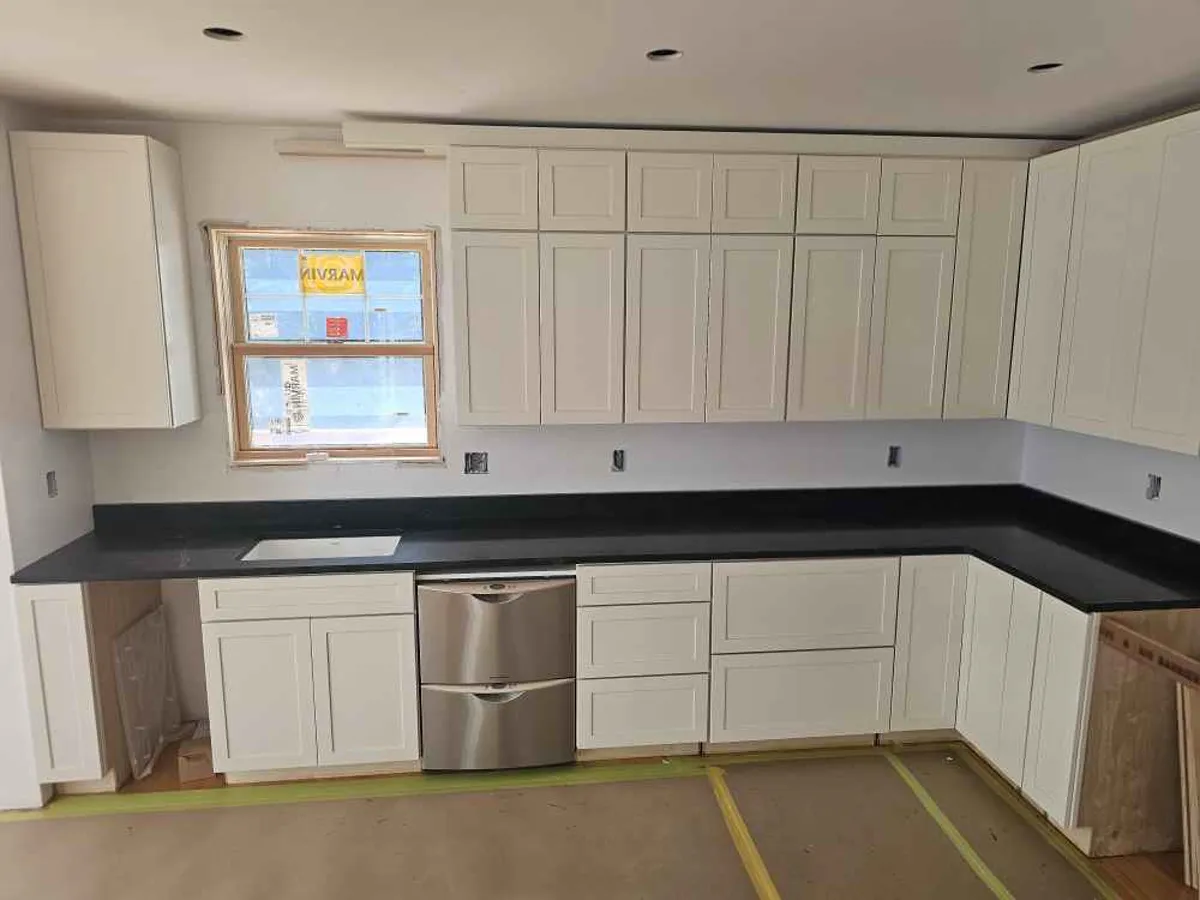
Cherry cabinets have a strong personality. Their red and orange undertones can deepen over time, which means the countertop should usually calm or balance the wood rather than compete with it.
Good countertop options for cherry cabinets often include:
- Creamy white
- Soft greige
- Light taupe
- Quiet quartz
- Natural stone with restrained brown movement
- Granite with soft charcoal or gold detail
Lighter countertops can make cherry cabinets feel more current without trying to hide the wood. The most common mistake is choosing a countertop with a pink, peach, or red undertone that is close to the cherry but not quite the same — that can make the whole combination feel muddy. Adding too many active materials at once is another common mistake. If the goal is to update existing cherry cabinets, a lighter countertop, simple edge profile, and quieter backsplash can make a much bigger difference than homeowners sometimes expect. The wood does not always need to be replaced — sometimes it just needs better surroundings.
What Countertops Pair Well With Walnut Cabinets?
Walnut is deeper and more dramatic than most light woods. Its chocolate and espresso tones can support both soft contrast and bold stone, depending on the room. Cream, warm white, pale beige, and light quartzite are all strong choices because they brighten the kitchen and allow the walnut to remain the focal point.
Good countertop options for walnut cabinets may include:
- Creamy quartz
- Warm white granite
- Pale beige quartzite
- Soft taupe stone
- Green-toned natural stone
- Charcoal surfaces
- Expressive slabs in larger kitchens
Walnut can look especially beautiful with green-toned natural stone because the colors feel grounded and organic together. In a large kitchen with good natural light, walnut can also support more dramatic movement — a pale perimeter countertop with a bold island can give the room depth without making every surface compete. In a small or dim kitchen, though, be careful about combining very dark walnut with dark countertops, dark floors, and dark backsplashes unless you intentionally want a moody space with a strong lighting plan.
Granite, Quartz, or Quartzite With Wood Cabinets?
Granite, quartz, and quartzite can all work well with wood cabinets. The better question is what kind of look you want.
Granite With Wood Cabinets
Granite is a strong choice when you want natural variation, depth, and a surface that does not look manufactured. Wood and granite can work beautifully together because both materials have natural movement. The key is making sure the grain and stone pattern complement each other rather than compete. If the wood cabinets have strong grain, a quieter granite may work best. If the cabinets are more consistent, a bolder granite can become the focal point. Granite is especially useful when you want natural character, unique slab variation, warmth, and a one-of-a-kind surface.
Quartz With Wood Cabinets
Quartz works well when the cabinets already provide plenty of character and you want the countertop to stay calmer. Because the pattern is more controlled, quartz can help a wood kitchen feel clean and balanced. Warm whites and low-contrast veining are especially versatile. In a kitchen with bold walnut or detailed cherry cabinets, a restrained quartz may be exactly what keeps the room from feeling too busy. Quartz is a good choice when you want more consistency, a quieter countertop, low maintenance, and less visual competition with the wood grain.
Quartzite With Wood Cabinets
Quartzite is worth considering when you want natural stone with flowing movement and a lighter, more refined look. Warm quartzites can bridge pale oak, walnut, and mixed wood finishes beautifully. Because every slab varies, the full slab matters more than the sample name — two slabs sold under the same stone name may have different movement, tone, and intensity. Quartzite is a good choice if you want natural stone, softer flowing movement, warm color variation, or a more elevated island focal point.
No material automatically wins. The best choice is the one whose color, pattern, care requirements, and price fit your actual project. For more on the visual differences between surfaces, see our guide on bold veining vs. subtle movement.
Should the Countertop Match or Contrast With the Cabinets?
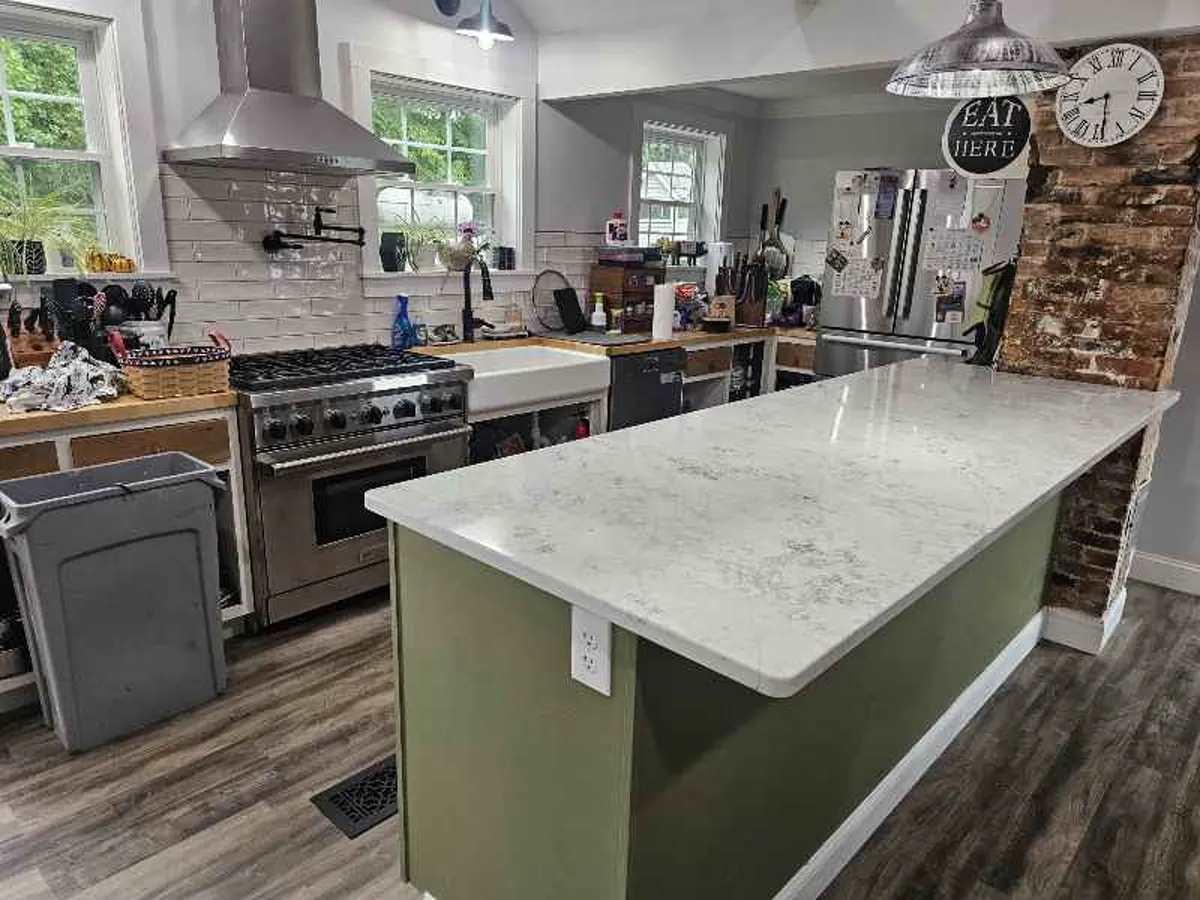
Matching creates a softer, more blended look. Contrast gives the cabinets and countertop clearer definition. Neither is better — it depends on the kitchen.
If the wood is light, a light countertop can make the room feel open and calm. You can add definition through veining, hardware, backsplash, or a darker island. If the wood is dark, a pale countertop usually keeps the room from feeling too heavy. Contrast does not have to mean black and white. A medium walnut cabinet with creamy quartzite is contrast. White oak with warm charcoal granite is contrast. Cherry cabinets with soft ivory quartz are contrast. The difference only needs to be clear enough that the materials do not look like a near miss. When in doubt, compare both a tonal option and a contrasting option in the same lighting — homeowners often know quickly which direction feels more like their home.
Do Not Choose From Separate Photos
A cabinet photo on one screen and a slab photo on another will not show color accurately. Screen brightness, camera settings, editing, showroom lighting, and white balance can all shift beige, gray, green, gold, and brown. That is why separate photos are not enough.
Bring a finished cabinet door, drawer front, or reliable sample when you view stone. If possible, bring your flooring sample, backsplash sample, paint color, and hardware finish too. Place everything directly on the slab and step back. For natural stone, look at the entire slab — a small sample may show the background color but miss a strong vein, darker area, mineral shift, or change in movement that affects the finished layout.
This is also the time to talk about seams, sink placement, island size, cooktop cutouts, and which part of the slab you want to feature. Choosing the countertop and planning the layout should not be completely separate conversations — they influence each other.
Fabricator Recommendation: Let One Material Lead
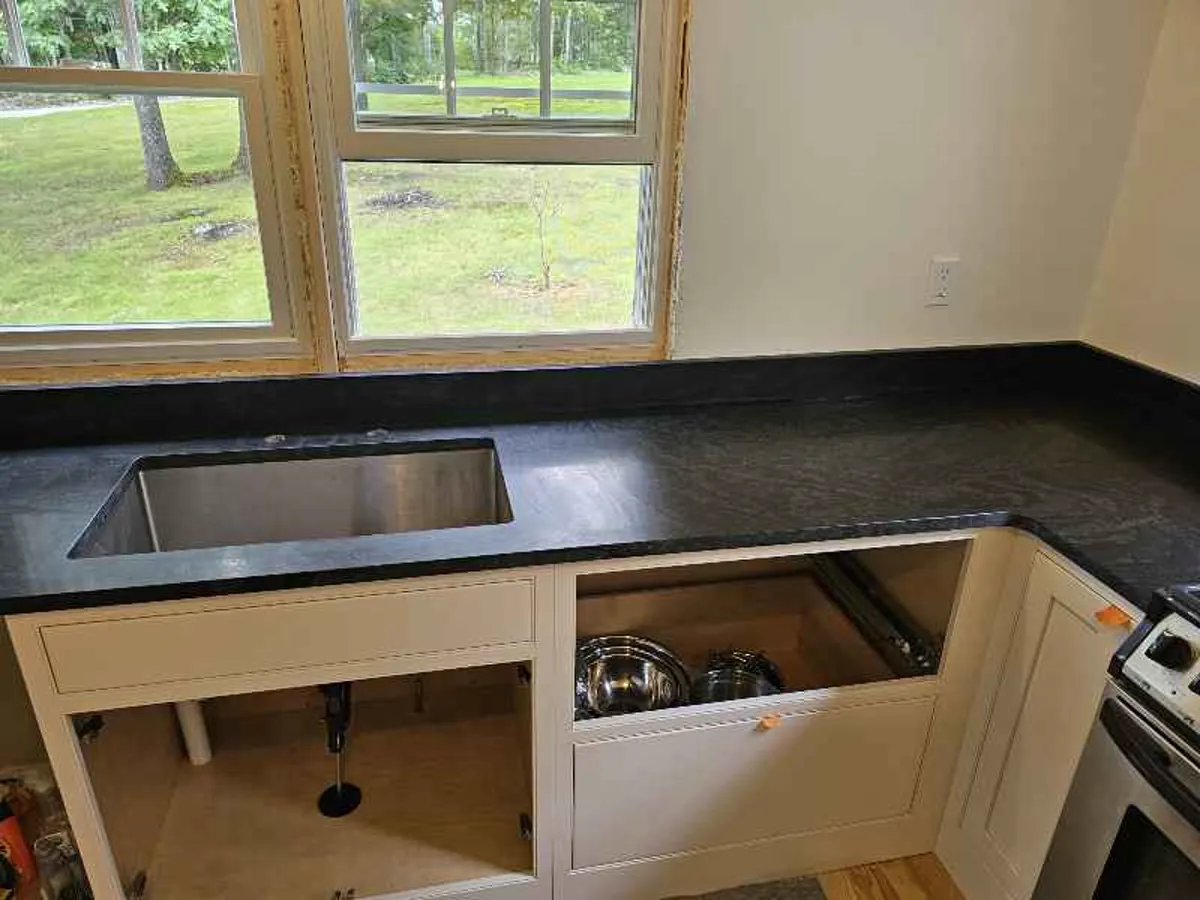
Wood cabinets and natural stone can both be visually active. The most successful kitchens usually let one material lead while the other supports it. If the cabinets have strong grain, variation, or a rich stain, a quieter countertop may create better balance. If the cabinets are simple and consistent, the countertop can carry more movement.
A dramatic island can be the feature while the perimeter stays calm. A beautiful walnut cabinet wall can lead while a creamy countertop keeps the room light. A soft white oak kitchen can support a bold natural stone island if the surrounding finishes remain restrained. Choose the combination as a room, not as two separate products — the cabinet and countertop have to live together every day.
How Lighting and Finish Change the Pairing
The same countertop and cabinet can look different from one side of the kitchen to the other. North-facing daylight may cool the colors. Strong afternoon sun may pull out gold and warm undertones. Warm light bulbs can deepen red or honey tones in wood. Countertop finish changes the effect too — a polished surface reflects more light and may make colors and veining appear sharper, a honed finish can feel softer and more subdued, and a leathered finish may add texture and a more natural appearance.
Test the cabinet and countertop combination the way it will actually sit in the room. Hold countertop samples flat — horizontal light hits them differently than it hits a vertical cabinet door. Look at the pairing in the morning, during the afternoon, after sunset, and under your normal kitchen lights. If the color only works under one showroom light, it is probably not the most dependable choice for the room.
What If You Already Have Wood Cabinets and Are Only Replacing the Countertops?
This is a very common situation. Many homeowners like their cabinet layout and do not want to take on a full kitchen remodel. In that case, the countertop can completely change how the wood cabinets feel.
A lighter surface may brighten dark cherry or walnut. A warmer countertop can soften pale oak. A quiet quartz can calm detailed cabinetry. A bold natural stone can give simple wood cabinets more personality. The biggest mistake is choosing a countertop as though the cabinets do not already exist — they are one of the largest visual surfaces in the room and the countertop needs to respond to them.
If you are keeping the cabinets, bring a sample or clear photos when you visit the showroom. The more information you provide, the easier it is to narrow down materials that make sense. For more on this specific situation, see our guide on replacing countertops without replacing cabinets.
What Countertops Look Best With Wood Cabinets?
The best countertop for wood cabinets depends on the exact wood species, stain, finish, undertone, room lighting, flooring, and how much contrast you want. In general:
- White oak works well with warm whites, creams, taupes, soft quartzite, and darker contrasting stone.
- Maple pairs well with creamy neutrals, light greige, subtle gold movement, or darker contrast.
- Cherry usually benefits from quieter light countertops that balance its red and orange undertones.
- Walnut works well with cream, warm white, pale quartzite, green-toned natural stone, charcoal, and more expressive slabs in the right room.
The goal is not perfect matching. It is balance. Choose a countertop that works with the wood, supports the rest of the kitchen, and still feels right when you see everything together.
See Cabinet Samples and Stone Together at Precision Granite Works
The best countertop for wood cabinets depends on the exact finish, the room's lighting, the flooring, and how much movement you want to see every day. Precision Granite Works helps homeowners in Concord, Manchester, Portsmouth, the Lakes Region, and across New Hampshire compare granite, quartz, and quartzite options, review full slabs, and think through layout details before fabrication begins.
Bring your cabinet sample, drawer front, flooring, paint colors, or photos of the room to the Precision Granite Works showroom at 1022 Dover Road in Epsom, New Hampshire. Seeing the materials together is one of the best ways to narrow the choices and find a surface that feels right beside the wood — not just one that looks good by itself. Request a free estimate or call us at 603-736-0004.
Frequently Asked Questions
What countertops look best with wood cabinets?+
What countertop color looks best with white oak cabinets?+
What countertops go with maple cabinets?+
How do you update cherry cabinets with new countertops?+
What countertops pair well with walnut cabinets?+
Should countertops match or contrast with wood cabinets?+
Can you mix warm wood cabinets with cool gray countertops?+
Should I bring a cabinet sample when choosing a stone slab?+
Is granite or quartz better with wood cabinets?+
Can I keep wood cabinets and only replace the countertops?+
Ready to Start Your Project?
Contact Precision Granite Works for a free consultation and quote at our Epsom, NH showroom.
About the Author
Written by the team at Precision Granite Works — New Hampshire's family-owned countertop fabricators. Jillian and Shawn Woodward and their team serve homeowners and builders across all of NH from our Epsom showroom.