Granite vs Quartz Countertops: Which Is Better for a Busy Kitchen?
Trying to choose between granite and quartz countertops? Both materials can work well in a busy kitchen, but they have different strengths. Granite offers natural stone character and strong heat resistance, while quartz offers consistency and low-maintenance daily care.
By Precision Granite Works Team · Precision Granite Works, Epsom NH
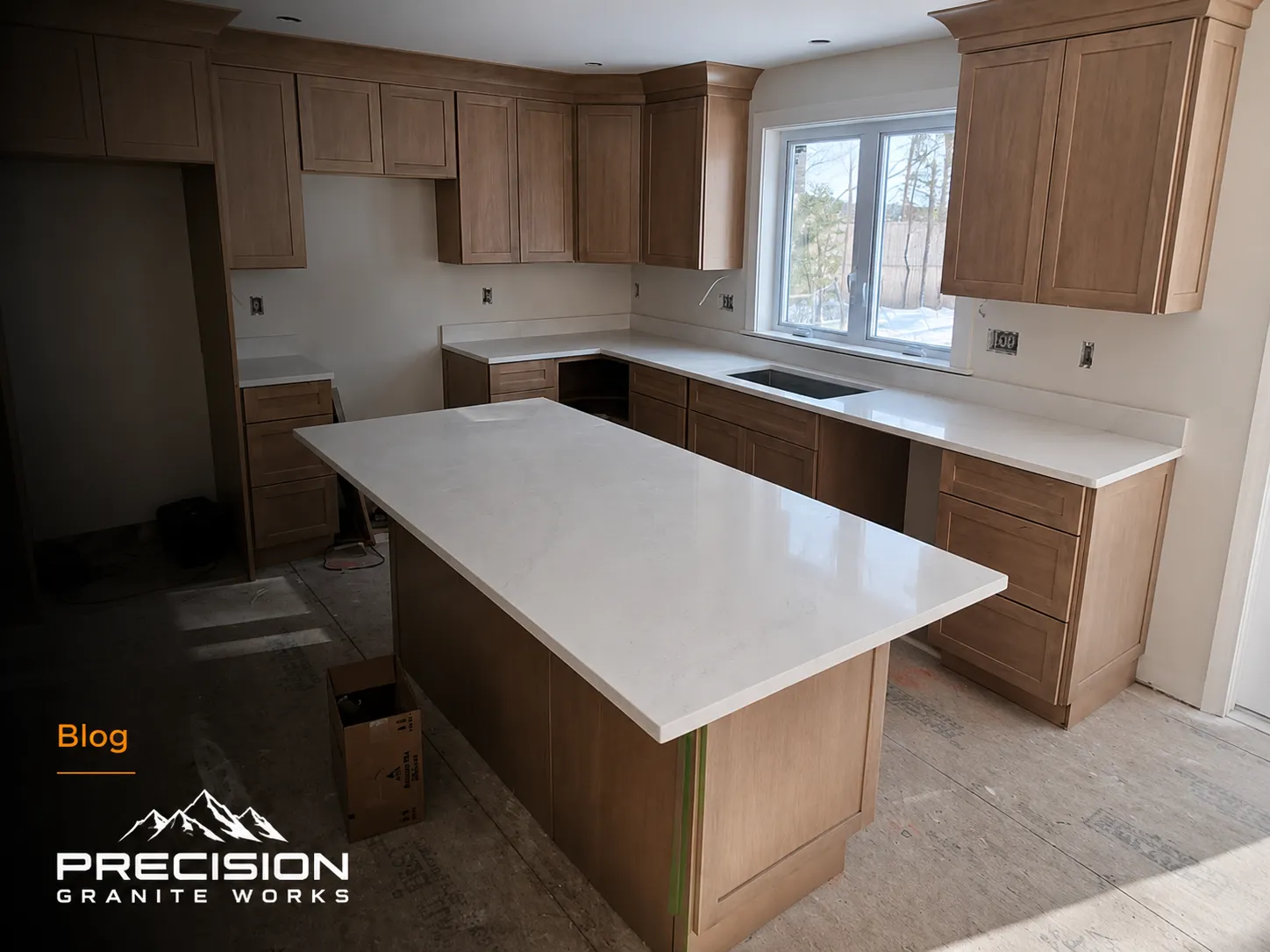
If you're planning new kitchen countertops, there's a good chance you've asked this question already:
Should I choose granite or quartz?
It's one of the most common decisions homeowners face when updating a kitchen. Both materials are popular. Both can look beautiful. Both can hold up well in a busy home. But they are not the same, and the better choice depends on how you cook, clean, entertain, and use your kitchen every day.
For a busy kitchen, granite and quartz can both be excellent countertop choices. Granite is a natural stone with one-of-a-kind color, movement, strong heat resistance, and long-term character. Quartz is an engineered surface known for consistent patterns, low maintenance, and a wide range of design options. The right choice depends on your lifestyle, design goals, budget, and how much maintenance you're comfortable with.
Here's a practical homeowner's guide to granite vs quartz countertops, without the sales pitch.
Granite vs Quartz: The Simple Difference
The biggest difference between granite and quartz is how they are made.
Granite is a natural stone. It is quarried from the earth, cut into slabs, polished, and fabricated into countertops. Every granite slab is unique because it comes directly from natural stone. The color, movement, pattern, mineral deposits, and variation are all part of the material.
Quartz countertops are engineered surfaces. They are made using quartz minerals, resins, pigments, and other materials to create slabs with more controlled colors and patterns. Because quartz is manufactured, it can offer more consistency from slab to slab.
That difference matters.
Granite gives you natural variation and one-of-a-kind character. Quartz gives you more predictability and design control.
Neither one is automatically better. They simply fit different homes and different homeowners.
Why Granite Is Still Popular for Kitchens
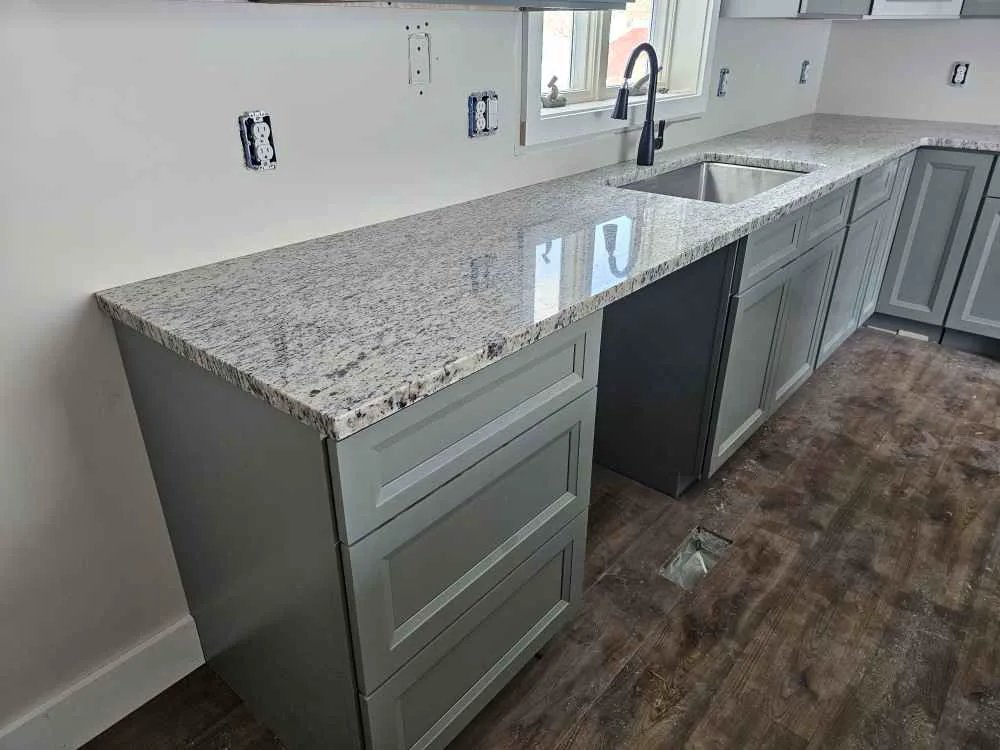
Granite has been used in kitchens for decades, and there's a reason it has stayed popular.
It's durable, natural, and each slab has its own personality. Some granite is subtle and quiet. Some has bold movement, dramatic veining, or strong contrast. That natural variation is what many homeowners love most.
Granite is a good choice if you want:
- A natural stone countertop
- One-of-a-kind color and movement
- Strong heat resistance
- A surface with long-term character
- A kitchen that does not look exactly like everyone else's
- A material that works with many cabinet styles
Granite also has a grounded, authentic feel. It does not try to be perfectly uniform. That can be a big advantage if you want your kitchen to feel warm, natural, and lived-in rather than overly polished or manufactured.
For homeowners who like choosing the actual slab and seeing the movement in person, granite can be a very satisfying material to work with.
Why Quartz Is Popular for Busy Households
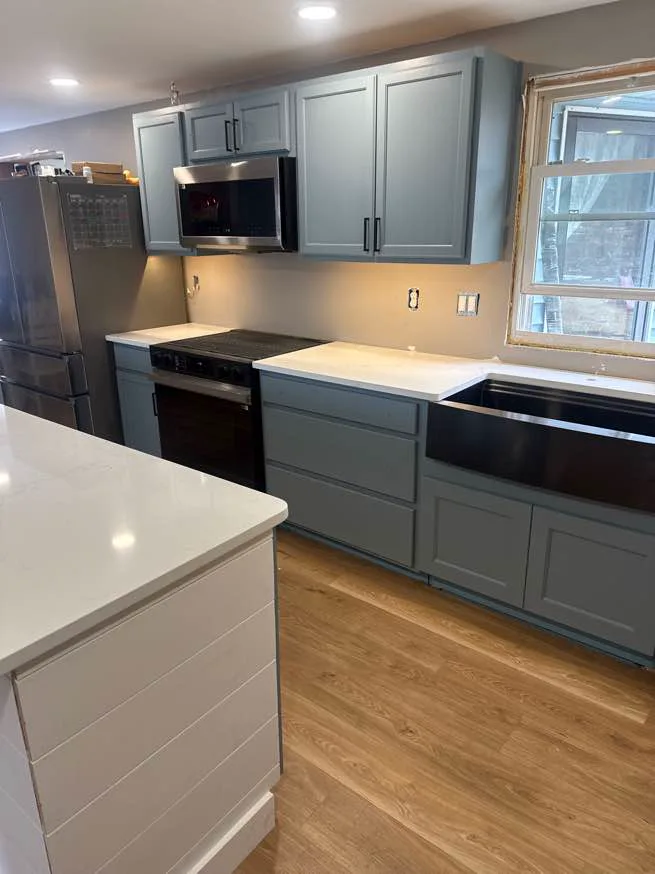
Quartz has become popular because it solves a lot of practical concerns for homeowners.
It offers consistent patterns, a large color range, and low maintenance. Many quartz designs are made to work with modern kitchens, light cabinets, warm neutrals, darker islands, and clean design styles.
Quartz is a good choice if you want:
- A low-maintenance countertop
- More consistent color and pattern
- A wide range of design options
- A surface that does not require sealing
- A predictable look across the kitchen
- A practical option for a busy household
For homeowners who want a countertop that feels clean, simple, and easy to live with, quartz can be a strong option.
It's also helpful when you want a specific design direction. If you're trying to match a cabinet color, backsplash, flooring, or overall style, quartz may give you more control because the patterns are manufactured instead of naturally formed.
Heat, Stains, Scratches, and Daily Use
A busy kitchen needs countertops that can handle real life — hot pans, coffee spills, pasta sauce, kids doing homework, groceries landing on the island, and someone setting down a dish where they probably shouldn't.
Granite and quartz both perform well, but they have different strengths.
Heat Resistance
Granite is a natural stone and generally handles heat very well. That's one of the reasons many homeowners like it for kitchens.
Quartz is durable, but it contains resins that can be sensitive to high heat. It's best to use trivets or hot pads with quartz, especially for hot pans, crockpots, air fryers, or anything that sits in one spot and gives off heat.
Using trivets is a smart habit with any countertop material. But if heat resistance is a major priority, granite has the advantage.
Stain Resistance
Quartz is nonporous, which makes it very resistant to staining in everyday use. Spills should still be wiped up, but quartz is generally easy to maintain.
Granite is a natural stone and is usually sealed to help protect the surface. With proper sealing and normal care, granite performs very well in kitchens. But because it is natural stone, it may need more attention over time than quartz.
If you want the lowest-maintenance surface, quartz has the advantage. If you're comfortable with basic stone care and sealing as needed, granite can still be a very practical kitchen countertop.
Scratch Resistance
Both granite and quartz are strong materials, but neither should be treated like a cutting board. Granite is very hard and holds up well to daily kitchen use. Quartz is also durable and resistant to everyday wear. Still, it's best to use cutting boards with either material to protect the surface and preserve the finish.
For most homeowners, scratch resistance is not the deciding factor between granite and quartz. Both are strong enough for normal kitchen use when cared for properly.
Which One Is Easier to Maintain?
Quartz is usually easier to maintain. Because quartz does not need sealing, it appeals to homeowners who want a countertop with very little ongoing upkeep. Daily cleaning is simple, and the surface is designed to be consistent and practical.
Granite is also easy to live with, but it does need proper care. Depending on the stone and how the kitchen is used, granite may need to be resealed over time. That is not usually a complicated process, but it is still something to keep in mind.
For daily cleaning, both materials are straightforward. Mild soap and water are usually enough for normal wipe-downs. Harsh chemicals, abrasive pads, and strong cleaners should generally be avoided.
If you want the simplest maintenance routine possible, quartz is probably the better choice. If you love natural stone and don't mind basic care, granite is still a strong option.
Which One Looks More Natural?
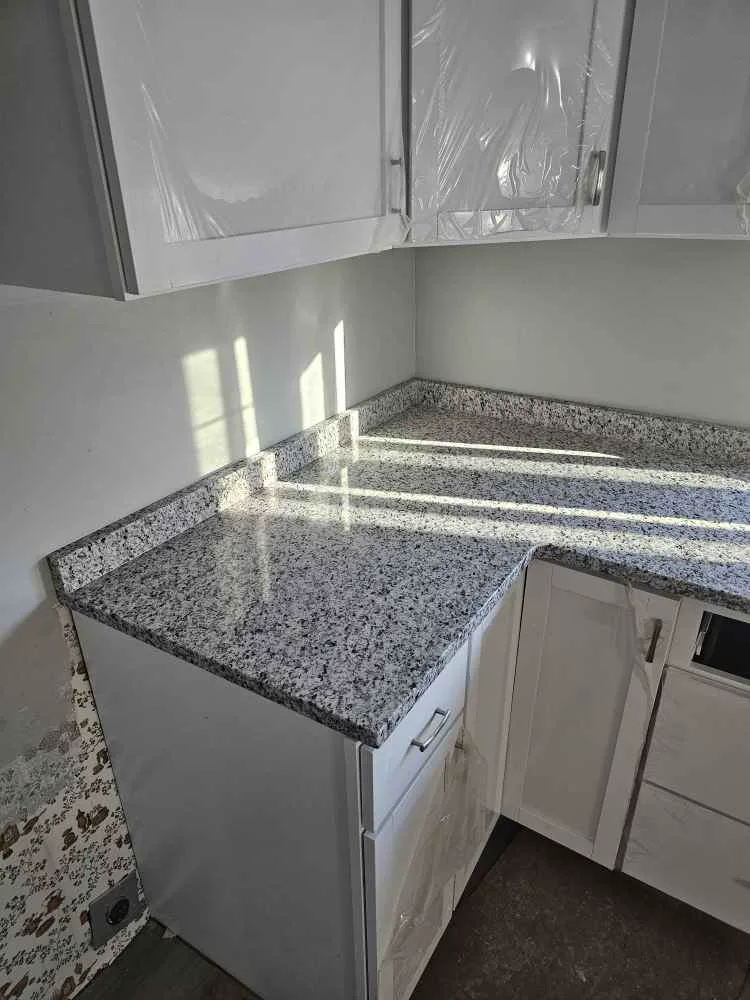
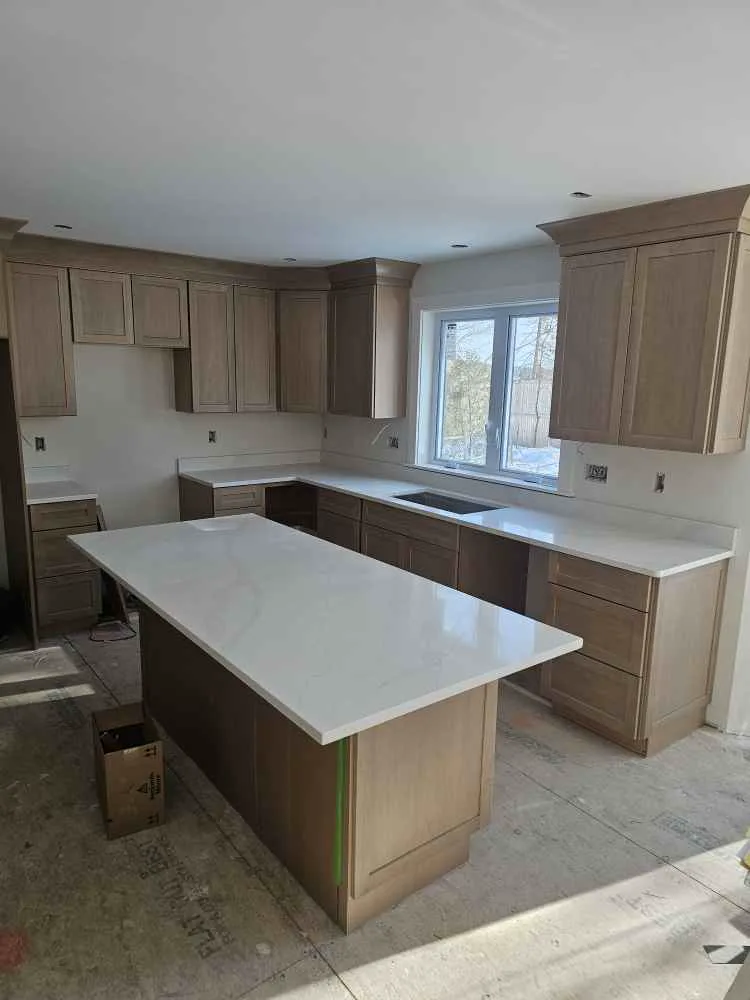
Granite looks more natural because it is natural. Every slab has its own mineral patterns, color variation, and movement. Some slabs are quiet and consistent. Others are dramatic, with bold veining or high contrast. That natural variation is part of the appeal.
Quartz can look beautiful, but it is engineered. Some quartz designs are very convincing and attractive, especially in modern kitchens. Others have a more consistent or manufactured look, which some homeowners prefer and others do not.
This comes down to taste. If you want movement, natural variation, and a slab that is truly unique, granite may be the better fit. If you want consistency and a more controlled design, quartz may be the better fit.
This is one of those decisions that is much easier to make in person. Photos online can help, but they do not always show the depth, finish, and movement of the material accurately.
Which One Costs More?
The cost of granite vs quartz depends on the specific material and the project. There is no universal rule that granite is always cheaper or quartz is always more expensive. A more common granite may cost less than a premium quartz. A high-end granite may cost more than some quartz options.
The final cost can depend on: material selection, slab availability, square footage, kitchen layout, edge profile, sink cutout, faucet holes, backsplash choices, seam placement, removal of existing countertops, and installation conditions.
This is why it's hard to compare materials based only on a square-foot number. The best way to compare granite and quartz is to look at specific options that fit your style and then quote the actual project.
Which One Is Better for Resale Value?
Both granite and quartz can support resale value when they are chosen well and installed properly. Most buyers recognize both materials as quality countertop options. A clean, updated kitchen with well-selected granite or quartz will usually make a stronger impression than a kitchen with worn laminate, damaged surfaces, or outdated colors.
The better resale choice depends on the home and the buyer. Granite may appeal to buyers who love natural stone, unique slabs, and classic kitchen materials. Quartz may appeal to buyers who want low maintenance, consistency, and a more modern look.
A well-designed countertop project will usually matter more than the label on the material.
When Granite Is the Better Choice
Granite may be the better choice if you want a countertop with natural character. It's a strong fit for homeowners who like movement, variation, and the idea that no two slabs are exactly the same. It's also a good option if heat resistance is important and you want a surface that feels connected to natural stone.
Granite may be the better choice if:
- You want real natural stone
- You like unique slabs and natural movement
- You want strong heat resistance
- You are comfortable with basic stone care
- You prefer a less manufactured look
- You want to choose the actual slab in person
Granite works especially well in kitchens where warmth, texture, and character are part of the design.
When Quartz Is the Better Choice
Quartz may be the better choice if low maintenance is your top priority. It's also a strong option if you want a specific color, a cleaner pattern, or a more consistent look throughout the kitchen.
Quartz may be the better choice if:
- You want the lowest maintenance option
- You prefer consistent color and pattern
- You want a wide range of design choices
- You do not want to seal the countertop
- You like a cleaner or more modern look
- You want predictable slabs across the kitchen
- You are matching a specific design palette
Quartz is especially useful when the rest of the kitchen design depends on consistency.
Which One Is Better for a Busy Kitchen?
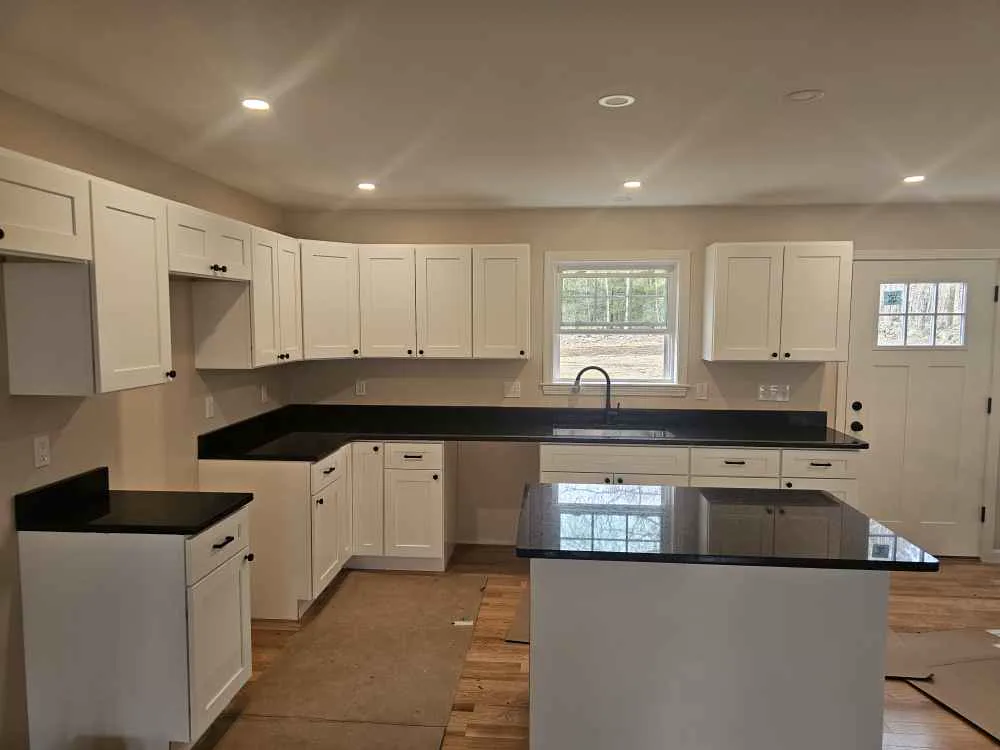
For a busy kitchen, both granite and quartz can work very well. If your kitchen sees a lot of cooking, entertaining, homework, meal prep, and daily family traffic, the better choice depends on what matters most to you.
Choose granite if you want natural stone, strong heat resistance, and one-of-a-kind character.
Choose quartz if you want low maintenance, consistency, and easier everyday care.
There is no wrong answer if the material fits your home and how you use the kitchen.
Why Seeing Both Materials in Person Matters
Granite and quartz are both much easier to understand in person. A photo can show color, but it does not always show depth, finish, movement, or how the material looks under real lighting. It also does not show how the countertop will feel next to your cabinets, flooring, backsplash, and wall color.
Seeing materials in person helps you compare: color, pattern, movement, finish, consistency, edge profiles, sink options, and how the material works with your kitchen style.
This is especially important with granite because each slab is unique. With quartz, seeing samples in person helps you understand how the pattern repeats, how bold or subtle the veining feels, and whether the color works with the rest of the room. A showroom visit can make the decision much clearer.
Fabricator Recommendation: Choose Based on How You Live
The best countertop material is the one that fits your home, your habits, and your expectations. A fabricator can explain the differences, but the right decision often comes down to how you live.
If you cook often, use hot pans, and love natural variation, granite may feel right. If you want low maintenance, consistent color, and a simpler cleaning routine, quartz may be the better fit.
If you're still unsure, compare both materials in person. Bring photos of your kitchen, cabinet samples if you have them, and any inspiration images that show the look you like. You don't need to know the answer before you walk into the showroom. That's part of the process.
Granite vs Quartz Countertops: Final Thoughts
Granite and quartz are both strong choices for busy kitchen countertops. Granite offers natural stone character, unique movement, strong heat resistance, and long-term appeal. Quartz offers consistency, low maintenance, and a wide range of colors and patterns.
The better choice depends on how you use your kitchen, how much maintenance you want, what style you prefer, and which material looks best in your home.
If you're comparing granite vs quartz countertops in New Hampshire, Precision Granite Works can help you review options, understand the differences, and choose a countertop material that fits your kitchen, your budget, and your daily life. Visit the showroom in Epsom, NH, or contact Precision Granite Works to start planning your countertop project.
Frequently Asked Questions
Is granite better than quartz for kitchen countertops?+
Is quartz better than granite for a busy kitchen?+
Which countertop is easier to maintain, granite or quartz?+
Is granite more heat resistant than quartz?+
Does quartz stain less than granite?+
Which countertop material looks more natural?+
Which costs more, granite or quartz?+
Which countertop material is better for resale value?+
Should I choose granite or quartz for a family kitchen?+
Ready to Start Your Project?
Contact Precision Granite Works for a free consultation and quote at our Epsom, NH showroom.
About the Author
Written by the team at Precision Granite Works — New Hampshire's family-owned countertop fabricators. Jillian and Shawn Woodward and their team serve homeowners and builders across all of NH from our Epsom showroom.