Bold Veining vs. Subtle Movement: How to Choose the Right Countertop Style
A dramatic slab can become the centerpiece of a kitchen, while a quieter surface can make the entire room feel calm and balanced. Learn how kitchen size, cabinets, seams, cutouts, slab direction, and finish should influence your choice between bold veining and subtle movement.
By Precision Granite Works Team · Precision Granite Works, Epsom NH
Some countertops quietly support the room. Others become the first thing you notice when you walk into the kitchen. Both can be beautiful.
A soft cream countertop can make wood cabinets feel warmer and more settled. A dramatic quartzite slab with bold movement can turn a large kitchen island into a natural focal point. The mistake is assuming that the most dramatic slab is always the most impressive choice — or that a subtle countertop is automatically the safest.
The right amount of movement depends on the room, the cabinet style, the size of the kitchen, the slab itself, and the way that stone will eventually be cut into real countertop pieces.
Choose bold veining when you want the countertop to become a focal point and the kitchen offers enough visual space for the pattern to breathe. Choose subtle movement when cabinets, backsplash, flooring, or other finishes already have a lot of detail, or when you want easier seam transitions and more long-term design flexibility.
The most important thing is to look beyond a small sample. A beautiful slab still has to work with your actual layout — including seams, sink cutouts, cooktops, corners, and viewing angles. Here is how to decide which countertop style makes the most sense for your home.
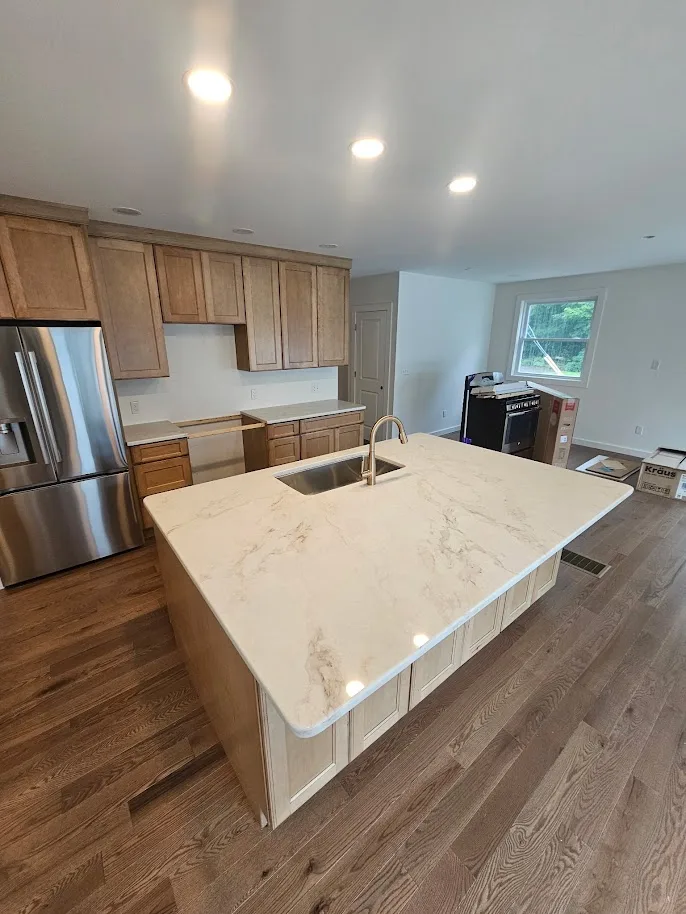
What Do Veining and Movement Mean in Countertops?
Veining refers to visible lines or bands that travel through a slab. Those veins may be thin and delicate, broad and cloudy, straight, diagonal, branching, or highly irregular.
Movement is a broader term. It describes the way color, crystals, veins, mineral patterns, and visual changes travel across the stone. A slab can have significant movement without one obvious vein running through it.
Subtle movement usually has lower contrast and more gradual changes. Bold movement may include stronger color shifts, larger features, dramatic veins, or patterns that immediately direct the eye across the slab.
These descriptions are also relative. A pattern that looks dramatic on a small sample may feel perfectly balanced across a ten-foot kitchen island. A medium-size vein that feels subtle on a full slab may dominate a compact bathroom vanity. That is why scale matters. You are not choosing a pattern in isolation. You are choosing how that pattern will behave once it becomes part of the room.
Why Bold Veining Is So Appealing
Bold countertops create a focal point. They can bring color into an otherwise neutral kitchen, connect cabinet and hardware tones, and make a large island feel intentionally designed rather than simply large.
Natural stone also offers individuality. The exact vein, crystal pattern, mineral deposit, or color shift in your granite or quartzite countertop will not appear in exactly the same way in another home. That uniqueness is part of the appeal.
Bold veining can be especially effective when the rest of the kitchen is relatively quiet:
- Simple cabinet doors
- Restrained flooring
- A subtle backsplash
- Clean hardware
- Minimal decorative detail
In that type of space, the countertop has room to lead. Bold does not necessarily mean loud in color either. A creamy slab with one broad taupe wave can feel just as dramatic as a high-contrast black-and-white pattern when that movement crosses the center of a large island. The impact comes from scale, contrast, placement, and how the stone relates to the rest of the room.
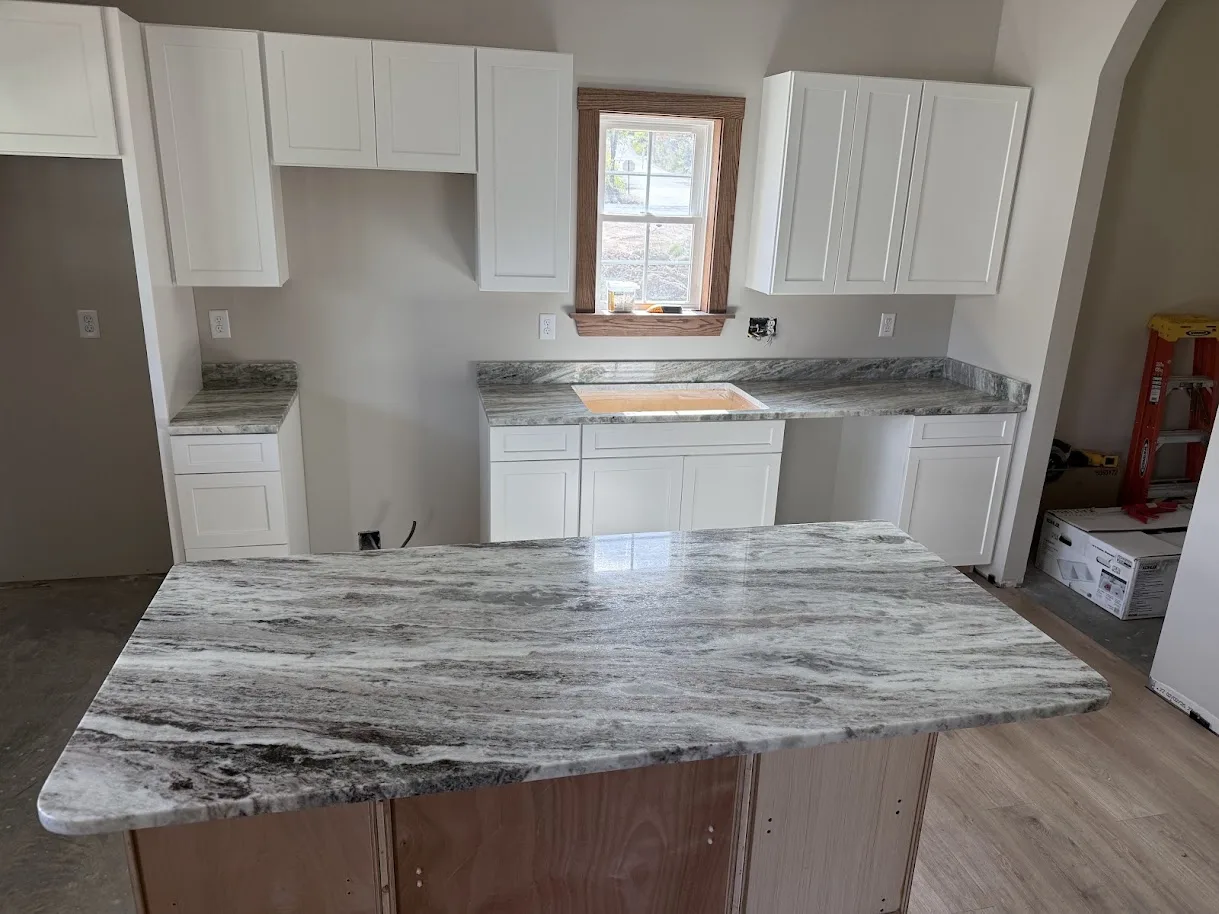
Why Subtle Movement Is Not Boring
A quieter countertop gives other materials space to lead. It can work beautifully with strong wood grain, detailed cabinetry, patterned tile, distinctive flooring, colorful paint, or architectural details.
Subtle movement can also make the room feel calmer — especially valuable in a kitchen where several finishes already have visual texture. Quiet does not mean flat. A subtle granite, quartz, or quartzite may include fine crystals, soft clouding, small mineral changes, low-contrast veining, and gentle shifts in tone that become more noticeable over time as you live with the material and see it under different lighting throughout the day.
Subtle movement also tends to be easier to carry across perimeter runs, corners, and seams because the eye is not following one dominant line. For many busy kitchens, that calm background is exactly what makes the finished space feel polished.
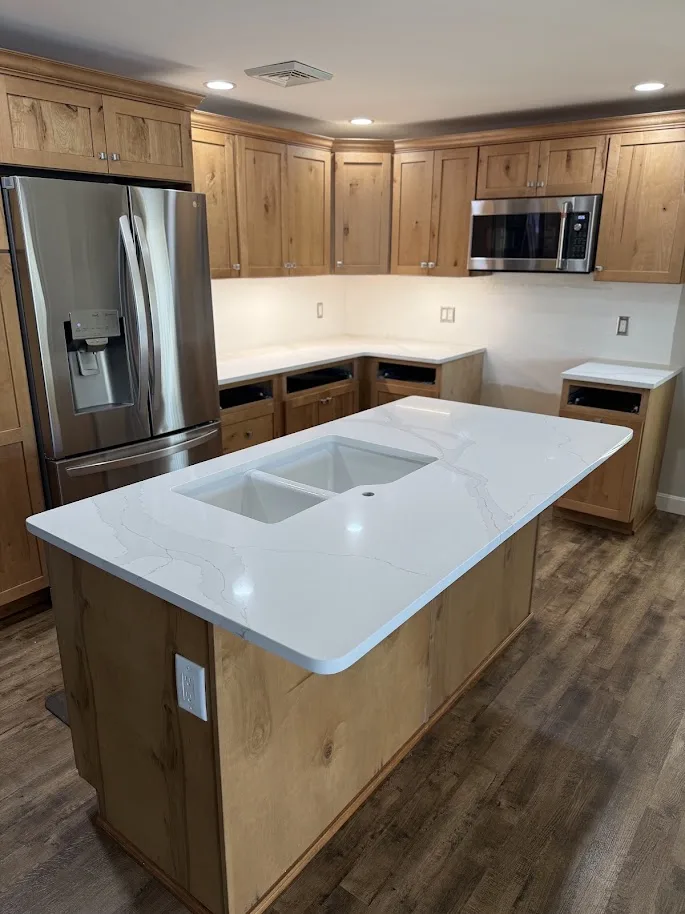
How Kitchen Size Changes the Decision
Large kitchens and open floor plans can usually support more pattern because there is more visual space around the countertop. The viewer can step back and see the stone as a whole. A large kitchen island is one of the best places to feature dramatic movement because it creates a broad, mostly uninterrupted surface where the pattern can travel without being broken up by too many corners.
In a smaller kitchen, bold veining can still work beautifully. The key is scale. One intentional focal area may be more effective than putting strong movement on every short countertop run. A dramatic peninsula or island paired with quieter perimeter countertops can create interest without making the room feel crowded.
Also think about sightlines. If the kitchen is visible from the living room, dining room, or main entrance, the countertop becomes part of several spaces, not just the kitchen. A dramatic pattern may look different when seen from fifteen feet away than it does when standing directly beside the island. The best countertop choice should work from both perspectives.
Cabinets, Flooring, and Backsplash Need a Clear Leader
Every material adds visual information. Wood grain, cabinet doors, flooring, tile, hardware, lighting, and countertop movement all compete for attention. The kitchen does not need every surface to be the focal point.
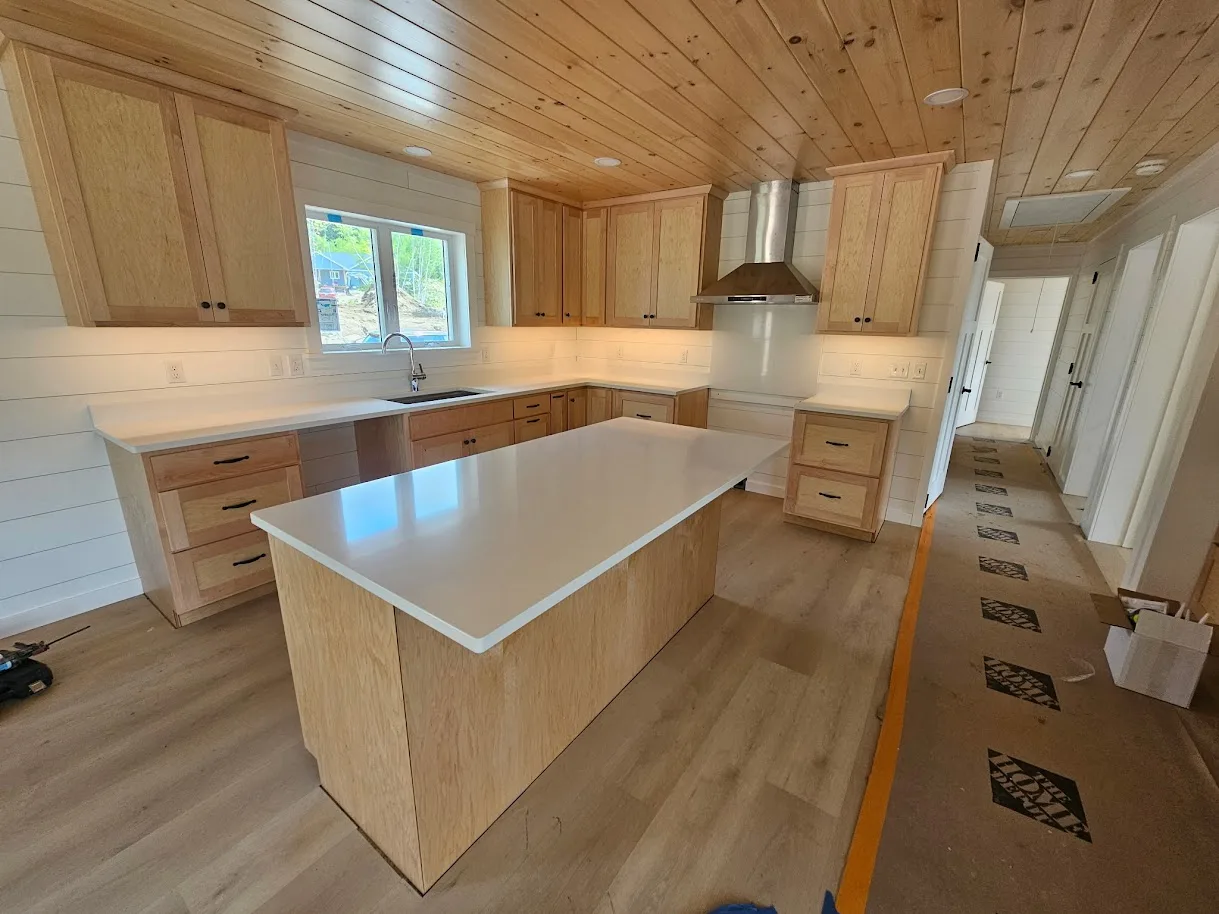
If the cabinets have strong wood grain or detailed door fronts, a low-contrast countertop often creates a better balance. If the cabinets are simple and solid, the countertop may have more room to carry dramatic movement.
The backsplash is one of the most common areas where too many patterns can start to compete. A heavily veined countertop paired with small patterned tile may make both materials harder to appreciate. In that situation, a quieter tile or a carefully planned full-height stone backsplash may create a more unified result.
Choose the focal point first. The supporting materials do not need to match it exactly, but they should not argue with it. If the stone is the star, give it room.
Why Seams Matter More With Directional Stone
Seams are a normal part of many countertop projects. Their location depends on slab size, cabinet layout, access to the home, sink placement, cooktop openings, safety, and fabrication requirements.
With subtle movement, a seam may blend more easily because there is no single dominant line the eye expects to continue. Directional stone can be more complicated. If a bold vein stops, changes angle, or meets another piece differently at a seam, the transition may be more noticeable. A skilled layout can improve the flow, but natural stone cannot always be made to match perfectly. Slab dimensions and the actual geometry of the kitchen create real limitations.
That does not mean you should avoid dramatic stone. It means you should understand where likely seams will fall before finalizing the layout. The goal is not to pretend seams do not exist — the goal is to plan them thoughtfully. For more on seam placement, see our countertop seams guide.
Sink and Cooktop Cutouts Can Remove the Best Part of the Slab
One of the easiest things to overlook during slab selection is what the sink, cooktop, and other cutouts will remove. Homeowners sometimes fall in love with a beautiful section of stone without realizing that most of it will disappear once the sink opening is cut.
Cutouts can also interrupt movement. A broad vein may disappear at the sink and return on the other side. A dramatic section may be divided into narrow rails in front of or behind the sink. A cooktop can remove the center of a striking pattern.
That does not mean the vein should be avoided. It means the slab layout should be reviewed with the cutouts shown. In some cases, shifting the strongest movement toward the seating side of an island or another more visible area can create a better result. Practical requirements always come first, but early planning gives the fabricator more opportunities to use the slab well.
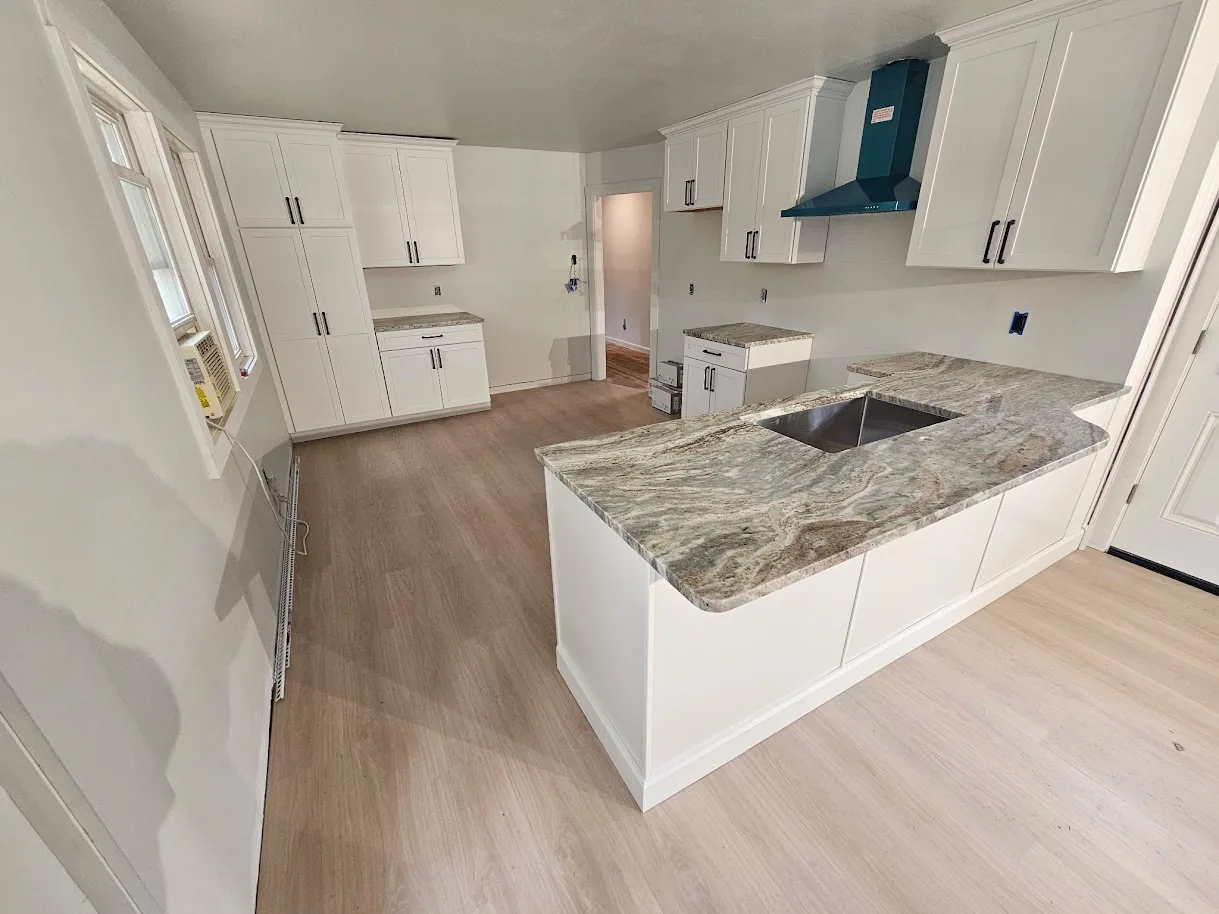
Should Countertop Veins Run in a Certain Direction?
There is no universal rule that countertop veins must run lengthwise or point toward a particular wall. The direction should respond to the shape of the countertop and the way the room is viewed.
Lengthwise movement can make a long island feel even longer and more dramatic. Crosswise movement can add energy to a wide surface. On an L-shaped run, the pattern may need to turn, meet at a seam, or be balanced rather than perfectly continued.
Think about where people will stand. Which side of the island is seen from the living room? What does the countertop look like when entering the kitchen? Which surface is visible from the sink or dining area? A layout that looks good from one viewpoint may feel completely different from another.
For engineered quartz, there is another consideration: pattern repetition. Ask how often the printed design repeats and whether adjacent pieces can be oriented without creating an obvious mismatch. The goal is not always perfect continuation — the goal is a layout that feels intentional.
Can You Use a Bold Island and Quiet Perimeter Countertops?
Yes. In fact, this is one of the most practical ways to use dramatic stone. A bold island can create a focal point while quieter perimeter countertops handle the busier areas around sinks, appliances, corners, and backsplashes.
The two materials do not need to be identical. They do need some relationship — through color, undertone, overall warmth, contrast level, or cabinet color. For example, a controlled quartz perimeter can support a dramatic natural quartzite island. A quiet granite can surround a more expressive feature slab.
Before mixing countertop surfaces, compare thickness, edge profile, finish, color, undertone, and how both materials look under the same lighting. The goal is contrast that feels intentional, not accidental. A stone like Taj Mahal quartzite, for example, can serve beautifully as a bold island surface while a quieter granite or quartz handles the perimeter.
Why a Small Countertop Sample Can Be Misleading
Small samples are helpful. They can show background color, basic texture, and sometimes the overall direction of the pattern. What they cannot show is the full scale of movement.
A small sample may come from a quiet corner of a slab and completely miss a dark band crossing the center. It may show one delicate vein without revealing how often that pattern repeats across a full quartz slab.
Whenever possible, view the full slab. Stand close and look at the details. Then step back — the stone may feel completely different from several feet away. Bring cabinet, flooring, paint, and backsplash samples too. Place them against the stone rather than imagining how they will work together.
If the project requires more than one natural stone slab, try to view the bundle together. Natural stone varies from slab to slab, and those differences can affect color consistency, pattern flow, seam planning, and the finished look. A small sample can help narrow your options. It should not always be the final decision-maker.
How Countertop Finish Changes the Look of Movement
Finish can change the way a countertop pattern feels significantly.
- Polished: Reflects more light and may make veins, crystals, and contrast look stronger and more dramatic.
- Honed: Diffuses reflection and can make the same stone feel softer or quieter — a useful option when a slab feels too active at full polish.
- Leathered: Adds texture and deepens the natural character of the stone, especially in certain granites and darker materials.
Finish availability depends on the material, and maintenance or fingerprint visibility can vary. That is why pattern and finish should not always be treated as separate decisions. Whenever possible, look at the actual finish under lighting similar to what will be used in the room. Natural daylight, under-cabinet lighting, and evening lighting can all change the way movement appears. For more on finish options, see our guide on granite edge profiles and finish choices.
Questions to Ask During Slab Layout
A good slab layout discussion should go beyond asking whether the stone is beautiful. You also want to understand how that slab will become your actual countertop. Useful questions include:
- Which part of the slab will be used for the island or most visible countertop run?
- Where will the sink, cooktop, faucet, and outlet cutouts fall?
- Where are seams likely to be placed, and how will the movement meet at those seams?
- Does the project require more than one slab?
- Are there natural fissures, filled areas, or color changes I should expect?
- Will the backsplash use the same stone, and how will backsplash pieces relate to the countertop?
- Which direction will the pattern run from the main viewpoints?
- Will any dramatic sections be removed by cutouts?
You do not need to become a fabricator to ask good questions. You just need to understand how the material you love will translate into the finished room.
Fabricator Recommendation: Design With the Whole Slab
Choose bold veining when you want the countertop to lead and the room gives the pattern enough space. Choose subtle movement when the kitchen already has a lot of detail, when you want easier transitions, or when long-term flexibility matters more.
Then move beyond those simple labels. Look at the exact slab, the actual project dimensions, sink and cooktop cutouts, seam locations, corners, viewing angles, and lighting. A dramatic slab can lose impact if the best parts are removed or divided without a plan. A quiet slab can feel unexpectedly rich when its color, finish, and mineral detail are placed thoughtfully.
The right countertop style is not just the one that looks best on the slab rack. It is the one that still works after the slab is divided into the real pieces your kitchen needs.
Bold Veining or Subtle Movement: Which Should You Choose?
Choose bold veining if you want the countertop to become a focal point and the room has enough space for the pattern to breathe. Choose subtle movement if the cabinets, flooring, backsplash, or architecture already carry a lot of visual detail.
For a large kitchen island, bold movement can create a powerful feature. For kitchens with many corners, seams, and short countertop runs, subtle movement may make the layout feel more natural and connected.
There is no universal best choice. The goal is to match the stone to the space. A countertop should work with the kitchen — not just look impressive as a full slab.
Plan Your Countertop Pattern With Precision Granite Works
Precision Granite Works helps homeowners across New Hampshire compare granite, quartz, and quartzite and understand how the material will work once it becomes part of the actual kitchen. That includes more than choosing a color — movement, slab layout, seam placement, sink and cooktop cutouts, edge details, and finish all affect the final result.
We serve homeowners in Epsom, Concord, Manchester, Portsmouth, Nashua, Dover, Bedford, Rochester, Londonderry, Hooksett, Laconia, Meredith, Wolfeboro, and throughout southern New Hampshire, the Seacoast, the Lakes Region, and into nearby Maine and Vermont.
Visit our showroom at 1022 Dover Road in Epsom, NH to compare full slabs and samples, talk through your layout, and understand how the pattern may work across your actual countertop project. Whether you prefer a quiet surface or a dramatic showpiece island, planning the pattern early can help the finished room feel more intentional.
Call us at 603-736-0004 or get a free estimate online.
Frequently Asked Questions
What does movement mean in a stone countertop?+
Are bold veining countertops going out of style?+
Do dramatic countertops make a small kitchen look smaller?+
Is bold veining good for a kitchen island?+
How do seams affect countertop veining?+
Should countertop veins run in the same direction?+
Can I use a bold island with quiet perimeter countertops?+
Why should I view the full slab before fabrication?+
Does countertop finish change how veining looks?+
Can a sink or cooktop cutout remove part of a dramatic vein?+
Ready to Start Your Project?
Contact Precision Granite Works for a free consultation and quote at our Epsom, NH showroom.
About the Author
Written by the team at Precision Granite Works — New Hampshire's family-owned countertop fabricators. Jillian and Shawn Woodward and their team serve homeowners and builders across all of NH from our Epsom showroom.