How to Choose a Full Slab of Granite or Quartzite Before You Buy
A small sample can identify a general color, but it cannot show how a natural slab will move across an island, where a sink will land, or how two pieces will meet. This guide gives homeowners a practical way to evaluate the actual slab before it is cut.
By Precision Granite Works Team · Precision Granite Works, Epsom NH
A sample can tell you that a stone is cream, gray, green, or black. It cannot show where a broad vein will cross your island, whether one end of the slab is warmer than the other, or what will disappear when the sink is cut out.
That is why choosing granite or quartzite is different from choosing a uniform product from a small chip. Natural stone varies from slab to slab and often within the same slab. The goal is to select the exact material that works for your room and your countertop layout, then make sure the best areas are used deliberately.
You do not need to inspect stone like a geologist or plan cuts like a fabricator. You do need to look at the whole slab, understand which characteristics are normal, and ask how the slab will become the pieces in your home.
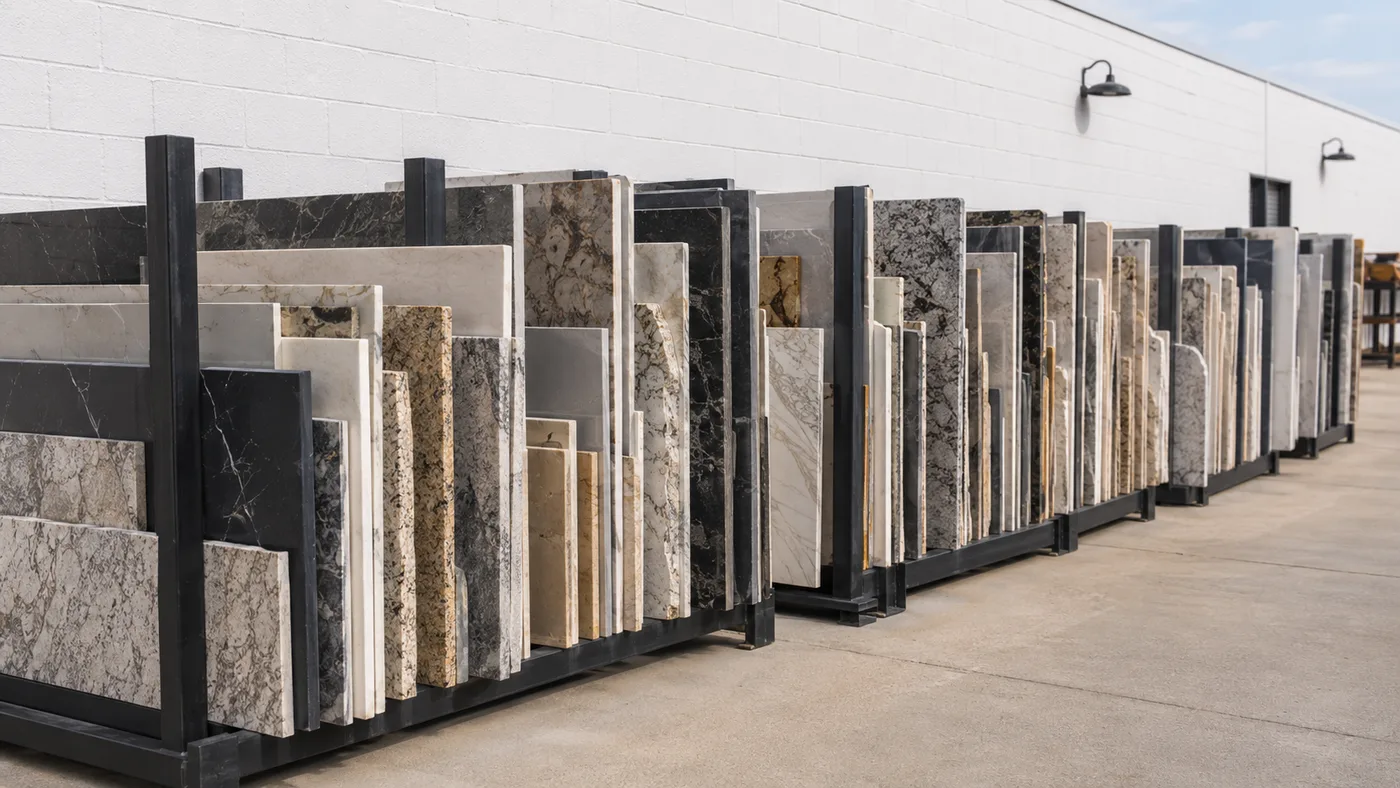
Start With the Room Before You Enter the Slab Yard
Bring more than a phone photo. A cabinet door or finish sample, flooring sample, backsplash candidate, paint chip, hardware finish, and a reasonably accurate plan will make the visit far more useful. Natural and artificial light can shift undertones, so note whether the room faces north or south and whether the countertop will sit under warm or cool lamps.
Decide what the stone needs to do visually. A large island may be the focal point. A perimeter with many corners, appliances, and small runs may need calmer movement. If the cabinets have strong wood grain, the stone may need to support it rather than compete with it.
Also be honest about use and care. Granite countertops and quartzite countertops are broad commercial categories, not performance guarantees. Ask about the specific material's porosity, sealing needs, acid sensitivity, scratch resistance, and finish. If those answers matter to your household, request a representative sample for appropriate testing before committing.
Look at the Entire Slab From More Than One Distance
Begin several feet back. At that distance you can see the overall direction, balance, and scale of the movement. Then move closer to study crystals, pores, filled areas, surface texture, and color changes. Finally, step back again and imagine only the pieces your project will use.
View the slab upright whenever the supplier can present it safely. Never pull or climb between stored slabs. Stone slabs are extremely heavy and must be handled by trained staff with proper equipment.
A polished slab may reflect warehouse lights, while a honed or leathered finish scatters light differently. Look from an angle as well as straight on. If possible, see the actual finish you are purchasing rather than assuming the same stone will look identical in another finish.
Judge Color Across the Whole Surface
Natural stone can change noticeably from one end to the other. A cream field may become grayer near a mineral band. Gold may be concentrated in one corner. Dark crystals may form a cluster that reads as a feature from across the room.
Ask whether the color variation is typical of the bundle and whether the project needs more than one slab. If it does, view the slabs together. Sequential slabs can relate closely, but they are not printed copies. Confirm that the backgrounds and major movements coordinate where finished pieces will meet.
Phone images are useful for memory, not final approval. Cameras adjust white balance and exposure; screens alter color; reflections can hide texture. Take photos, but base the decision on the physical slabs and real samples from the room.
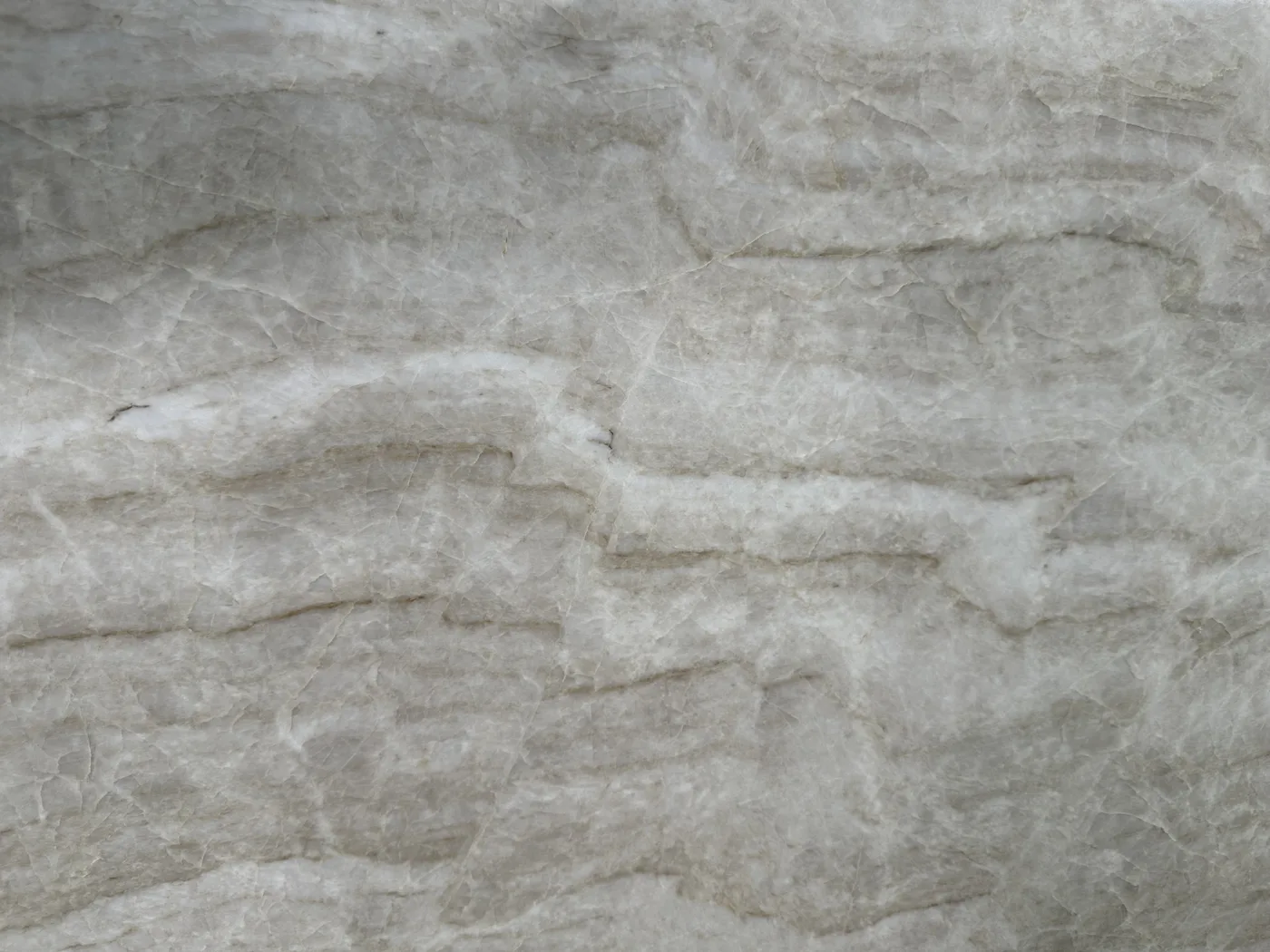
Trace the Movement and Choose the Focal Areas
Movement describes how veins, mineral clouds, color bands, and crystals travel through the slab. Trace that movement with your eye. Does it have a clear direction? Is there one dramatic feature you want on the island? Does a quiet zone belong near a sink or seam?
Mark priorities, not an impossible list of forbidden areas. Reserving every dramatic feature while avoiding every natural variation can make the layout unworkable or require more material. Tell the fabricator what matters most: perhaps a sweeping vein on the island, a calm sink rail, or a balanced view from the adjoining living room.
If the stone is strongly directional, ask whether adjacent countertop runs can follow the same visual flow. Rotating a piece may improve material yield but make the pattern feel disconnected. This is a design tradeoff worth resolving before cutting. For more on that choice, compare bold veining versus subtle movement.
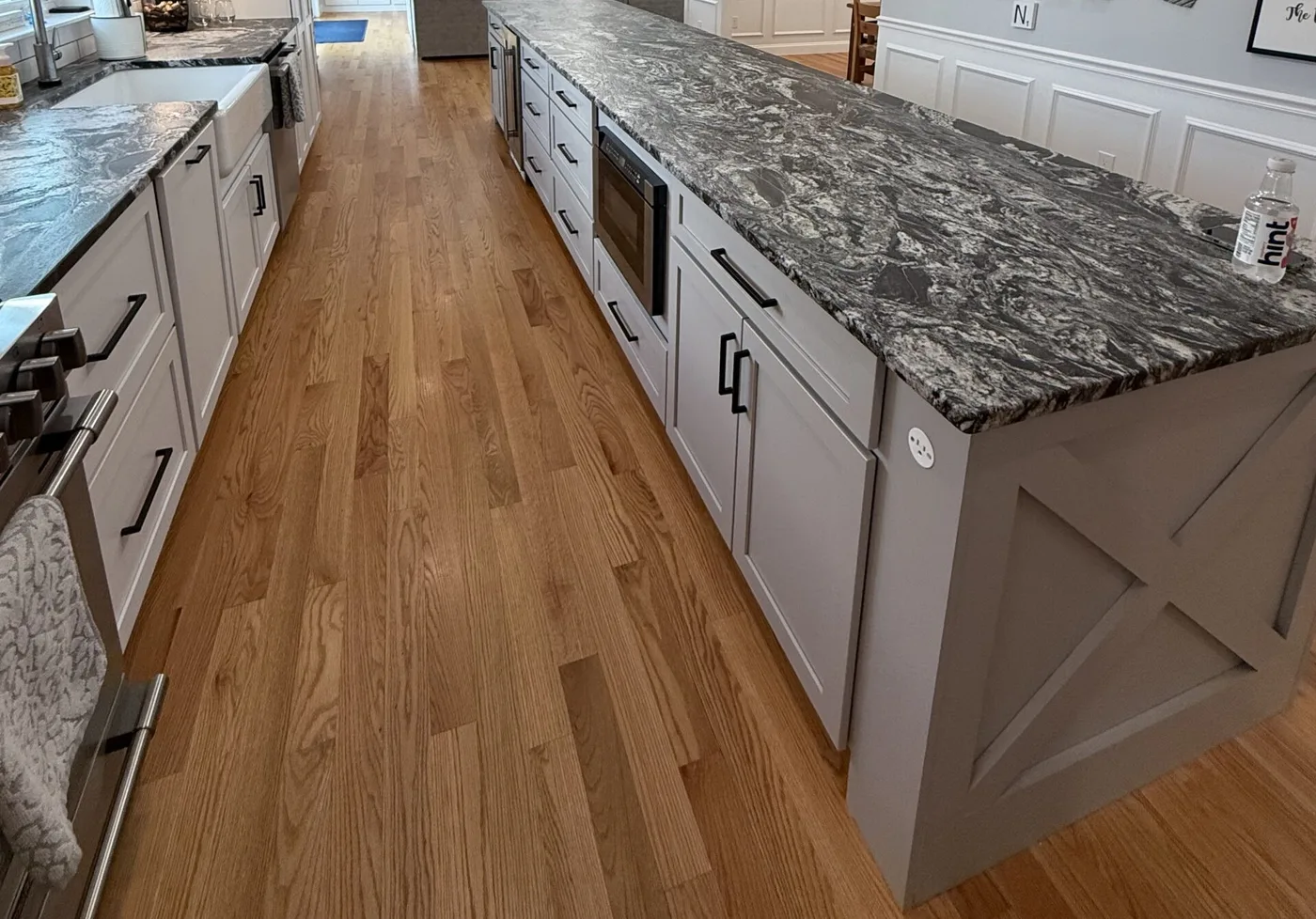
Plan Around Sinks Cooktops and Other Cutouts
A sink or cooktop removes some of the slab's most visible area. Place a paper outline or use a digital layout to understand what will remain. A vein that looks perfectly centered on the slab may be divided by a sink, leaving two unrelated fragments on either side.
Cutouts also create narrow stone rails that need careful evaluation. A natural feature that is harmless in the middle of a broad island may be less desirable beside a sink opening, at an inside corner, or along a narrow strip. The fabricator should decide whether the exact area is suitable for the planned piece.
Finalize sink, faucet, cooktop, outlet, and accessory locations early. Moving an opening after layout approval can change both the appearance and the structural demands of the piece.
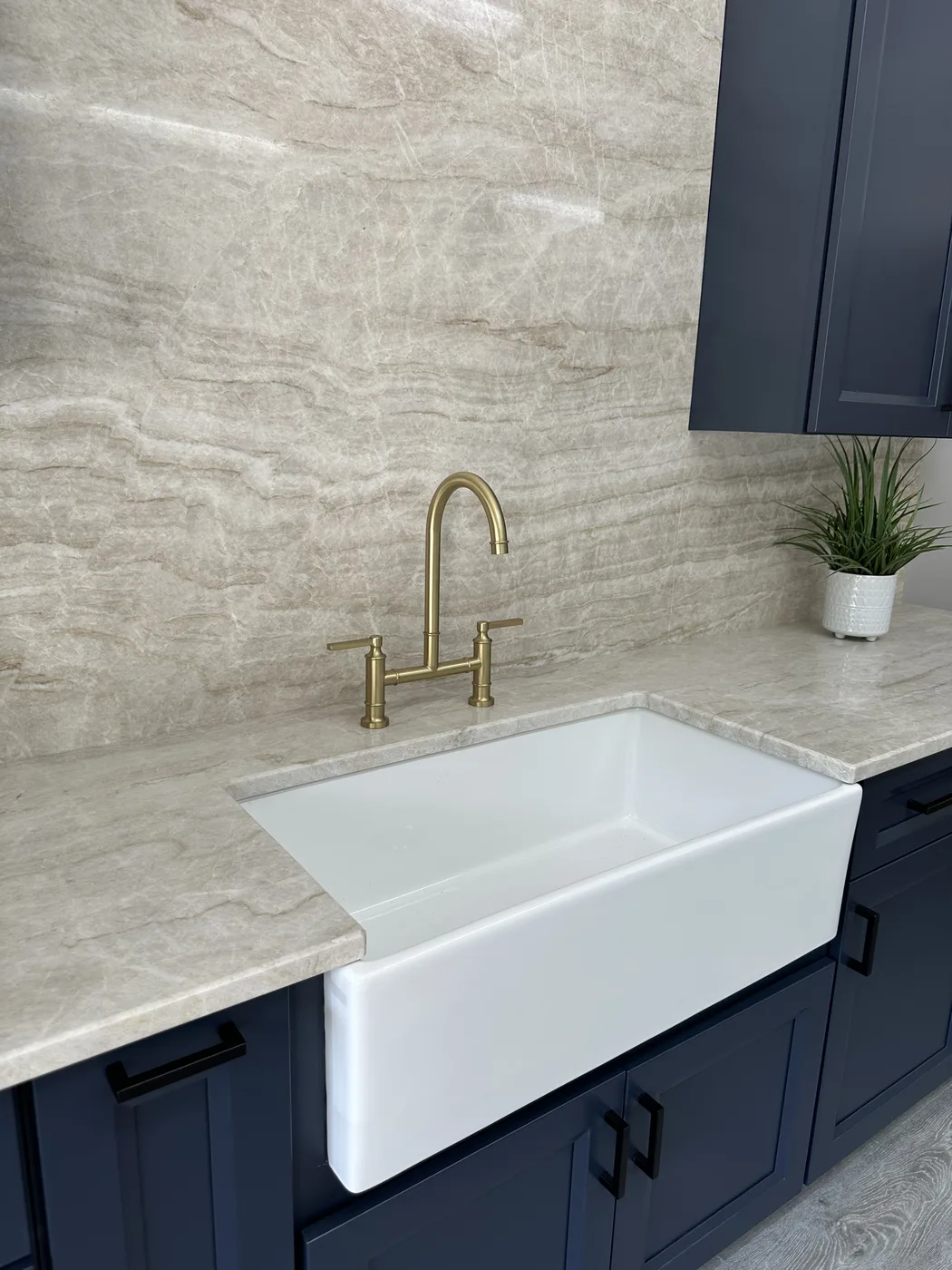
Understand Fissures Cracks Pits and Resin Filled Areas
A fissure is a naturally occurring separation or healed break created during the stone's geologic history. A crack is damage caused after the stone formed, often through handling, fabrication, impact, or stress. The distinction is important, but the label alone does not decide whether an area belongs in your countertop.
Many natural stones also contain pits, voids, mineral pockets, mesh backing, or resin-filled areas. Resin may be applied during slab processing to stabilize or fill the surface. These features can be normal, visible characteristics of the material. They can also affect where a narrow rail, exposed edge, or miter should be cut.
Ask the fabricator to inspect anything that concerns you. Look at whether a line can be felt, whether it continues through the slab, and where it would land in the finished piece. A feature in a well-supported field is a different question from the same feature at an unsupported overhang.
Confirm How Many Slabs Must Work Together
The recent Precision Granite Works guide to how many countertop slabs you need explains why square footage alone cannot determine how many slabs a project needs. Selection adds another layer: all required slabs must work as a set.
Compare background color, finish, thickness, and major movement. Ask which slab will carry the island and which will supply perimeter runs. If two pieces meet at a corner or seam, review the likely relationship between them.
Do not assume a coordinating slab can be purchased later. Natural bundles sell, and manufactured surfaces can vary between production lots. Reserve the complete material requirement after the fabricator confirms the preliminary layout.
Review the Layout Before the Slab Is Cut
Slab layout is the stage when digital countertop shapes are positioned over images of the selected material. It helps everyone discuss focal areas, vein direction, seams, cutouts, and natural features before fabrication begins.
A digital preview is a planning tool, not a photographic guarantee. Saw kerf removes a small amount of material, polishing changes edges, seams have width, and calibrated images still cannot reproduce the depth of real stone. Even so, layout review is the best time to catch a feature that would otherwise land in the wrong place.
Ask which decisions are being approved and how later changes will be handled. Save the approved layout with the project documents. Learn how countertop templating and custom fabrication turn the selected material into finished pieces.
How Lighting Changes the Stone at Home
Warehouse lighting is rarely identical to a New Hampshire kitchen. Winter daylight can be cool and limited; warm under-cabinet lights can bring out cream or gold; bright recessed lighting can strengthen contrast on a polished surface.
Take a representative sample home when one is available and view it in morning, afternoon, and evening light. Hold it horizontally because a countertop reflects light differently than an upright display. Place it against the actual cabinet and floor finishes.
For strong natural movement, the sample confirms color and finish, while the full slab confirms composition. You need both views.
Questions to Ask Before Approving a Slab
- Am I approving this exact slab or only a stone variety?
- Does the project require more than one slab, and can I see them together?
- Which areas are likely to become the island and the most visible runs?
- Where will the sink, cooktop, seams, and exposed edges land?
- Are there fissures, filled areas, mesh, pits, or color changes I should understand?
- Can I review a digital slab layout before fabrication?
- What care or performance expectations apply to this specific stone and finish?
- What happens if the final field template changes the preliminary layout?
Choose the Slab and the Plan Together
The strongest selection is not simply the prettiest slab in the warehouse. It is the slab whose color, movement, usable area, and performance fit the room and the way the stone must be fabricated.
At Precision Granite Works, homeowners can bring plans and finish samples to discuss granite and quartzite options, then review how the selected material may be used across the project. Visit the showroom at 1022 Dover Road in Epsom, New Hampshire, before the material is reserved and cut. To discuss your project, contact Precision Granite Works.
Frequently Asked Questions
Should I choose granite or quartzite from a small sample?
No. A sample can help with color and basic testing, but natural slabs vary. View and approve the exact full slabs whenever possible, especially for an island or strongly patterned material.
What is the difference between a fissure and a crack?
A fissure formed naturally within the stone; a crack is damage that occurred later. Ask the fabricator to evaluate location, depth, support, and the planned cut rather than relying on the name alone.
Can I request a specific vein on my island?
Yes, identify the priority during slab layout. The fabricator must also account for piece size, cutouts, seams, natural features, safe cutting margins, and the other parts required from the slab.
Should two slabs look identical?
No. Natural slabs vary, even within one bundle. They should coordinate in background, finish, and movement where the finished pieces relate, but exact duplication is not realistic.
Why does my slab look different in photos?
Phone cameras and screens alter exposure, white balance, contrast, and reflections. Use photographs for reference, but approve color and surface characteristics in person.
When is slab selection final?
Reserve material after the project scope is clear and the fabricator has checked slab quantity and suitability. Final piece placement is most dependable after field templating and layout review.
Frequently Asked Questions
Should I choose granite or quartzite from a small sample?+
What is the difference between a fissure and a crack?+
Can I request a specific vein on my island?+
Should two slabs look identical?+
Why does my slab look different in photos?+
When is slab selection final?+
Ready to Start Your Project?
Contact Precision Granite Works for a free consultation and quote at our Epsom, NH showroom.
About the Author
Written by the team at Precision Granite Works — New Hampshire's family-owned countertop fabricators. Jillian and Shawn Woodward and their team serve homeowners and builders across all of NH from our Epsom showroom.