Should You Use the Same Stone Throughout Your Home
Using one stone throughout a home can create continuity and make good use of material, but exact repetition is not a design rule. The best plan gives each room an appropriate surface while carrying a few consistent colors, finishes, or details from one space to the next.
By Precision Granite Works Team · Precision Granite Works, Epsom NH
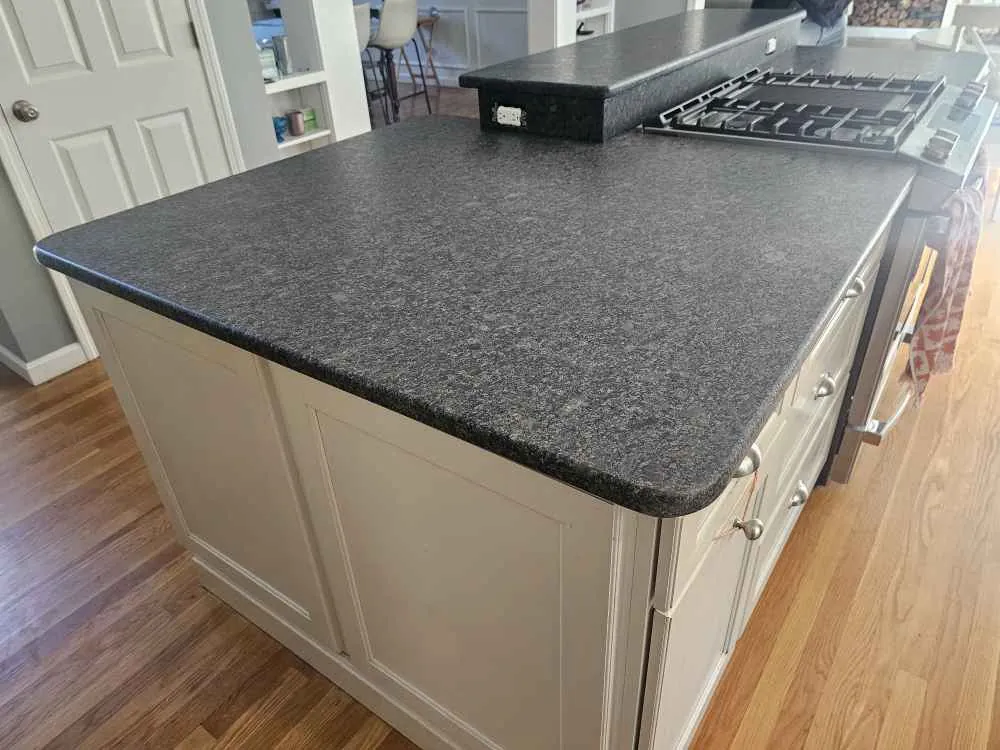
There is no rule that the kitchen, bathrooms, fireplace, laundry room, and bar must use the same stone. There is also nothing inherently builder-basic about repeating a material you genuinely like.
The decision depends on sightlines, room use, lighting, project timing, and material availability. A connected open plan benefits from a clear material relationship. A private bath on another floor can respond to its own tile, cabinetry, and light. The goal is a home that feels related, not copied room by room.
Three Levels of Coordination
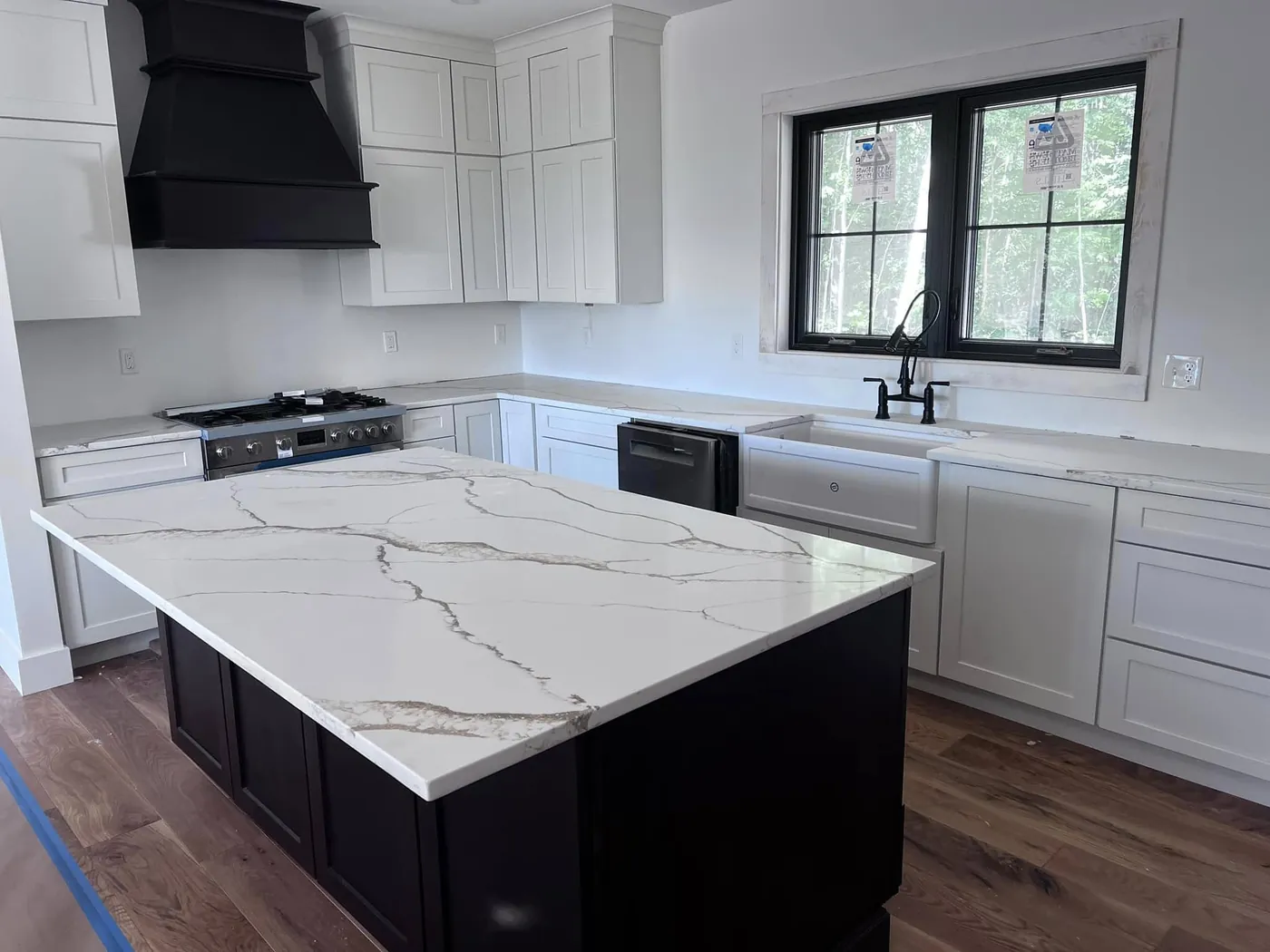
The first option is an exact repeat: the same named material, finish, thickness, and edge. This gives the strongest continuity and is easiest to recognize across open spaces.
The second is a variation on the same material. You might use polished stone in the kitchen and a honed version in a powder room, or keep the same stone with a simpler edge on a vanity. Confirm that the finish is available and appropriate for each use.
The third is a coordinated family. Different stones can share a warm cream background, charcoal accent, soft movement, or similar visual temperature. This creates connection while allowing each room to have its own identity.
When Repeating the Same Stone Works Well
Repeat stone where two areas are seen together: a kitchen and nearby bar, an open pantry, a dining built-in, or a fireplace visible from the island. The repeated surface can carry the eye through the space and reduce the number of competing finishes.
It also works when the material is quiet enough to adapt to different rooms. A low-contrast stone may feel calm on a broad island and almost solid on a narrow vanity. Cabinetry, wall color, plumbing, and lighting can change the expression.
A multi-room project completed at one time may use slab yield efficiently. Smaller pieces can sometimes come from areas left after major kitchen parts are planned, provided the dimensions, direction, finish, and quality work. Ask the fabricator to include every room in one layout rather than assuming scraps will fit later.
When Exact Matching Can Feel Repetitive
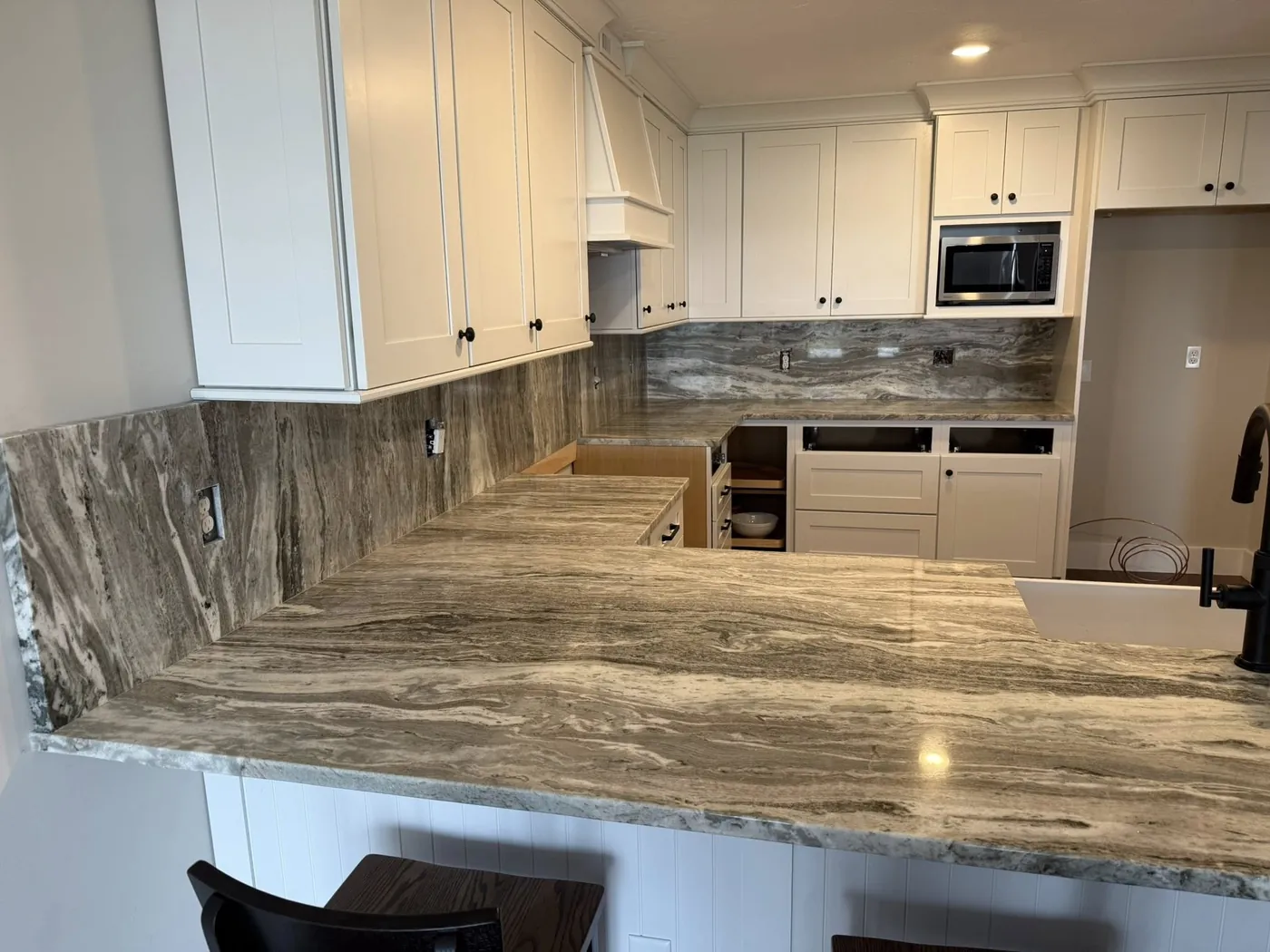
A dramatic slab that commands attention on a kitchen island may be too active on every vanity and fireplace panel. Repetition is most obvious when the pattern is distinctive and the rooms are close together.
Rooms also have different fixed finishes. A cream stone that settles beautifully against white oak in the kitchen may turn yellow beside cool gray bathroom tile. The name is the same, but the context changes the color.
If each room has a strong theme, forcing one stone into all of them can create compromises. Coordination through undertone or finish may produce a more coherent home than literal matching.
Kitchens Need the Most Demanding Review
The kitchen usually has the largest surface area, the most cutouts, and the most daily heat, spills, abrasion, and cleaning. Choose that material for the household's real use before extending it elsewhere.
A stone that is acceptable on a lightly used powder-room vanity may require more vigilance around acids, oils, or heavy cooking. A manufactured surface may carry application or heat restrictions that matter near a range or fireplace. Confirm performance and warranty guidance for each application.
Because the kitchen often establishes the home's main palette, it can supply colors to repeat elsewhere without dictating the exact stone. A mineral tone from the island might reappear in bath tile or a laundry cabinet finish.
Explore kitchen countertops for the main workspace, or read about using two different countertops in one kitchen when an island and perimeter need different roles.
Bathrooms Change the Scale and the Light
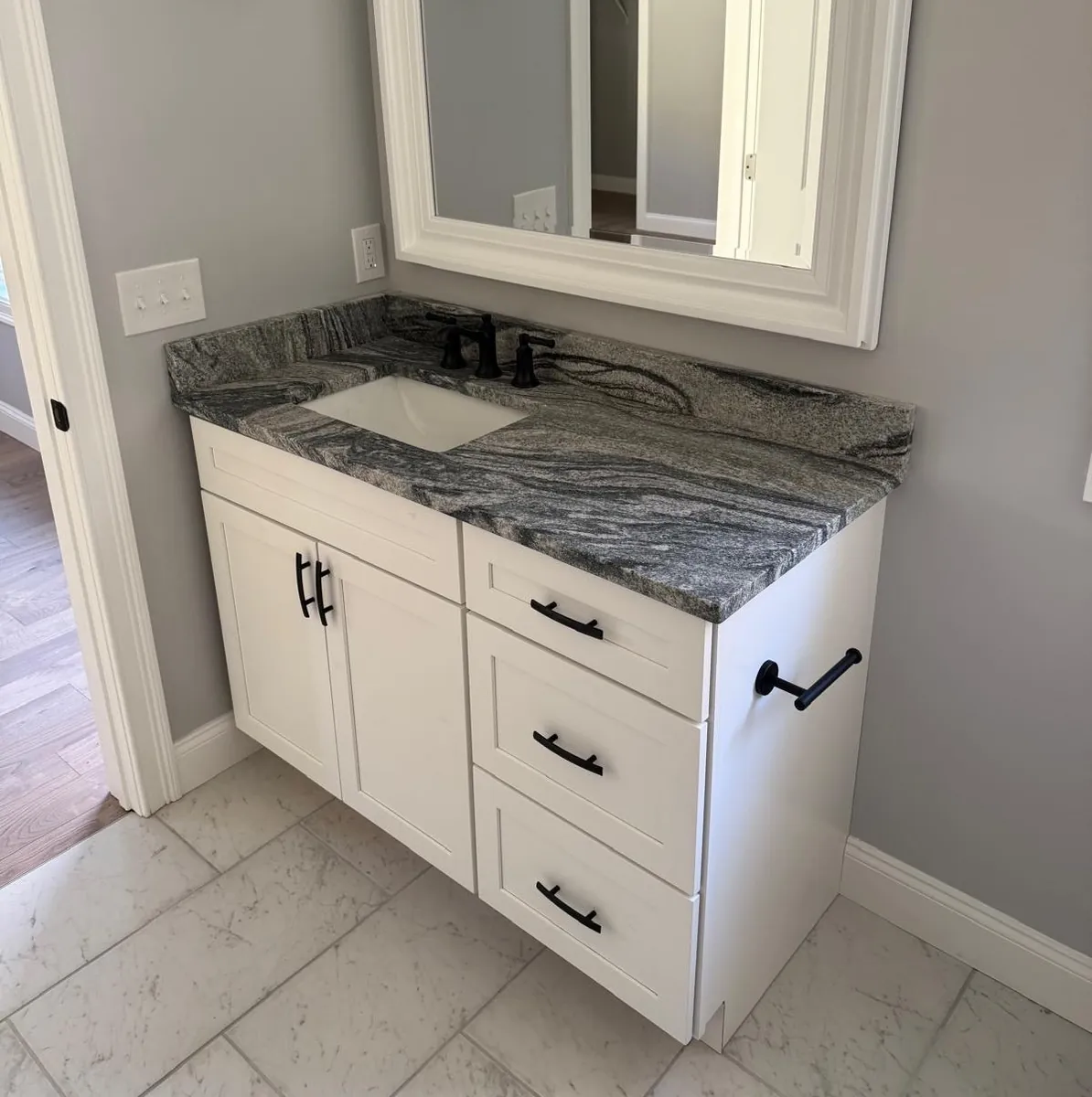
A pattern that reads as a broad landscape on an island may become one heavy stripe on a 36-inch vanity. Review the exact piece, not only the full slab. Decide whether the small section should be quiet, centered, or intentionally dramatic.
Bathrooms often use cooler lighting, glossy tile, mirrors, and compact sightlines. Place a sample beside the vanity door and tile in the actual room. If the exact kitchen stone does not cooperate, choose a related background or vein color instead.
Remnants are especially useful for small vanities. Inventory changes, and a remnant must still be large enough for safe fabrication, sink placement, finished edges, and pattern direction. Compare the complete fabricated and installed cost, not material price alone.
Review bathroom countertops and ask about countertop remnants that suit the size and layout of your vanity.
Fireplaces Need Application Specific Advice
A fireplace surround, facing, mantel, and hearth do different jobs. Heat exposure, clearances, attachment, substrate, piece size, and local code must be reviewed for the actual appliance and construction.
Do not assume a countertop product or adhesive system is automatically approved near a firebox. Manufacturer instructions and the fireplace specification control the assembly. Natural stone selection also needs to account for thermal conditions and support.
Visually, a fireplace can be a good place to repeat the kitchen stone when both are seen from one room. It can also use a quieter related stone so two focal points do not compete.
Explore stone for living spaces while confirming the requirements for your particular application.
Laundry Rooms Bars and Built Ins Reward Flexibility
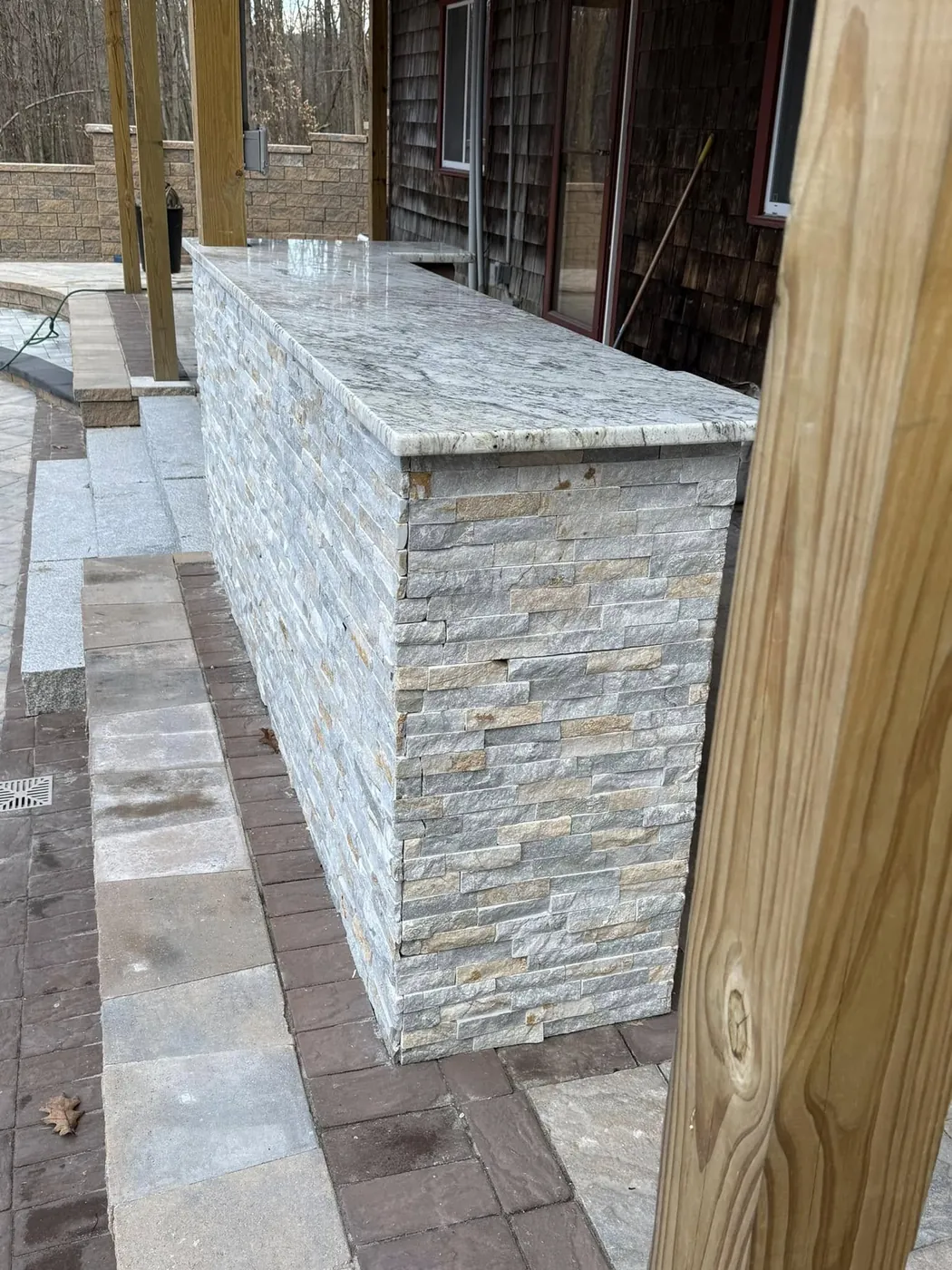
Secondary spaces are ideal for coordination without exact matching. A laundry top can repeat the kitchen's background color in a simpler material. A bar can echo the island's darker minerals. A window seat or desk can use a remnant from the main project if the size and edge requirements work.
These rooms may have different exposure to detergents, cosmetics, alcohol, water, or direct heat. Select the surface for the actual use, then coordinate the design.
Small projects also create an opportunity to use a special remnant that would be unaffordable or visually overwhelming across a full kitchen.
Our guide to the best countertop materials for every room looks more closely at material performance across these spaces.
Plan All Rooms Before Cutting the First Slab
If several spaces may share material, give the fabricator one complete list of pieces. Include vanities, splashes, shelves, sills, hearth parts, bar tops, and built-ins. A small piece still needs safe margins and the correct finished edges.
Rank the pieces. The island or longest kitchen run may receive first priority; a powder-room vanity might fit around it. If pattern continuity matters between two pieces, state that before layout.
Clarify who owns and stores leftover material, how long it can remain, and what later fabrication or delivery will cost. A future project cannot rely on an unreserved remnant remaining available.
Create Variety With Finish Edge and Cabinetry
The same stone can feel different with a polished versus honed finish, but finishing options vary and may change care or appearance. Confirm availability before planning the design around it.
Edge profiles offer another level of distinction. A substantial island edge can make the kitchen feel architectural, while a simple eased edge keeps a bathroom vanity quiet. Cabinet color, hardware, wall finish, and backsplash can do even more to separate the rooms.
Keep one or two repeated cues. The exact stone may change, while warm metal, natural wood, or a consistent edge radius carries through the house.
Questions to Ask When Planning Several Rooms
- Which rooms can be seen together?
- Does the proposed material suit the use and care needs of every application?
- Will the pattern scale work on both large and small pieces?
- Can all pieces be included in one slab layout?
- Are matching slabs or production lots available now?
- Could a remnant serve a vanity, bar, laundry top, or built-in?
- Would a different finish or edge create enough variety?
- Who will confirm fireplace clearances, substrate, and approved materials?
Choose Continuity Without Forcing Sameness
Use the same stone where it improves sightlines, supports the architecture, and fits the practical demands. Coordinate rather than match where lighting, scale, or use calls for another surface.
Precision Granite Works can review a whole-home piece list, current remnant inventory, and material options at the Epsom showroom. Bring plans and samples for every room so the team can evaluate both the design relationship and the actual slab yield. Contact Precision Granite Works to discuss your project.
Frequently Asked Questions
Should kitchen and bathroom countertops match?+
Can I use a kitchen slab remnant for a vanity?+
Will one stone throughout make a small home feel larger?+
Can the same stone use different finishes in different rooms?+
Can countertop stone be used around a fireplace?+
Do remnants make secondary rooms cheaper?+
Ready to Start Your Project?
Contact Precision Granite Works for a free consultation and quote at our Epsom, NH showroom.
About the Author
Written by the team at Precision Granite Works — New Hampshire's family-owned countertop fabricators. Jillian and Shawn Woodward and their team serve homeowners and builders across all of NH from our Epsom showroom.