Are White and Gray Countertops Going Out of Style? What Is Replacing Them in 2026
White countertops are not disappearing, but the cold white-and-gray formula is changing. Homeowners are choosing warmer backgrounds, softer veining, natural variation, and more personal color. Learn what is shifting and how to update the look without chasing a short-lived trend.
By Precision Granite Works Team · Precision Granite Works, Epsom NH
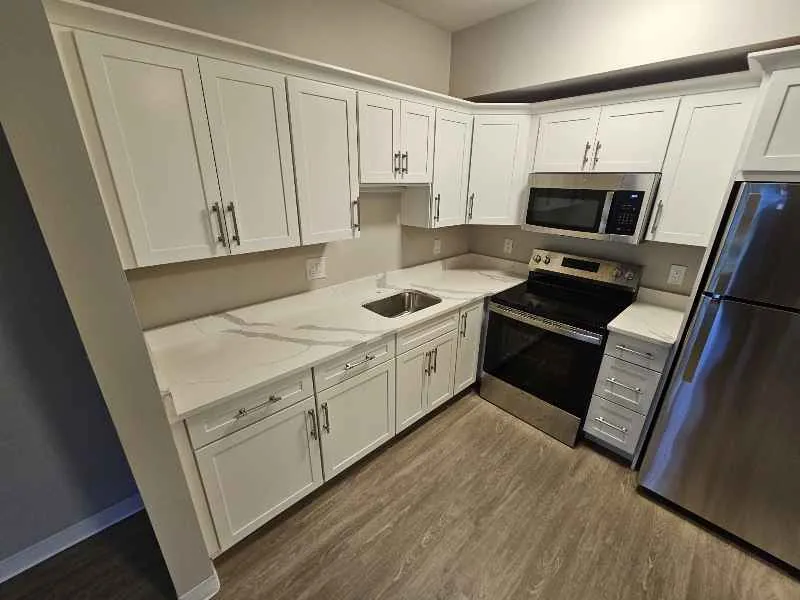
For years, one kitchen formula seemed to dominate almost everything: white cabinets, white countertops, and gray veining. It was clean, bright, and safe.
That look is not suddenly disappearing. White countertops are still popular because they solve real design problems. They can make a smaller kitchen feel more open, brighten a room with limited natural light, balance darker cabinets, and create a neutral background that works with many styles.
What is changing in 2026 is not the use of white itself. It is the type of white homeowners are choosing and how it is being paired with the rest of the kitchen. The shift is away from stark blue-white surfaces, icy gray tones, and highly repetitive gray veining. In their place, more homeowners are considering warm whites, creams, taupes, browns, soft golds, greens, and natural stone with more organic movement.
So, are white and gray countertops going out of style? No. The familiar white-and-gray kitchen is evolving. The newer direction feels warmer, softer, more layered, and often more personal.
White Countertops Are Not Going Away
White countertops remain popular because they are incredibly versatile. They can make a compact kitchen feel larger, brighten a room with dark cabinets, and give the eye a place to rest when other parts of the kitchen already have color, wood grain, texture, or movement.
The important thing to understand is that “white countertop” describes a much wider range of materials than it may seem. A bright solid white quartz, a creamy granite, a soft white quartzite, and a warm engineered surface with subtle veining may all fall into the white category, but they create very different kitchens.
That is why the better question is no longer simply, “Should I choose white?” It is: Which white works with the rest of my kitchen?
A white that looks beautiful in one home may feel cold in another. Cabinet color, flooring, wall paint, backsplash, hardware, natural light, and even the color temperature of your light bulbs can all change the way the countertop looks. A creamy countertop beside warm oak may feel soft and natural. The same countertop beside bright blue-white cabinetry may look unexpectedly yellow.
Why Cold Gray Is Losing Ground
Gray became popular because it gave homeowners a neutral alternative to beige and brown. Then it spread everywhere: gray cabinets, gray floors, gray walls, gray backsplashes, gray furniture, and gray countertops.
Used carefully, gray can still work beautifully. The problem comes when every surface in the room leans toward the same cool, blue-gray direction. That can make a kitchen feel flat, especially as more homeowners bring back natural wood cabinetry, warmer flooring, brass or bronze finishes, earth tones, and richer textures.
This does not mean every gray countertop is outdated. A charcoal granite can feel dramatic and timeless. A warm gray can bridge painted cabinets and natural wood. Soft gray veining can add just enough movement to an otherwise quiet quartz countertop. The dated feeling usually comes from the whole cold-gray formula rather than the presence of gray itself.
Gray still works when it has a reason to be in the room. It may connect stainless steel appliances to blue cabinetry, pick up a tone from stone flooring, add contrast to pale oak, or soften black cabinets. The issue is not whether gray exists. It is whether the gray belongs.
What Is Replacing Stark White and Cool Gray?
The biggest change is warmth. Homeowners are still choosing light countertops, but many are looking at whites that lean slightly creamier, softer, or more natural.
Warm white is one of the easiest ways to update a kitchen without abandoning a light palette. It keeps the brightness many homeowners want but works more comfortably with white oak, walnut, maple, cream-painted cabinetry, brass hardware, bronze finishes, and warmer flooring.
Cream and beige are also returning, but not in the heavy yellow-beige form many people remember from older kitchens. Today's versions are more restrained: soft taupe, pale greige, gentle caramel, subtle gold, and warm mineral movement.
Brown is showing up with more confidence too. Deep chocolate stone can ground a pale kitchen, while softer brown or bronze veining can connect a lighter countertop to natural wood cabinetry. Another major shift is toward natural variation. Granite and quartzite can offer crystals, clouds, movement, mineral shifts, and one-of-a-kind details that do not repeat in exactly the same way from one slab to the next.
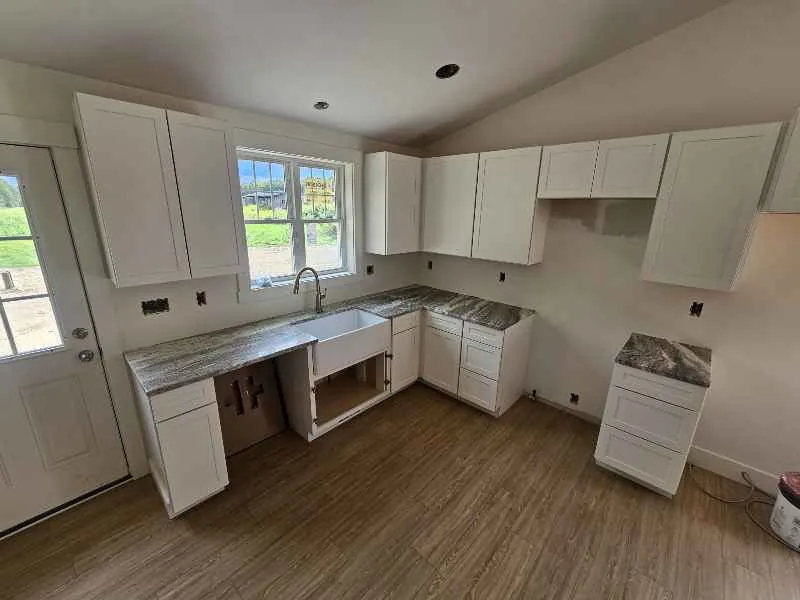
Warm White vs. Cool White Countertops
Not all white countertops are the same. A cool white may have a blue, silver, or gray undertone. A warm white may lean toward cream, ivory, beige, or a very soft yellow. Neither is automatically better. The right choice depends on what is already in the room.
Cool white often works well with:
- Bright white cabinetry
- Blue-gray paint
- Chrome finishes
- Cooler flooring
- Crisp modern interiors
Warm white often works well with:
- White oak, maple, and walnut
- Off-white cabinetry
- Brass or bronze hardware
- Warm tile and earth-toned flooring
The biggest problems happen when two whites are close, but not close enough. A creamy countertop beside a blue-white cabinet may make the stone look too yellow. A crisp white countertop beside warm cabinets may make the cabinets look dull or dingy.
This is why samples should be viewed together. Place the countertop sample directly beside the cabinet finish. Look at it during the day, then look at it again in the evening under artificial lighting. The relationship between the materials matters more than whatever name is printed on the sample.
Is White Quartz Still in Style?
Yes. White quartz is still very much in style. The difference is that homeowners are becoming more selective about the pattern and whether it actually works with the rest of the kitchen.
Some kitchens need quiet movement. Others can support broad veining, warmer undertones, or more contrast. A simple white quartz can work especially well when the cabinets, flooring, backsplash, or lighting already provide plenty of texture and personality. In that case, the countertop gives the eye a place to rest.
On the other hand, if the rest of the room is extremely simple, a countertop with more movement may keep the space from feeling flat. There is no single correct pattern. The right answer depends on the room.
If you are unsure whether you prefer consistency or natural variation, compare quartz beside full slabs of granite and quartzite. Seeing them next to one another usually makes the difference much clearer than browsing photos online.
Can Gray Countertops Still Look Current?
Absolutely. Gray countertops can still look current when they work with the rest of the room. A warm gray or greige is often easier to pair with today's wood tones and earthier palettes than a sharp blue-gray. Dark charcoal can also feel timeless because it reads as a grounded neutral rather than a passing trend color.
Finish matters too. A leathered dark granite can feel textured, natural, and substantial. A glossy uniform gray may feel cleaner, more contemporary, or more industrial. Neither is wrong. They simply create different moods.
If you already have gray cabinets or gray floors, you do not need to repeat that exact shade in the countertop. Sometimes a warm white, cream, or natural stone with a small amount of gray creates a more layered and interesting result. Matching everything exactly is not always the goal. Often, the best kitchens have enough connection to feel intentional without making every surface look the same.
Colorful Stone Is Becoming More Approachable
Moving beyond white and gray does not mean covering the entire kitchen in a bright color. Color can be much more subtle than that. Green granite or quartzite can behave almost like a natural neutral, especially beside wood cabinetry. Blue stone can create a strong focal point on an island. Burgundy, rust, bronze, and gold can add warmth to traditional kitchens or richly layered interiors.
For homeowners who are cautious about color, a focused application can be a smart approach. You might use a colorful natural stone on the island and keep the perimeter countertops quieter. That gives the room personality without making every surface compete.
Color also works best when it connects to something else in the space: cabinet paint, artwork, backsplash tile, flooring, hardware, nearby wood tones, or the view outside the kitchen. A bold stone feels much more natural when it belongs to the larger design story.
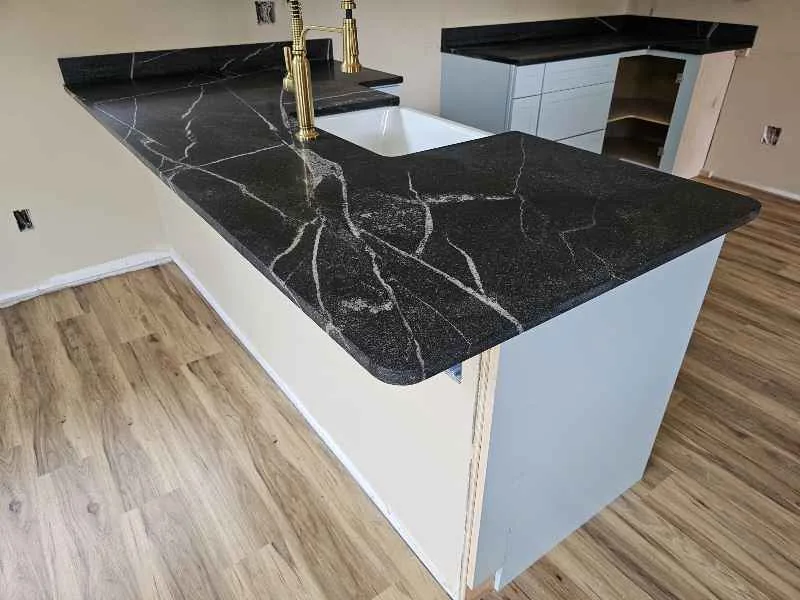
Which Countertop Colors Are Most Likely to Age Well?
A countertop ages well when it feels connected to the home. That matters more than whether the material happens to be trending this year.
Warm white, cream, soft taupe, charcoal, and many natural stone colors tend to have long lives because they can work with changing paint colors, hardware, furniture, and decor. But that does not mean every long-lasting countertop has to be neutral. A green or blue stone can also feel timeless when it suits the architecture of the home and reflects the homeowner's actual taste.
The bigger risk is choosing something only because it is popular online. Before making a decision, ask yourself: Would I still like this surface if no one called it trendy? That question can be surprisingly helpful.
Paint, hardware, lighting, and decor are relatively flexible. Countertops are a much bigger commitment. A countertop should give the rest of the kitchen room to evolve. That does not always mean choosing the plainest material. It means choosing one you will still appreciate when the trend language changes.
How New Hampshire Homeowners Can Use the Trend
New Hampshire homes are not all the same. A new construction home in Southern New Hampshire may call for something very different from a lake house in Meredith, a Cape in Concord, a Colonial near the Seacoast, or an older farmhouse being renovated in stages.
That is why national trends should be used as inspiration, not rules. Warm stone and natural wood may feel completely at home in a rural or traditional property. Crisp white quartz may still be exactly right for a smaller contemporary kitchen. A dramatic granite island can add character to a simple renovation without making the whole room feel busy.
The point is not to avoid white or gray because a trend report says warmer colors are becoming more popular. The point is to give yourself permission to compare more options. Your countertop should work with the light, architecture, cabinetry, flooring, and materials already present in your home. What looks right in a modern kitchen in Manchester may not be the best fit for a lake house in Wolfeboro. Context matters.
How to Keep a Neutral Countertop From Feeling Plain
A neutral countertop does not need a loud pattern to have personality. Texture, finish, edge detail, slab thickness, seam placement, backsplash design, and lighting can all change the way a quiet surface feels.
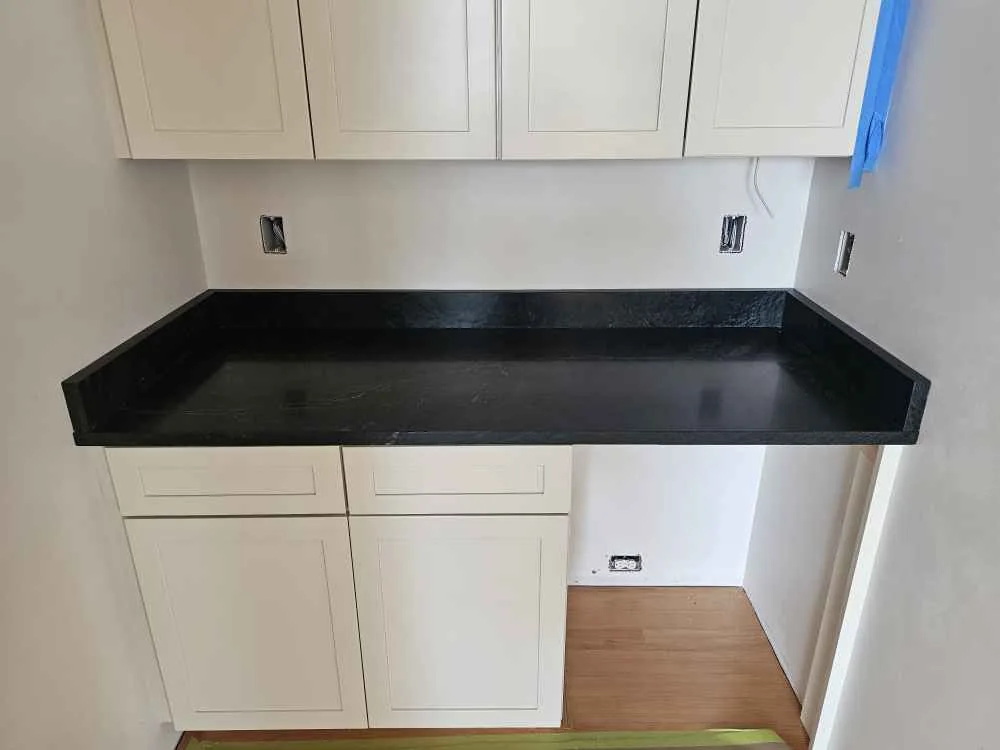
Natural granite and quartzite may reveal crystals, clouds, subtle color shifts, or mineral details that are difficult to see in a small sample. Engineered quartz can stay restrained while still adding soft movement that connects to the cabinets or flooring.
Lighting matters too. Under-cabinet lighting can bring out details in the stone at night. Pendants can help define an island. Natural daylight can make colors shift throughout the day. If the countertop is quiet, the rest of the kitchen can carry more personality through wood grain, cabinet color, hardware, wall paint, tile, lighting, and decorative details.
The goal is depth, not visual noise. You do not necessarily need to replace a dependable neutral option with a more expensive material just because something newer is trending. Sometimes warmth and character can come from the cabinets, backsplash, lighting, paint, or hardware. Spend where the material makes a meaningful difference, not where a trend tells you to.
Fabricator Recommendation: Look at the Whole Palette
One of the best things you can do before choosing a countertop is look at everything together. Do not approve the stone by itself. Put the cabinet sample beside it. Add the flooring. Look at the backsplash. Bring in paint colors and hardware if you have them.
Then decide what should be the focal point. If the stone is dramatic, it may help to keep one or two surrounding finishes quieter. If the countertop is subtle, the cabinetry, backsplash, or lighting can carry more personality.
For natural stone, view the full slab whenever possible. For engineered quartz, look at the largest display or sample available and ask how the pattern will repeat across your actual layout. Our guide to bold veining versus subtle movement is a useful companion when you are deciding how much pattern your room can support.
The goal is not to make the kitchen look like 2026. It is to make the kitchen feel considered today and comfortable for years.
Are White and Gray Countertops Going Out of Style?
No. White and gray countertops are not disappearing. What is changing is the way homeowners are using them.
Stark white and cold gray are making room for warmer whites, cream, taupe, beige, brown, gold, green, and more natural variation. White quartz is still popular. Gray countertops can still look current. Granite and quartzite with natural movement are attracting homeowners who want more individuality.
The common thread is not one specific color. It is a move toward kitchens that feel warmer, more personal, and more connected to the rest of the home.
Compare Countertop Colors at Precision Granite Works
Choosing a countertop color is easier when you can compare materials in person. Precision Granite Works can help homeowners review granite, quartz, and quartzite options and understand how color, movement, finish, seams, and edge details will affect the finished room.
Bring cabinet samples, flooring samples, paint colors, backsplash ideas, or photos of your kitchen. Seeing everything together is one of the best ways to avoid choosing a countertop that looks good on its own but feels wrong once it is installed.
Visit the Precision Granite Works showroom at 1022 Dover Road in Epsom, New Hampshire, to compare materials and find a countertop that fits your home, your style, and the way you want the space to feel for years to come. You can also read more about pairing countertops with wood cabinets, explore dark countertop options, or request a quote when you are ready to talk through your project.
Frequently Asked Questions
Are white countertops going out of style in 2026?+
Are gray countertops outdated?+
What countertop colors are replacing cool gray?+
Is white quartz still a good choice?+
What is the difference between warm white and cool white countertops?+
What countertop colors are timeless?+
Can gray countertops work with wood cabinets?+
Should I choose a trendy countertop color?+
Ready to Start Your Project?
Contact Precision Granite Works for a free consultation and quote at our Epsom, NH showroom.
About the Author
Written by the team at Precision Granite Works — New Hampshire's family-owned countertop fabricators. Jillian and Shawn Woodward and their team serve homeowners and builders across all of NH from our Epsom showroom.